

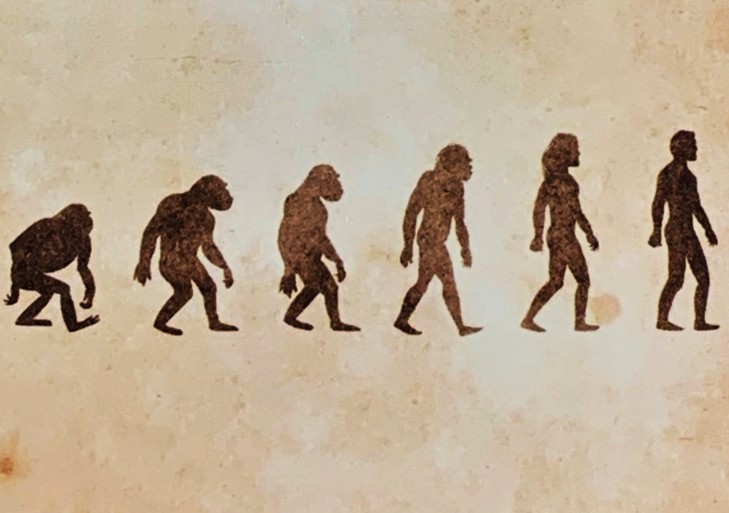
Moving from one place to another on two legs is a matter of some importance to the genus Homo, which separated from the other primates several million years ago as the first and only biped, evolving to Homo erectus. Prior to that, swinging through trees and rambling about on the ground in a knuckle-dragging galumph was de rigueur. We walked before we talked and we talked before we texted. The twentieth century dawned with an uncontrolled experiment that resulted from the industrial revolution of the nineteenth. Earning ones’ daily bread changed from activities of bodily motion and physical work to consumption based on the energy of steam and then oil and gas. We ride where we once walked, and we sit when we once stood. Whether this is sustainable on a global scale with over eight billion people remains to be seen, but there are good reasons to be concerned. On the level of the individual, increasing obesity and the prevalence of chronic metabolic conditions suggest that the experiment with riding and sitting is not going well. Thoreau wrote “I think that I cannot preserve my health and spirits unless I spend four hours a day at least …sauntering through the woods and over the hills and fields, absolutely free from all worldly engagements.” [1] The inner peace that results from a hike in the woods is not coincidence; it is universal and as true now as ever it was.
Walking is a healthful activity, hiking even more so. This has been demonstrated empirically and established according to the scientific principles of the experimental method. It is an activity that is not only innate but deeply gratifying and one that can last a lifetime. It strengthens muscles and joints as a consequence of motions that are entirely natural. While these truths are self-evident, there is more to it than that; Homo sapiens evolved as a bipedal nomad and survived according to fitness. The implication is that the inexorable forces of nature selected the operating system of heart, lungs, arms and legs with all its vascular plumbing and neuron wiring to accomplish the task of moving about on two legs. The last decade has witnessed a renaissance in biology. The understanding of DNA and its role in evolution has established fact where hypothesis once prevailed, profoundly disrupting anthropology formerly based solely on physical characteristics. Neanderthal man (Homo neanderthalensis), once considered our direct ancestor, is now established genetically to be an extinct subspecies with whom modern humans interbred [2]. While there are many twists and turns yet to be discerned in our lineage, it is clear from DNA that humans of the genus Homo separated from chimpanzees of the genus Pan about 5 million years ago (MYA) to become the first and only primate to evolve bipedalism, locomotion on two limbs. While there remains legitimate speculation as to why this occurred, there is no disputation that it did as we exist; cogito ergo sum.
Darwin’s theory of evolution is only a theory in the sense that it cannot be proven by the scientific method of testing with variables and controls. It is not (currently) possible to turn back the clock and conduct experiments in evolutionary forcing factors. The underlying principle of survival is immutable, however, and one can only survive by eating, not being eaten, and reproducing at a rate that increases an extant population; the Darwinian term is “fittest.” What the common ancestor of chimps and humans must have faced was an environment in which an upright posture conveyed survival advantages. Darwin writes in The Descent of Man that “man could not have attained his present dominant position in the world without the use of his hands,” though it is much more likely that this is a result rather than a cause of bipedalism. One might also posit that an upright posture affords a better view, but apes can stand periodically to that same end. Primates had been around for about 30 million years; the profound physical changes of bipedalism must have resulted from factors more fundamental than handiness and height.
Climate is a generic term for the complex forces of wind and water that operate on a scale with global reach, weather is its quotidian result. When combined with the equally perplexing geology of subducting tectonic plates and spreading ocean floors, the task of deducing environmental conditions of the past is daunting. But generalizations are possible; it is relatively clear from the rock record that a series of glacial maxima occurred in the Ice Age or more properly the Pleistocene Epoch that extended from 2.6 MYA to “just recently” – 10,000 years ago. It is equally evident that the earth went through a period of gradual cooling during the Pliocene Epoch that preceded it, coincident with the advent of walking apes. On the African continent, the lush forests of the hotter and wetter Miocene Epoch gradually but inexorably gave way to savannah and the concomitant emergence of grazing herd animals that fed on its grasses. It is of possibly dire consequence that the last time that carbon dioxide levels in the atmosphere exceeded the recently achieved 400 ppm was during this quite warm pre-human epoch [3]. The habitat of the forest ape was diminished with the cooler climate affecting its jungle smorgasbord of nuts and fruits. The savannah beckoned, and the more adventurous and perhaps desperate apes first came down from the trees. The Laetoli bipedal footprints were discovered just south of the Olduvai Gorge in Tanzania by Mary Leakey in 1976. Extensive research has established that they were made by hominids of the species Australopithecus afarensis 3.7 MYA, perhaps relatives of Lucy whose skeletal remains were found nearby in 1974 and named for the Beatles song that played over and over at the field camp on the eve of discovery (in the sky with diamonds) [6]. Man walked early. Why?
With the same energy expenditure, a human on two feet can cover at least twice as much distance in a day as can a chimpanzee using four; bipedalism’s efficiency is a matter of the forces and motions of physics [4]. This seems counterintuitive as four legged animals are much faster – but that is only in the short term; sprinters do not run marathons. It stands to reason (pun intended) that more distance for less energy is a compelling survival enhancing mutation. Over the eons of time during which A. afarensis was sequentially succeeded by Homo habilis, H. erectus and ultimately us, it was this efficiency that stoked the evolutionary engine of adaptation. This is consistent with the ideas of Richard Fortey, a senior paleontologist at the Natural History Museum of London, who writes that “upright legs evolved first and freed the arms; thus liberated, hands learned to manipulate and to maneuver precisely … and only then did brain size became important.” The upright hominids learned to make tools (habilis means handy in Latin) to dig tubers and to stab grazing animals with whom they shared the savannah, using their bipedal stamina to outlast their prey in the struggle for survival. Those with more endurance were more successful and brought home meat to nurture their scions. We most probably evolved as man-apes whose metabolism of the physical state and sensory mechanics of the mental state were gradually adapted to walk on two legs. There is a practical test to this hypothesis – on the African savannah with an aboriginal hunter.
While there are few hunter-gatherers left due to the globalization of culture, the Hadza of northern Tanzania have persevered. Several years ago, a team of anthropologists set out to measure their metabolic rate using a relatively new method with “gold standard” accuracy called doubly-labeled water. Taking advantage of advances in the use of isotopes in medicine, deuterium, or heavy hydrogen and oxygen-18 are used to make “doubly labeled” water; both atoms are traceable. The core principle is that animal energy is generated by the oxidation of hydrocarbons with water and carbon dioxide as products. To determine the caloric expenditure over a set period, a fixed volume of deuterium, oxygen-18 water is consumed and its dilution over time measured by taking sequential urine samples to calculate carbon dioxide production. The anthropologists spent a month with the Hadza taking urine samples as they went about their physically demanding daily activities that consisted primarily of animal hunting by males and plant foraging by females. Expecting huge caloric utilization necessary for the level of activity maintained, the results from the Baylor College of Medicine were tantalizing: Hadza males used about 2500 calories a day and Hadza females used 1900, the same daily caloric requirement as that of their relatively sedentary urban cousins [5].
The implications of this study are profound. How can it be that Hadza live a life of nearly continuous energy expenditure without the requisite calories logically mandated; the logic must be flawed, but in what way? To address the conundrum, follow-up studies were done using isotopic water to measure and validate the caloric expenditures of typical urban populations. The Modeling and Epidemiological Transition Study (METS) had over 300 participants whose activities were monitored using standard fitness tracking accelerometers for a week [7]. Those participants who had minimal movement, the louche couch-potato crowd, used about 200 calories less than those who subscribed to an exercise regimen of some kind – corresponding to about the same 2500 calories used daily by the Hadza. But what was more surprising was that the daily caloric expenditure of those study participants who engaged in rigorous and frequent exercise was the same as those with moderate exercise. This means that, contrary to everything we have thought about exercise and energy, there is a plateau in caloric utilization and that moderate exercise on a periodic basis is sufficient to reach it.
Two evident truths are implicit. The first is that exercise beyond a certain minimum does not burn more calories and that more exercise will not in and of itself result in weight reduction. This means that it is all about calories in, and that the 37 percent (and counting) of American adults who are obese eat too much and not exercise too little. It also means that a person who is fit should be able to travel long distances without continuous food supplements. Those who have participated in endurance events such as marathons or long-distance hikes will no doubt have noticed that they don’t need to consume thousands of extra calories before, during or after; the pre-marathon pasta supper only makes you constipated. However, it is absolutely necessary to train the body to store energy with a program of marathon training in which distance is progressively increased. But the second evident truth is more compelling – that “calories burned” are independent of energy expended, an oxymoron it would seem (and probably is). There is only speculation as to causation in the scientific community at present; like dark energy and dark latter, “missing calories” are a black hole.
The most logical explanation is that calories burned equate to the energy expended and that the “missing calories” are being diverted from one function to another and are not really missing. The business of running the body’s nervous, cardiovascular, digestive, endocrine, and supporting systems is known as the basal metabolic rate or BMR; it accounts for approximately 70 percent of total daily energy required for an adult male – about 1700 out of 2500. The brain and its nervous network use the lion’s share; about one quarter of everything you eat runs your brain. That this distinguishes us from our primate cousins has been established; humans burn about 500 calories more per day than chimpanzees or gorillas [8]. The immune system is also relatively expensive from a caloric perspective. The remaining 30 percent of available calories must then be the font from which we draw on for the kinetic energy of muscles moving torso, arms and legs, the musculoskeletal system. It is the evolved parsimony of bipedalism that makes this possible. It is also evident that additional energy can be drawn away from other bodily functions within limits to allow for some degree of overreach. For an active healthy adult and Hadza, the result is health in body and mind.
What does all this mean for hiking and health? Herman Pontzer, an anthropologist at Hunter College and one of the Hadza researchers opined that “metabolic adaptation to activity is one of the reasons exercise keeps us healthy, diverting energy away from activities such as inflammation that can have negative consequences if they go on too long.” There are two parts to this observation. The first is that regular exercise is the key to a properly functioning metabolism; that hiking is the exercise that was the survival factor in human evolution and that it is therefore the best way to keep the body in tune over time. The second part is that the energy that is not used by those who do not exercise is diverted into other activities, like inflammation. Taking this a step further, it is reasonable to attribute the spate of modern ailments to too many calories looking for something to do. The industrial revolution was powered using steam from water boiled by burning coal or wood to do work that was formerly done by man, beast, water or wind. Over the last 200 years, Homo sapiens have been conducting an uncontrolled experiment with physiology to see what happens when you promote sitting and riding over standing and walking.
Wild mice offer a window into the prelapsarian world of nature and its prerogatives. That caged laboratory mice are provided with an exercise wheel is not a matter of experimental protocol; rodents are runners; the wheel satisfies their primordial need to move. To test the ‘mice must run’ theory a group of Dutch researchers placed a wheel in an urban park with a surveillance camera. The wheel was in almost continuous use by wild mice sequentially spending up to fifteen minutes in seemingly pointless running in place in the midst of their scurrying to or from their appointed rounds. Nearly defenseless rodents evolved to run for many of the same reasons that humans evolved to walk. Mice need to run to survive and their behavior with an exercise wheel is instinctual [9]. In an ironic twist, mice are used for many of the epidemiology studies as surrogates for humans; the correlation has always been subjective to some degree due to physiological differences. It has been found that laboratory mice that are kept in cages with no exercise become obese, have compromised immune systems and become cancerous before scientists can even start their planned experiments [10].
Does the need to exercise apply to humans? Empirically yes, as has been known for some time. In the middle of the last century, a British researcher named Morris became intrigued by the startling rise in heart-attacks incident to the industrial revolution and hypothesized that they may correlate to lack of exercise. London’s iconic double-decker buses provided the ideal controlled study. Using medical records to compare the relative health of the immobile drivers with the stair climbing conductors, he found that the former had twice the heart attack rate as the latter [11]. While this result was initially met with skepticism in the scientific community, thousands of research studies have confirmed that there is an incontrovertible link between exercise and health and that many chronic diseases are involved. Hiking is the best of exercises and is necessary and sufficient to sustain health.
But we do not know why. A recent and provocative study conducted in by Dr. David James at the University of Sydney in Australia confirms the dearth of knowledge about exercise and health. Four healthy adult men agreed to have muscle biopsies taken before and after ten minutes of very rigorous exercise. An analysis of the protein structure revealed that there were over a thousand changes of which only one tenth could be explained with known physiology. This ground-breaking study offers a glimpse into the complex operation of the human metabolic machine that may ultimately yield the true nature of the cause and effect of exercise. The conclusion reached by James was that “exercise is the most powerful therapy for many human diseases, including type 2 diabetes, cardiovascular disease and neurological disorders.” [12]
Correlation is not causation. While it is demonstrably true that exercise correlates to improved health outcomes, it is premature to assert a causative quid pro quo. However, the facts are compelling. Humans evolved as the first bipedal mammal and survived through attrition of less efficient individuals. For almost all human history, the exercise of living as a hunter gatherer mandated walking, climbing, digging and carrying; the Hadza attest to the healthy result. Even after the advent of agriculture in Mesopotamia and concurrently in China about 10,000 years ago, movement by foot from farm to field and the rigors of reaping sufficed. The sedentary stasis that has become increasingly pervasive over the last one hundred years has occurred in tandem with the rise of many pernicious maladies, both physical and mental. While it is not legitimate to aver unequivocally that sloth begets sickness, it is legitimate to pronounce exercise as a demonstrative boon to health. Among other things, regular exercise has been shown to reduce the incidence of colds, protect against hearing loss, lower the risk of cataracts, improve sleep patterns, lower rates of urinary incontinence, and, yes, improve sexual potency [13]. Hiking is what human nature intended when we first set out across the savannah, and for our own best interests of health and well-being, we must retrogress to the halcyon hiking days of yore. Ambulare ergo sum.
References :
1. Thoreau, Henry David – Excerpted from Walking, sometimes referred to as “The Wild”, a lecture by Henry David Thoreau first delivered at the Concord Lyceum on April 23, 1851. First published as an essay in the Atlantic Monthly after his death in 1862. This compilation of talks provides the essence of the nature to the physical, mental, and spiritual goodwill of mankind.
2. Wade, Nicholas, Before the Dawn, Penguin Group, New York NY, 2006. A general overview of human evolution that provides a snapshot of DNA or molecular anthropology, a field that is changing rapidly with new discoveries and methods.
3. Jansen, E. et al “Paleoclimate”, In: Climate Change 2007: The Physical Science Basis. Contribution of Working Group Ito the 4th Assessment Report of the Intergovernmental Panel on Climate Change (IPCC). An excellent technical summary of a complex history.
4. Fortey, Richard, Life, A Natural History of the First 4 Billion Years of Life on Earth, Random House, New York, NY, 1997 pp 60-62. A very readable summary of the forces and factors that shaped the world we inhabit.
5. University of Arizona. (2007, July 17). “Study Identifies Energy Efficiency as Reason for Evolution of Upright Walking”. ScienceDaily. Retrieved March 1, 2018, from http://www.sciencedaily.com/releases/2007/07/070716191140.htm
6. Pontzer, Herman “Exercise Paradox” Scientific American, February 2017 pp 27-31. This study of nomadic foragers is of seminal importance to understanding the use of calories by humans and the degree to which activity is involved in their expenditure.
7. https://clinicaltrials.gov/ct2/show/NCT02925156 The Modeling and Epidemiological Transition Study is sponsored by Loyola University
8. Pontzer Op cit.
9. Twilley, Nicola, “The Exercise Pill” The New Yorker 6 November 2017 pp. 30-35. A summary of some interesting experiments about exercise, diet and weight loss.
10. Grimm, D. “The Happiness Project” Science 9 February 2018 pp 624 – 630
11. Morris, J.N., Heady, J.A., Raffle, P.A.B., Roberts, C.G., and Parks, J.W., 1953. “Coronary heart disease and physical activity of work”. Lancet 265, pp. 1053-1057
12. James, David E. et al “Global Phosphoproteomic Analysis of Human Skeletal Muscle Reveals a Network of Exercise-Regulated Kinases and AMPK Substances.” Cell Metabolism 22 pp 922-935 3 November 2015.
13. Davis Robert J. “Why Exercise? Six Surprising Health Benefits.” Washington Post 20 June 2017. This article summarizes a number of studies about the benefits of moderate exercise and health benefits from better sex to fewer colds.
 Hiker's Notebook