


Common Name: Mallard – From the Old French mallart and Latin mallardus, a combination form derived from the word male. The etymology is not well defined, but it is likely that the distinctive plumage of the male duck is the basis for distinguishing the species with a name derived from “male of the wild duck.” In France, the mallard is known as le canard colvert, roughly translated as duck with the green feathers on the side of the head. Duck is derived from Middle Dutch as düken, to dive underwater. Mallard ducks duck but don’t dive.
Scientific Name: Anas platyrhynchos – The generic name is the Latin word for duck which is ascribed to the Sanskrit ati meaning aquatic bird. The species name is from the Greek platy meaning flat and rhynchos meaning snout, bill, or beak. Taken together the scientific name literally means flat-billed duck. [1]
Potpourri: The contrast between male drake and female hen mallard, known as sexual dimorphism, is among the most extreme of all vertebrates, affording an unmistakable visual key for identification. Carl von Linné originally listed the male and female as different species in the Linnean taxonomy classification system, believing that they could not possibly be the same. The male drake’s iridescent dark green head, white neck ring, chestnut brown breast, brownish gray back and white flanks stand in stark contrast to the female’s maculation of buff, ecru, and dark brown. Mallards are prolific, having spread across the northern hemisphere as a global species. The North American contingent of mallards can even be considered a single population. [2] The evident evolutionary success of mallards, even though they are preyed on by human duck hunters, is due to several factors. Drakes are aggressive sexual predators, even though those that succeed settle on a single partner. Hens are selective in choosing mates that meet their criteria, which must impart qualities in their combined offspring that advance favorable adaptability and survival traits. Mallards are masters of ponds and lakes, which provide a measure of protection from terrestrial predators, and furnish an ample supply of water plants, their primary food source. Mallards are a duck dynasty.
Mallards are members of the Anatidae family, named for its characteristic “type” species, the duck genus Anas. It is comprised of ducks, geese, and swans, consisting of 49 genera and 158 species that range across the globe on every continent except Antarctica, a cosmopolitan distribution. Anatids are adapted for aquatic habitats, employing open water as a means of transport. For the most part, they have webbed feet for paddling locomotion and large, round bodies due to the physics of floatation. [3] The buoyancy that provides an upward force to float a duck is equal (and opposite) to the gravitational weight of water displaced by its semi-submerged body. This is important for ship hull construction and duck anatomy, both of which are elongated, rounded cylinders. Waterfowl are also unusual in that they are one of only a few types of birds (3 percent) that have a penis, necessary to ensure successful sperm transfer in an aqueous environment. It is a given that the ancestral bird cum dinosaur had a penis as it was reptilian in origin. The reduction and eventual elimination of the male sexual appendage in most birds is attributed to social behavior. Mating is based on mutual choice with the female usually having the greater say in the matter; many partnerships are lifelong. Since penetration is not forced, the act of intercourse amounts to what is euphemistically called the cloacal kiss. The cloaca (Latin for sewer) is the channel that serves as the passage for excrement and, in some cases like most birds, reproduction. Geese and swans follow the normal bird arrangement of mutual, lifelong partnerships in spite of the retention of a shortened penis for aquatic penetration. In Greek Mythology, Zeus took the form of a swan to impregnate Leda, who gave birth to Helen of Troy. Mallard sex is altogether different.

The sexual overdrive of mallards in particular and ducks in general can take extreme forms. In June 1995 a flying mallard collided with the glass front wall of the Rotterdam Natural History Museum in Holland and fell, limp and thoroughly dead at its base. A curator from the museum went to investigate and found not only the dead duck but also a live mallard actively engaged in intercourse that persisted for over an hour. The paper written on the subject, entitled “The First Case of Homosexual Necrophilia in the Mallard” won Harvard’s Ig Nobel prize in biology in 2003. The museum continues to celebrate “dead duck day”. While this particular observation may be an aberration, it is similar in sexuality if not in degree to other mallard drake behaviors such as gang rape. Groups of males are wont to chase after single hen females with repeated sexual assaults that sometimes results in fatal injuries. The cuckold whose mated hen was the object of the chase usually responds with aggressive assault to try to dissuade the rapists, manifesting male fitness evolution. [4] In the absence of available females, drakes have been observed attempting copulation with other (live) males. The evolution of mallard drake’s super libido is matched by the physical size and complexity of the penis. While the record goes to the Argentine lake duck with a 17-inch penis, the mallard is amply endowed with a spined member one third as long. It operates like a coiled party blowout noisemaker, unrolling and everting with lymphatic system pressure as it extends into the vagina of a willing or unwilling hen. In less than a second, it coils counterclockwise inward and upward as a flattened tape with a groove (the sulcus) on one side serving as sperm conduit.[5] However, male sexual dominance is not the whole duck story.
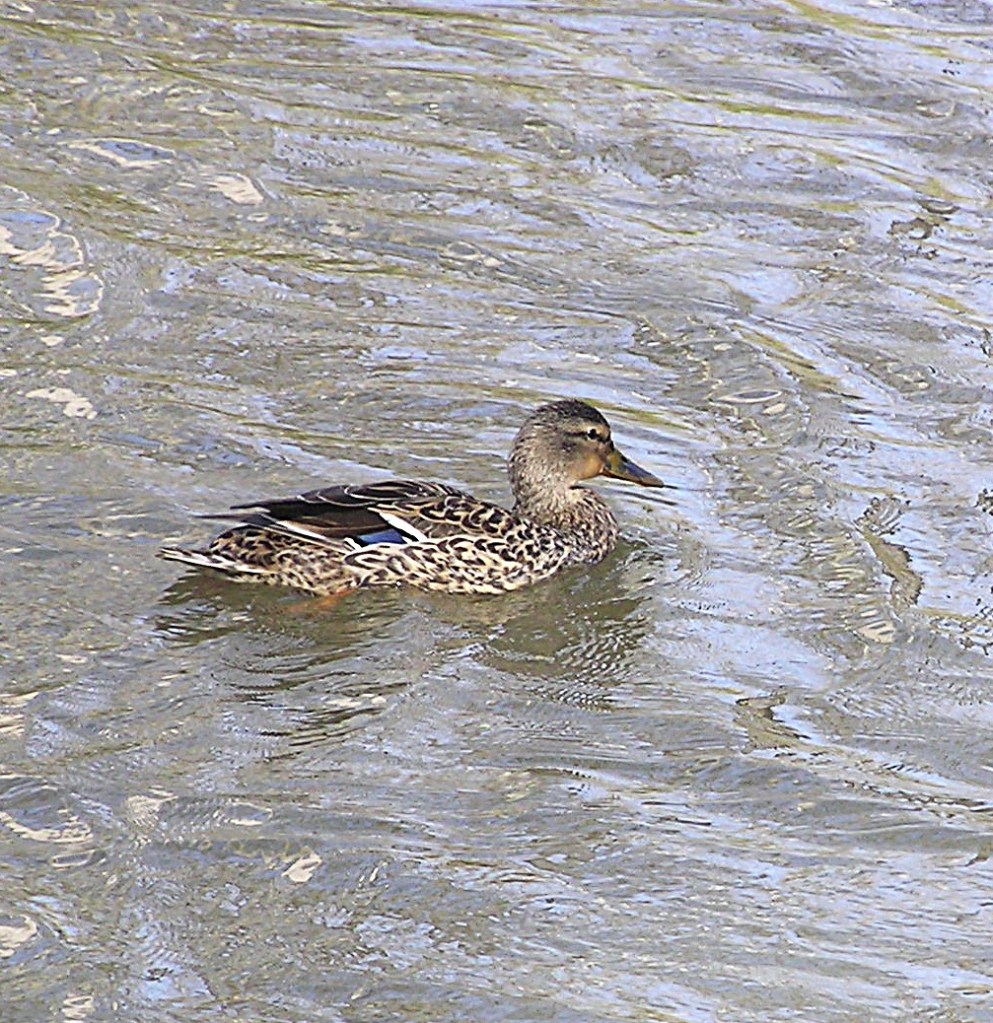
Female mallards exercise mate choice, just like most of their avian counterparts. It is not, however, a simple yes or no. The complex nature of duck sexual behavior became a matter of scientific interest early in the century. The explosive, almost instantaneous erection of the penis of mallards and several other ducks must have had some evolutionary origin and was a matter of some interest to the biological sciences. The first area of investigation led to the study of the vaginal structure of duck hens. A series of dissections of different species revealed considerable anatomical differences. While most ducks had simple, tubular passages as would be expected, mallard hens had convoluted structures with a number of side openings that led to dead ends. And, most surprisingly, the vagina was coiled clockwise, in the opposite direction of the counterclockwise drake penis. This led to the hypothesis that species of female ducks partnered males with intimidating sexuality had evolved a coping mechanism, coital sidetracking. To test the hypothesis, an ingenious experiment was devised in which male ducks were encouraged (using a hen as stimulation) to ejaculate into purpose-built glass vesicles that simulated either a corkscrew vagina with cul-de-sac outlets or a simple tubular design with no twists or turns. The data showed that the ducks using the straight, normal tubes were successful in full erections 80 percent of the time while those using the actual hen twisted coil arrangement were only 20 percent successful. This was supported by DNA testing of drakes, hens, and the resultant chicks showing that even though 40 percent of all mallard copulations are forced, no more than 5 percent of the chicks genetically matched to rogue drakes. In other words, the female was able to employ mate selection 95 percent of the time. [6]
Scientific research conducted to unravel the complex sexuality of ducks contributes to a better understanding of birds in general and of biology more broadly. Mallards are particularly important for a number of reasons. One is population size. It is estimated that the 23 million individual mallards that make up the global population range over about 10 million square kilometers (one tenth) of the earth’s land surface. In some areas like the Chesapeake Bay, mallards are considered invasive. [7] A second is sexuality, for, in addition to assaulting hens and even dead males, mallard drakes are insatiable paramours. Introduced mallards interbreed with native duck populations to the extent that hybridization threatens to extirpate other duck species; it is estimated that 95 percent of New Zealand’s native gray ducks have been hybridized and that the Hawaiian duck has become completely hybridized on the island of Oahu. [8] Last but not least is human health and nutrition. Ducks are the principal reservoir on Influenza A viruses, including the H5N1 variant, which, as recently as 2013, resulted in outbreaks in poultry in over 60 countries resulting in 622 human infections. [9] However, studying duck sex, when taken out of context, can sound ludicrous, not unlike many other scientific studies. As part of the political news cycle, the study was dubiously called Duckpenisgate and newscasters asked whether the public was aware that $385,000 of their tax dollars had been spent to study duck dicks. The war on science was just getting started.
Mallard behavior is hard-wired by genetic heritage, focused on reproduction. The annual cycle starts with the initiation of pair bonding in late fall that continues through to spring, migrating in most cases to breeding grounds for the mating season. [10] The sexual hormones ramp up from minimal during winter to what can only be described as overdrive as gonads grow thousands of times larger in only a few months. Problems arise because the ratio of drakes to hens is skewed with the former outnumbering the latter, as is the case with most duck species. The problem is exacerbated by the concentration of ducks in their habitat. Ponds are limited in size and have an abundant food supply of aquatic plants. Since it would not be possible for any drake-hen couple to defend a pond, ducks are not territorial. [6] The combination of too many males in a restricted area with a large number of paired couples committed to copulation and reproduction is a recipe for mayhem. Males struggle to defend their mates from the testosterone driven bachelor drakes in search of fulfillment. After successful mating, controlled in part by hen selectivity, the favored drake continues to guard his mate during selection of a ground nest near the water and the laying of 9-13 eggs. The burden of sitting on the nest for a month and leading the hatched chicks to water rests entirely with the hen. The drake departs, molts and regrows flight feathers needed for the reverse migration to find a new mate for the next season. [11]
The love it and leave it behavior of male ducks is blighted according to human morality. Anthropomorphism, however, has no place in nature other than amongst us. The mallard drake dynasty is a product of time, space, and survival, as is the evolution of every other living thing. The evolution of the mallard is fairly recent, the genus Anas is thought to have originated sometime in the late Pliocene or early Pleistocene epoch, about two million years ago, probably in Siberia.[12] During the relatively brief geologic time scale period since then, the combination of aggressive males preying on females and the selectivity of females in their choice of males (presumably preferring those with coruscating green heads) has been a resounding success. The loss of hens sitting on ground nests to predators like foxes contributes to their numerical imbalance. The high demands on chick survival according to the same constraints would also result in survival of the strongest, usually male, of the species. There are therefore more males for the females to choose from to ensure that those with the “right stuff” get the reward of progeny. Drakes are aggressive because they have to be. Disney’s irascible Donald Duck character as foil to the benign Mickey Mouse is well cast.
References:
1. Webster’s Third New International Dictionary of the English Language, Unabridged Meriam Webster Company, New York, 1971, pp 78, 698, 1267
2. Starr, C. and Taggart, R. Biology, The Unity and Diversity of Life, Fifth Edition, Wadsworth Publishing Company, Belmont, California, 1989, p 539, 543.
3. Alderfer, J. ed Complete Birds of North America, National Geographic Society, Washington, DC, 2006, pp 2-42.
4. Barash, D. “Sociobiology of Rape in Mallards (Anas platyrhynchos): Responses of the Mated Male” Science, Volume 197 Issue 4305, 19 August 1977, pp 788-789
5. Schilthuizen, M. Nature’s Nether Regions, Penguin Group, New York, 2014, pp 125-129.
6. Prum. R. The Evolution of Beauty, Doubleday, New York, 2017, pp 149-181. The relevant chapter is entitled “Make Way for Duck Sex”
7. Smithsonian Institution Invasive Species https://invasions.si.edu/nemesis/chesreport/species_summary/anas%20platyrhynchos
8. Levin D. Hybridization and Extinction” American Scientist, Volume 90 Number 3, May-Jun 2002, p. 254.
9. Huang, Y. et al. (2013). “The duck genome and transcriptome provide insight into an avian influenza virus reservoir species”. Nature Genetics. April 29, 2014, Volume 45 Number 7 pp 776–783.
10. Cornell University Ornithology Laboratory https://www.allaboutbirds.org/guide/Mallard/id
11. Rogers, D. University of Michigan Ann Arbor Michigan, “ Anas platyrhynchos” https://animaldiversity.org/accounts/Anas_platyrhynchos/
12. Johnsgard, P. “Anas platyrhynchos Linnaeus – Evolutionary relationships among the North American mallards”. The Auk.1961 Volume 78 Issue 1 pp 3–43
 Hiker's Notebook