Cougar

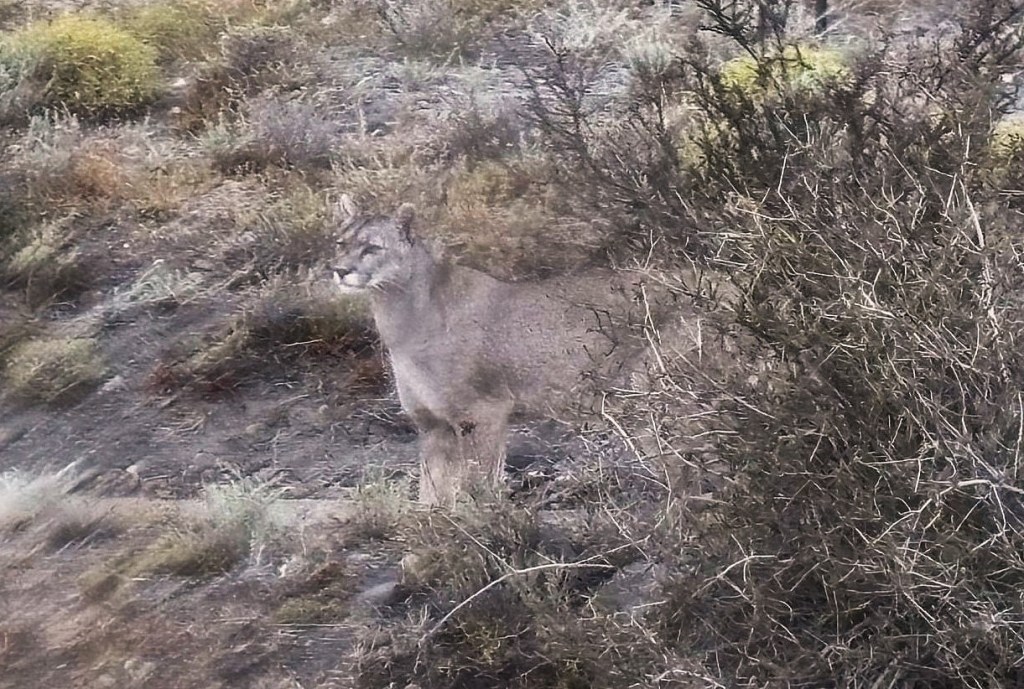
A cougar searches for guanacos, wild llamas indigenous to the grasslands of Patagonia, their primary prey

Common Name: Cougar, mountain lion, puma, catamount (cat of the mountain), panther, American lion, and many others – Cougar is derived from the language of the Tupi people, an indigenous group from central Brazil. The original name cuguacuarana was a modification of suasuarana, which literally meant false (rana) deer (suasu). This was presumably to distinguish the large cat with fur that was similar in color to deer from the jaguar, another large cat with spots which is also indigenous to South and Central America.

Scientific Name: Puma concolor – The generic name Puma is taken directly from the Quechua language of the natives of southern Peru in the Andes Mountains. Concolor means to have one, consistent color, noting the same attribute as the similarly colored deer – cougar etymology. Also listed on occasion as Felis concolor. Felis is the Latin word for cat. [1]

Potpourri:   The cougar has the largest geographic range of any terrestrial mammal in the Western Hemisphere, extending from the boreal forests of northern Canada and Alaska to the open grasslands of Patagonia at the southern tip of South America. As a solitary apex predator, it is without equal, adapting to extremes of climate and variety of prey from snowy tundra in the north across the desert Southwest into the rainforests of Brazil to elevations of over 15,000 feet in the Andes and back to sea level in southern Chile and Argentina. [2] Recognized and feared by many populations of people along the way, the cougar has accumulated a long list of common names … over forty applied according to the local languages of diverse tribal populations. The cougar/puma/mountain lion/et cetera holds the record for the most names of any mammal species [3] As a result, cougars convey a sense of mystery and intrigue in being somehow different animals even though they are the same.

Unlike most of the other large cats, cougars hunt day and night, favoring daylight in wilderness areas and night when near populated regions. Sightings by humans are almost universally fleeting resulting in frequent mistaken identities. The similarly colored bobcat (Lynx rufus) can easily look like a mountain lion based on a coup d’oeil of a darting large, brownish, furry animal. However, like the alleged encounters with yeti in the Himalayas and sasquatch in the Pacific Northwest, there have been no confirmed sightings of cougars in the Eastern United States for decades. This was the result of expanding settlement over the last two centuries and the near extirpation of the white-tailed deer, its primary food source. The last documented and validated records for cougar sightings were 1871 in Pennsylvania and 1887 in West Virginia. Further west confirmed sightings have been more recent; 1956 in Alabama and 1971 in Louisiana and Tennessee. [4] In 2008, the Smithsonian Conservation Biology Institute sponsored a six-month long program to assess the mammal populations along the Appalachian Trail corridor in Northern Virginia and Maryland using scented bait and a motion sensitive camera. With over 4,000 sightings including multiple bobcats, bears, and coyotes, among many others, there were no cougars.  While absence of evidence is not evidence of absence, it is indicative of rarity at the very least. That is not to say that cougars won’t be back, as the surge in white-tailed deer will likely draw the adventuresome seeking a reliable source of food at some point.

The near pole to pole range of the cougar is testimony to the geographic adaptability of the Felidae or cat family as a whole, which originated in Asia in the Oligocene Epoch 35 million years ago. The “intelligent” evolutionary design of the basic felid has stood the test of time as the 8 genera and 37 living species migrated globally. Almost all cats are solitary (only lions having pride in association) and share the characteristics of consummate predators―lithe, muscular bodies, tearing teeth and claws, keen senses, and camouflaged fur coats. This suite of attributes has changed little over the diaspora, testimony to the versatile success of cats. Based on DNA analysis of living cat species, the big cats of the genus Panthera, consisting of lions, tigers, leopards (including snow and clouded), and jaguars were first to become differentiated from ancestral species 10.8 million years ago in the Miocene Epoch, the age of mammals. Note that all the “big cats” could also be called panthers, and, for those with fur darkened by melanin for nocturnal hunting stealthiness like leopards and jaguars, the term black panther is widely used. It is hypothesized that an ancestral cat species migrated across the Beringian land bridge connecting Asia to Alaska 8 million years ago to give rise to the New World cats. The subsequent movement of cats through the Americas gave rise to cougars, lynxes, ocelots, and, ultimately, domestic cats. The closest DNA relative of the cougar is the cheetah, which evolved in North America and crossed back through Asia and into Africa about one million years ago to become the world’s fastest terrestrial animal. [5]

The cougar is not a “big cat” of the Panthera genus, a fact borne out by the observation that cougars don’t roar, a trait of note due in no small part to the MGM movie studio’s leonine opening sequence. The cougar might be thought of as the largest version of the domestic cat; both having diverse geographic and habitat adaptability suggests genetic similarity. The origins of cats as human companions has long stymied biologists since they don’t fit the pattern of domestication, lacking social group organization in which there is some sort of leadership hierarchy wherein the humans can become surrogate herd leaders. Herding cats is one of the maxims used to characterize missions impossible. The aloofness of cats is a matter of literary record; they are the “wildest of all wild animals” in Rudyard Kipling’s classic The Cat Who Walked by Himself. [6] Since the cat was proclaimed a sacred animal in the 5th dynasty of ancient Egypt about 4,000 years ago according to the hieroglyphic record, it was long thought that this led to domestication when cats proved their utility in ridding granaries of rodents. [7] However, recent archaeological and genetic research has revealed that domestication of cats began in Mesopotamia (Greek for mid river) between the Tigris and Euphrates over 10,000 years ago. DNA from 979 domestic and wild cats was analyzed to reveal that all cats evolved from Felis sylvestris lybica, the Middle East wild cat subspecies. In 2004, archaeologists digging on the island of Cyprus discovered a 9,500-year-old burial site containing a human and a cat, presumably imported as a pet from mainland Asia Minor (why else would they be buried together?). The current consensus is that domestic cats seeking rodent prey drawn by grain storage coevolved with humans in the Middle East as a matter of mutual benefit during the Neolithic (New Stone Age) Period. [8] Cougars that remained in the Americas sought larger prey and avoided human contact altorgether.

As an apex predator, cougars have a profound though largely unappreciated impact on ecosystems. Males occupy large, non-overlapping territories that range in size of over 500 square kilometers abutting several female territories that are about half that size. Other than biennial breeding during which they cohabitate for several weeks to propagate several cubs (not kittens), they live and hunt alone, which is the norm; 179 of 247 terrestrial carnivores are solitary. [9] A metanalysis of published research conducted several years ago revealed that puma-cougars preyed on 148 mammals, 36 birds, 14 reptiles and amphibians, and 5 fish. Of these, 40 species were found to avoid cougars due to fear effects, notably the cervids like deer of North America and camelids like the guanaco. the wild llamas of Patagonia. Predator avoidance results in reduced grazing, with evidence that 22 plant species benefited from the presence of cougars. Cougar deer kill has a more direct effect in removing on average one deer per week per cougar. The introduction of cougars to South Dakota is estimated to have saved over one million dollars due to a reduction in deer-vehicle collisions. [10] It is widely recognized that the burgeoning population of white-tailed deer in the Eastern United States is a matter of concern due to a combination of ecological damage in the consumption of seedling trees and the ever-present danger of running into one on the road. It is appropriate to at least entertain a change in public policy to promote the reintroduction of the mountain lion to the Appalachians.

There already is one population of cougars on the east coast in the state with the seventh highest population density. The Florida panther has struggled for survival against the onslaught of humanity for decades. Up until the beginning of the 20th century, the Puma concolor coryi, as the subspecies is designated taxonomically, ranged across the southeastern United States. Gradually, its preferred habitat of swampy forestland was cris-crossed by roads connecting population centers to the point that they retreated to southwestern Florida, where Big Cypress National Preserve and the adjacent Everglades National Park provide a survivable bastion. The population shrank to less than 50 animals and is now listed as threatened with projected extinction after 2050. [11] The problem is inbreeding, the bane of biology. Lack of mate variability promotes the advancement of harmful genetic traits, like low sperm count and heart murmurs in the case of the cougars. Over the last thirty years, efforts have been made to widen the gene pool. Eight Texas panthers were captured and released in south Florida in 1995. Thurty years later, sequencing of 29 genomes found “increased heterozygosity across the genome and reduced homozygous deleterious variants” which means increased diversity which promote survivability. [12] Florida panthers are so good at hunting white-tailed deer that there is some concern that deer hunting by humans needs to be curtailed as part of the statewide effort to save the panther, now that it is the official Florida state animal. [13] Having brought back bison, bears, eagles, condors, and wolves, it is high time for the renaissance of cougars.

References:

1. Webster’s Third New International Dictionary of the English Language, Unabridged, G. and C. Merriam Company, 1971.

2. The IUCN Red List of Threatened Species 2015: https://www.iucnredlist.org/species/18868/97216466      

3. Guiness Book of World Records –     https://www.guinnessworldrecords.com/search?term=cougar&page=1&type=all&max=20&partial=_Results&    

4. Whitaker, J. National Audubon Society Field Guide to North American Mammals, Alfred A. Knopf, New York, 1996. Pp 788-796.

5. Johnson, W. et al “The Late Miocene Radiation of Modern Felidae: A Genetic Assessment” Science, Volume 311 6 January 2006

6. Kipling, R. Just So Stories, The Odyssey Press, New York, 1902, pp 197-221.

7. “Cats” Encyclopedia Brittanica Macropedia, Willam and Helen Benton Publishers, Chicago, Illinois, 1972, pp 996-1000.

8. Driscoll, C. “The Taming of the Cat. Genetic and Archaeological findings hint that wildcats became housecats earlier- and in different place- than previously thought”. Scientific American. June 2009, Volume 300 Number 6 pp 68–75.https://pmc.ncbi.nlm.nih.gov/articles/PMC5790555/  

9. Elbroch, L. et al. “Adaptive social strategies in a solitary carnivore”. Science Advances. October 11, 2017, Volume3 Number 10.  

10. LaBarge, L. et al.  “Pumas Puma concolor as ecological brokers: a review of their biotic relationships”. Mammal Review. 18 January 2022, Volume 52, Number 3 pp 360–376. https://onlinelibrary.wiley.com/doi/10.1111/mam.12281  

11. Nowell, K. and Jackson, P.  “Wild Cats. Status Survey and Conservation Action Plan”. IUCN/SSC Cat Specialist Group. IUCN, Gland, Switzerland, 1996. p 131 http://carnivoractionplans1.free.fr/wildcats.pdf       

12. Simonti, C. “Saving the Florida Panther” Science 4 September 2025, Volume 389, Issue 6764.

13. Bled, F. et al “Balancing carnivore conservation and sustainable hunting of a key prey species: A case study on the Florida panther and white-tailed deer”Journal of Applied Ecology. 9 June 2022, Volume 59, Number 8 pp 2010–2022. https://besjournals.onlinelibrary.wiley.com/doi/10.1111/1365-2664.14201

Groundhog/Woodchuck

Groundhog foraging for food along the edge of a field not far from one of the entrances to its den refuge.

Common Name: Groundhog, woodchuck, forest marmot, whistle pig, marmotte commune (French), waldmurmeltier (German), Marmota canadiense (Spanish) – Groundhog is thought to derive from a translation of the Afrikaans aardvark; aarde means “earth” and vark means “pig”. This may have come to North America with the Dutch settlers of New Amsterdam. Earth pig and ground hog are synonymous.

Scientific Name: Marmota monax – The generic name comes from the French marmotte which is a shortened form of the Old French marmontaine which is from the Latin mures monti, which means “mountain mouse,” which is metaphorically similar to ground hog.  The specific name is from the Greek monos, which means single or alone, referring to characteristic solitary and  asocial behavior.

Potpourri: The groundhog is also known colloquially as woodchuck from a disparate Native American etymology. The various tribes of the Northeast were  familiar with the indigenous mammal, as it ventures abroad openly yet furtively in search of food during daylight hours. On being startled by a relatively large, and surprisingly fast woodchuck inadvertently encountered alongside a hiking trail, “big – brown – fluffy” was the descriptive name blurted out by one hiker. Perhaps due to similar and more frequent run-ins with different members of different tribes with different  languages, a variety of names were adapted over thousands of years of encounters: ockqutchaun in Narragansett; otchig in Ojibwa; otcheck or wuchak in Cree. [1] It is not clear that this was the name given to the groundhog, as one translation of the Cree name is “he who fishes” which  was given to  any of various fishing animals and groundhogs are not noted for catching or eating aquatic animals. Regardless of the precise etymology, which is rarely a matter of certainty, the  name wuchak was adopted by colonists. Many plants and animals of the New World had no European equivalents and were similarly christened. When words are taken from one language and used in another, modifications to suit familiarity are the norm. Thus, wu became “wood” to account for the animal’s habitat and chak became “chuck” perhaps as an onomatopoeia for the clucking noises that it made. The calque word woodchuck was the result. The palindrome that results from the reversal of the words led to the language exercise (tongue twister) phrase” how much wood could a wood chuck chuck if a woodchuck could chuck wood.” It was never clear what chuck wood was supposed to mean, but it suggests gnawing.

Groundhogs/woodchucks are in the Order Rodentia in the Family Sciuridae and are therefore closely related to squirrels and chipmunks, collectively the sciurids. The rodents are the largest group of mammals, comprising roughly 50 percent of all species, closer to 70 percent if based on the number of individual animals due to their geometric population growth and proliferation. Like all rodents, groundhog incisors grow at a rate of several millimeters a week throughout their lives (less during hibernation), which promotes and necessitates gnawing hard objects frequently. [2] While woodchucks may not chuck wood the way beavers do, it is not unlikely that they do. If there is nothing available to grind the teeth, malocclusion can proceed with potentially fatal result. Woodchucks are herbivores as are all rodents; foraging for food is the primary daily activity. While they favor grasses and herbs, they also regularly eat the leaves and twigs of dogwood, black cherry, and sassafras trees. Groundhogs are  synanthropes, thriving  in habitats planted and maintained in support of human enterprise. They are notorious for damaging consumption of farm crops such as corn, vegetables and fruit trees,  eating over a pound a day on average to maintain a body weight of 10 pounds. [3]

Groundhogs have strong, clawed forelimbs to dig elaborate dens that consist of an underground tunnel system with over 45 feet of tunnels extending to a depth of 5 feet underground.  The amount of effort necessary to excavate a maze of interconnected tunnels is near herculean, transporting about 100 cubic feet of soil weighing more than three tons. The tunnelling process would almost always include cutting through plant and tree roots, providing the tooth grinding necessary for survival. The den is accessed by a number of entrances, one of which is a plunge hole that extends vertically to the main tunnel for rapid ingress to escape predation. Occupied dens have a characteristic pile of fresh dirt at the entrances as a result of frequent cleaning. The den is arranged with a special chamber for excrement and a chamber for sleeping/hibernation that is a cozy 15 inch diameter padded nest.  The dens are both a boon and a bane as far ashumans are concerned. Their aeration and fecal fertilization of  the subsoil transforms it into topsoil, estimated by the state of New York to amount to 1.6 million tons per year. On the other hand, the burrows can damage building foundations and are a hazard to horses, who have been known to break a leg  on penetrating a hidden tunnel. [4]

Groundhogs have been traditionally characterized as solitary, agonistic animals, meeting only for the conjugal act necessary for survival of the species. Mating occurs soon after emergence from hibernation in early spring, the males on occasion fighting for the rights to reproductive activities with local females where geographic ranges overlap. The pugilistic ritual brings out the range of noises that make up the vocabulary of the animal which consists of  barking, squealing, chattering, and whistling; the name whistle pig is attributable to the cacophony. Female woodchucks have about three to five young called kits, that they raise for the most part on their own. The kits are naked, blind, and helpless and don’t even open their eyes until the fourth week. At six weeks, they are expelled from the den and forced to disperse. Not too many survive the first summer. The widely held belief that groundhogs are loners has been challenged by field studies. Recent research with modern radio tracking equipment has established that some if not most groundhogs belong to small groups consisting of one male and two or more kin groups of females consisting of an adult and a juvenile from the previous mating. “Interactions within the kin group and with the adult male were relatively frequent and generally amicable.” [5] Or maybe groundhogs are evolving so that the genetic traits that foster cooperation in raising kits results in increased survival of those who practice it.

Groundhogs are true hibernators in that they enter a state of torpor over extended periods during the colder months of winter. Hibernation is an evolutionary trait necessary and sufficient for survival (of the fitter) during periods when there is limited food available. It was most likely an adaptative genetic mutation that occurred soon after animals emerged from the oceans, where food is floating or swimming around at all times, to the challenges of seasonal terrestrial food availability. According to this theory, hibernation emerged during the transition from amphibians to reptiles and was retained in the mammalian diaspora during the Eocene Epoch. Human mammals would then have retained its genes, making the study of groundhog hibernation relevant to human treatments involving methods to slow metabolism   During sleep torpor, groundhog body temperature drops almost fifty degrees from 95 °F to 46 °F and heart rate slows form 100 to 15 beats per minute. In the mid-Atlantic groundhog hibernation begins in October and does not end until March or early April, lasting about 100 days. Research over the last twenty years has revealed that groundhogs do not stay in the lower metabolic, energy preserving state continuously, but rather reheat periodically to arouse and move about. It is hypothesized that arousal cycles may be needed to limit the physiological harm caused by long term shutdowns and contribute to readiness for spring mating. Arousals occur throughout winter becoming more extensive toward spring, which may then include short forays above ground, where they can be spotted by superstitious humans and named Punxsutawney Phil.[6]

Groundhog Day (February 2) is based on sound practical science even if its modern interpretation is fraught with the holiday hype of the social media age. When growing food became the norm during the Neolithic Age, knowing when to plant in spring for the fall harvest was a matter of life and death. The decision is essentially the same as that made by a hibernating animal that must decide based on environmental clues that it is safe to wake up and expend energy in search of food (and a mate).So looking for a hibernating animal out and about would provide a reliable prediction of the last frost and signal the start of preparatory measures to plow the fallow fields to sew the seeds of spring. Where and how this started is not known, but Romans purportedly celebrated hedgehog day in a similar manner, the indigenous hedgehog providing the shadowy omen. This practice spread across and was retained in medieval Europe. Since there are no hedgehogs in the New World, the majority of colonists who followed the Old World predictive prescription  eventually settled on groundhogs. While there are other animals that hibernate, including bears, skunks and snakes, the groundhog was common, easy to spot, and benign.

February 2 has a celestial significance that was important to early humans governed by the seasons as measured by the movement of the sun, the moon, and the visible stars. The Celtic tradition, which was incorporated into cultures that succeeded it in Britain and Ireland, is notable. The winter and summer solstices when the sun stood still and the spring and fall equinoxes with equal night and day were evident by careful observation. To provide for some transition between the four “quarter points,” the day that was midway between the two was known as a “cross-quarter” day. February 2, Groundhog Day, is  the quarter point between the winter solstice and the spring equinox. According to the Celtic tradition, it was called Imbolc, meaning lamb’s milk. A cloudy day was considered a harbinger of warm spring rains to prepare the ground for planting. Imbolc was symbolized by Brigantia, the goddess of light. When the Christian faith penetrated the Celtic lands, the holiday became Candlemas, when the candles of the church were blessed in celebration of the presentation of the Christ Child at the temple in Jerusalem. The other three cross quarter points are May 1, Beltane, generally the rite of spring now May Day, August 1,  Lammas, from “loaf mass” to celebrate the wheat harvest, and October 31, Samhain meaning “summer’s end” and the end of the old year, a time of the spirits of the dead. This became All Hallow’s Eve, now Halloween, returning to religiosity on All Saint’s Day on November 1. [7]

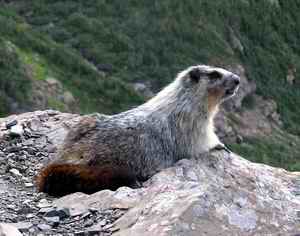
Hoary Marmot on Highline Trail in Glacier Park

The groundhog is the most solitary of the marmots, which are large ground squirrels that live in burrows and subsist on vegetative matter that can include grasses, berries, lichens, mosses, roots and flowers. The marmot appellation is more commonly applied to the species that live in mountainous areas, such as the Hoary Marmot (M. caligata) of the North American northwest and Siberia (right).  The Yellow-bellied Marmot (M. flaviventris) is also indigenous to the northwest and is noted for being the host for the tick that carries Rocky Mountain spotted fever. The Alpine Marmot (M. marmota) of Europe is thought by some historians to be the primary carrier of the Bubonic Plague, otherwise attributed to rats, which are also rodents. [8] It is not all bad. Groundhogs are the best non-human models for studying Hepatitis B since they suffer from a similar ailment and are also useful in studies of obesity, metabolism, and endocrinology. [9]

References:

1. Bento, H, publisher, Webster’s Third New International Dictionary of the English Language Unabridged, Encyclopedia Brittanica, Inc. Chicago, Illinois. 1971, p 2630

2. Wood, A. “Rodentia” Encyclopedia Brittanica, Macropedia William and Helen Benton Publishers, University of Chicago. 1974, Volume 15 pp 969-980.

3. Light, J. University of Michigan Museum of Zoology Animal Diversity Web. https://animaldiversity.org/accounts/Marmota_monax/

4. Kerwin, K. and Maslo, B. Ecology and Management of the Groundhog (Marmota monax)  Rutgers School of Environmental and Biological Sciences    https://njaes.rutgers.edu/e361/ 

5. Meier, P.  “Social organization of woodchucks (Marmota monax)”. Behavioral Ecology and Sociobiology Volume. 31 Number 6,  December 1, 1992, pp 393–400

6. Zervanos, S, “Professor sheds light on groundhog’s shadowy behavior” Penn State University Newsletter, January 2014

https://berks.psu.edu/story/2398/2014/01/23/professor-sheds-light-groundhogs-shadowy-behavior

7. Rothovius, A. “Ancient Celtic Calendar: Quarter Days and Cross-Quarter Days”            https://www.almanac.com/quarter-days-and-cross-quarter-days       

8. Whitaker, J. National Audubon Society Field Guide to North American Mammals, Alfred A. Knopf, New York, 1996, pp 438-445.

9. Kerwin and Maslo, op. cit.

Timber Rattlesnake

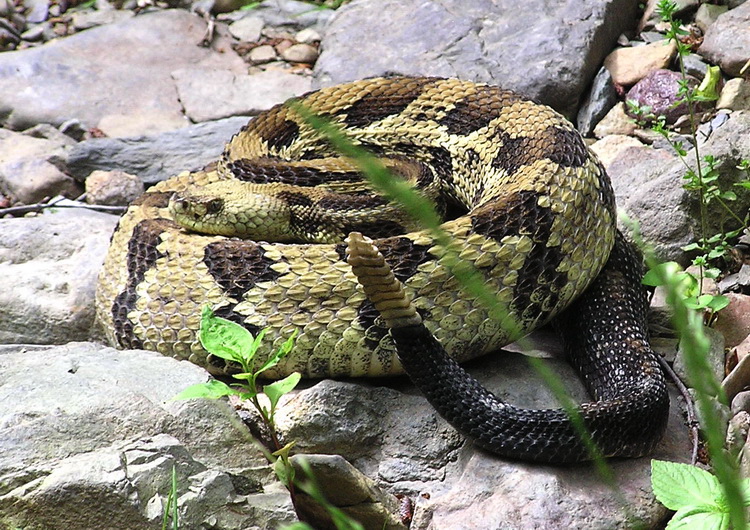
The coiled position is not necessarily for an imminent strike. It is mostly a defensive posture.

Common Name: Timber Rattlesnake, Canebrake Rattlesnake, Banded Rattlesnake, Black Rattlesnake, Eastern Rattlesnake – The name ‘timber’ describes the snake’s preferred habitat of rocky hills and forest uplands. The species is one of several that employ the rattle’s auditory warning.

Scientific Name: Crotalus horridus –   A crotalum is one of a pair of small cymbals that were used in antiquity to make a clicking noise; the castanet is a vestige. The generic name derived from it refers to the clicking noise made by the segments of the rattle. The species name horridus, in spite of its seeming etymological association with ‘horrid,’ has nothing to do with either the human perception of the snake or its venom. Horridus is Latin for ‘rough’ or ‘bristly’ and refers to the rough appearance of the scales due having a raised keel-like edge in marked contrast to the smooth skin of many snakes. [1]

As the only large and relatively common poisonous snake in the Appalachian Mountains, the timber rattlesnake evokes both existential fear and an abiding respect from all who cross its path. There is certainly a justification for these perceptions: its size ranges from 3 to 5 feet (the record is 6 feet); its venom is exuded in copious quantities through long and penetrating fangs; its potentially lethal strike is launched at lightning speed that is almost too fast for the eye and certainly too fast for the reflexes; and its bite can be deadly to humans if untreated. [2] However, the incidence of timber rattlesnake strikes on humans is vanishingly small, resulting in one or two fatalities per decade nationwide. The most common cause is handling snakes as a part of a religious ceremony [3]. The reason for the disparity between the potential for injury and the incidence of injury is that the timber rattlesnake is docile and will only strike if repeatedly provoked and threatened.

Ophidiophobia, the fear of snakes, is the most common type of herpetophobia, which applies to all reptiles. This fear is innate and almost certainly the result of evolution which may extend back in time to the earliest mammals, huddling in dark recesses to escape predatory dinosaurs. [4] Fear of snakes was reinforced in primates that evolved as tree dwellers where constricting snakes followed them in search of a meal. Recent research on macaque monkeys in Japan revealed that a region of the brain that is unique to primates called the pulvinar was especially sensitive to sighting snakes. Furthermore, monkeys that were raised in captivity without prior exposure to snakes displayed fear on first encounter. [5] Culturally, the serpent became a symbol of pernicious influence, chosen by the writer of Genesis as the tempter of Eve. Consumption of the fruit of the tree of knowledge led to expulsion from the Garden of Eden and God’s proclamation that the serpent would always crawl on its belly and eat dust. [6] Fear of snakes is embedded in the brain’s amygdala along with the fight or flight response that triggers panic action. However, cognition based on information stored in memory can override fear, a point enunciated by Roosevelt’s in his first inaugural address: “The only thing we have to fear is fear itself”.

The timber rattlesnake can be up to 6 feet long.

The timber rattlesnake is a consummate predator, well endowed with both the sensory tools and the physical agility to sustain its wholly carnivorous nutritional needs. As a pit viper, it has the namesake opening, or pit, just below the feliform vertical eye slit; the pit is the primary means of detecting prey.  The sensory organ in the pit is a heat receptor, capable of detecting a 1°C difference at a range of about one foot. This is both necessary and sufficient to detect and engage its warm-blooded prey during the preferred nocturnal forays when the cooler air accentuates the temperature differential. The strike is executed by the reflex-quick straightening of the lateral muscles to transition from either an S-shaped or coiled stance to full length extension; the fanged triangular head is projected about half of its body length. In other words, a 4-foot snake can strike at 2 feet. Contrary to popular folklore, the coiled position is not a strike prerequisite, though the snake will typically assume this posture in anticipation of a mammal’s traverse. Following the consummation of a successful strike, the olfactory sensors on the forked tongue are used to locate the head from the emanations of the victim’s mouth odors to initiate cephalic ingestion, a preference based on the anatomical connections of any attached appendages. Digestion is almost total; the gastric fluids in the rattlesnake dissolve everything including the bones, adding about 40 percent of the snake’s body weight annually. The prey consists almost entirely of small mammals. A 1939 survey in George Washington National Forest, which included the capture and evisceration of 141 timber rattlesnakes, found that the stomach content was 38% mice, 25% squirrels and chipmunks, 18% rabbits, 13% birds, and 5% shrews; one had eaten a bat. [7]

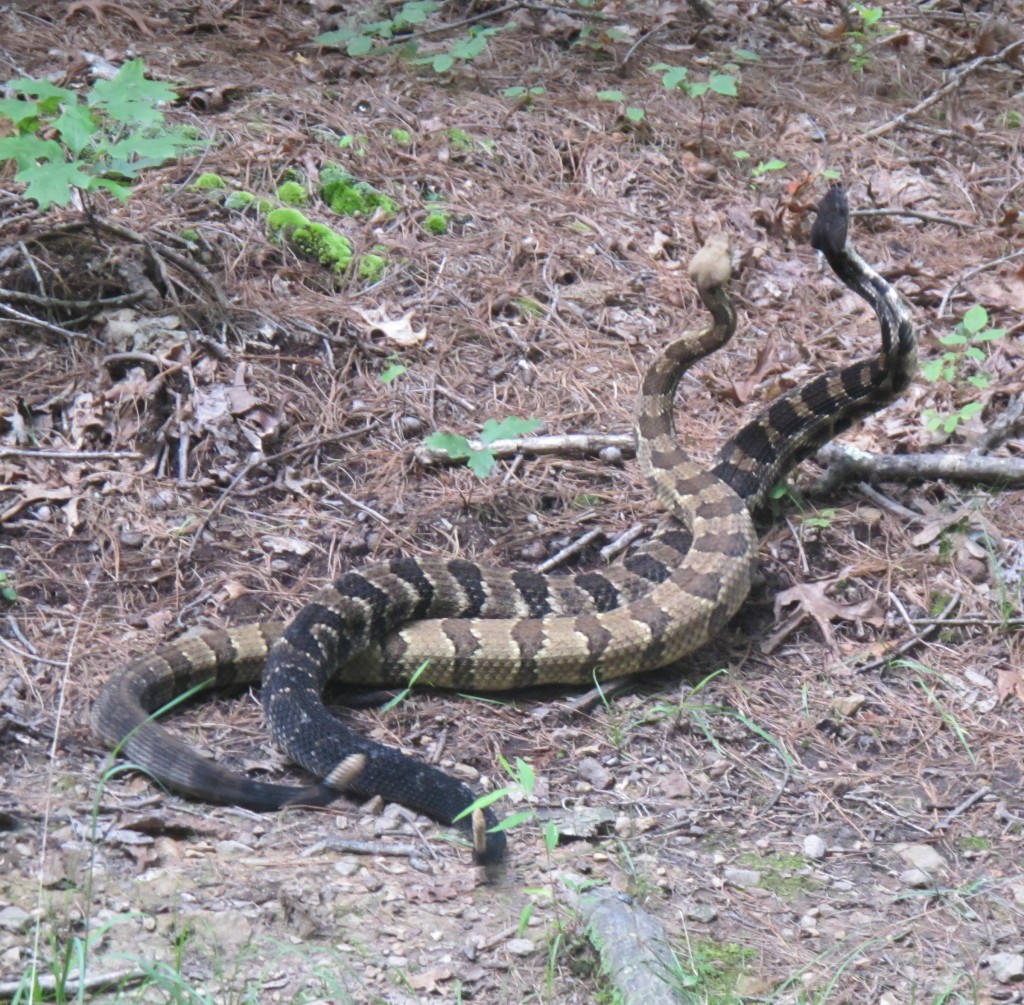
Two male snakes “wrestling” to win the heart of a nearby female.

Sex is vitally important for nearly every living thing on planet Earth. While perhaps historically overemphasized and of late deemphasized among humans, it is the essence of evolution. The random genetic mixing that is the result of the male-female “interaction” to form the gamete is how speciation (including our own) occurred. This is equally true for timber rattlesnakes, who take sex pretty seriously. While many snakes spend the cold winter months in a communal burrow called a hibernaculum, they range separately in search of prey for the remainder of the year. About every second year, females over the age of five years will release pheromones in the spring or early summer as they ply the leaf litter pathways of their home turf. The scent is strong enough to attract any and all males that happen by. The stage is then set for one of the most intriguing contests for the right to breed among all animals. Lacking arms, legs, and claws with only venomous fangs for teeth, what amounts to the timber rattlesnake version of an arm-wrestling contest ensues. Rising upward in intertwined arabesque coils, they try to push each other over. The prize goes to the one with the most stamina as the loser retreats dejected from the field. On first encountering the snakes depicted in the photograph, I was convinced that it was a male-female pre-coital ritual until learning of its even more surprising purpose from an expert. [8] Following insemination with one of the successful male’s two copulatory organs called hemipenes, the female gives birth to about a dozen young who are immediately on their own to face the world armed only with venom and slithering stealth. Most will not survive.

The signature rattle is a curiosity in its constitution and a conundrum from the standpoint of how it may have evolved; rattlesnakes are found only in the Western Hemisphere. The rattle starts as a bell-shaped horny protuberance called a button at the end of the tail. Every time the snake molts, which ranges from one to five times a year according to age and growth rate, the caudal end remains attached to form a segment of the rattle; the rattle grows in length by one segment for each molt. While it would theoretically be possible to count the number of times that the snake had shed its skin by counting the segments that constitute the rattle and thereby estimate the snake’s age, in actual practice this is fallacious. The rattle is loosely attached at each of the segments so that the assembly is subject to periodic breakage; it is not unusual to find a detached rattle segment on the trail. The conundrum associated with the rattle is that the rattlesnake employs both aposematism and crypsis simultaneously.  The purpose of the rattle is ostensibly to ward off an attack by a potential predator, an aposematic behavior. However, their primary predators – which include hawks, owls, coyotes and foxes – are apparently not put off by the warning of the rattle. King snakes, the preeminent rattlesnake predators, are immune to the toxins of the rattlesnake. The defensive behavior of rattlesnakes in the presence of a king snake does not involve the rattle in any way; the midsection is arched with the extremities held to the ground in an attempt to club the attacker. Experiments have revealed that the smell of the king snake triggers this response. [9]

Charles Darwin was also perplexed by the peculiar rattle of the American snakes. He wrote that “Having said thus much about snakes, I am tempted to add a few remarks on the means by which the rattle of the rattle-snake (sic) was probably developed. Various animals, including some lizards, either curl or vibrate their tails when excited. This is the case with many kinds of snakes.  Now if we suppose that the end of the tail of some ancient American species was enlarged, and was covered by a single large scale, this could hardly have been cast off at the successive molts. In this case it would have been permanently retained, and at each period of growth, as the snake grew larger, a new scale, larger than the last, would have been formed above it, and would likewise have been retained. The foundation for the development of a rattle would thus have been laid; and it would have been habitually used, if the species, like so many others, vibrated its tail whenever it was irritated. That the rattle has since been specially developed to serve as an efficient sound-producing instrument, there can hardly be a doubt; for even the vertebrae included within the extremity of the tail have been altered in shape and cohere. But there is no greater improbability in various structures, such as the rattle of the rattle-snake.” [10] The improbable evolution of the rattle had to have a provenance that was unique to the Americas; there are no rattle snakes anywhere else. There must therefore have been a predatory threat to the snakes that created the evolutionary rattle warning behavior. It was not human predation, as the land bridge of Beringia was not traversed to bring them from Eurasia until about 10,000 years ago. The only reasonable explanation must be that there was a snake predator among the extinct megafauna of the pre-human Tertiary Period and that the rattle developed as an effective tool to ward off that predator, presumably as an indication that the poisonous venom was, while perhaps not deadly, certainly unpleasant.

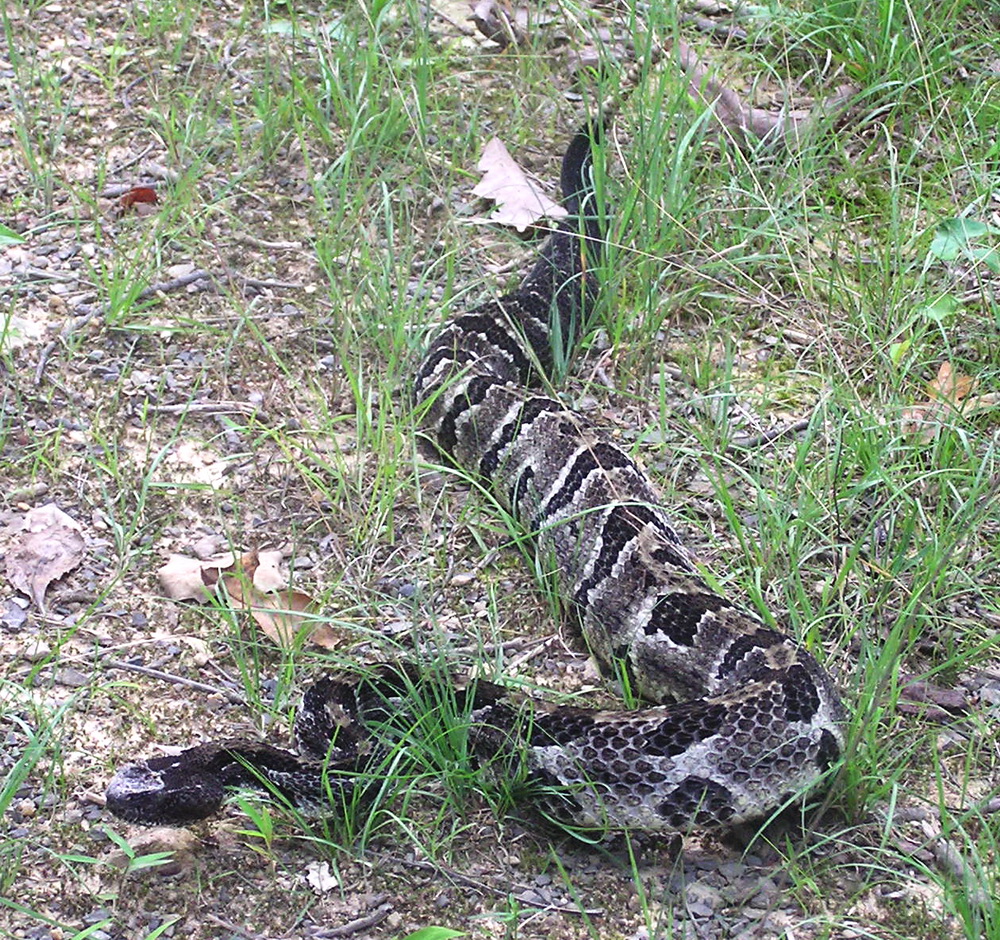
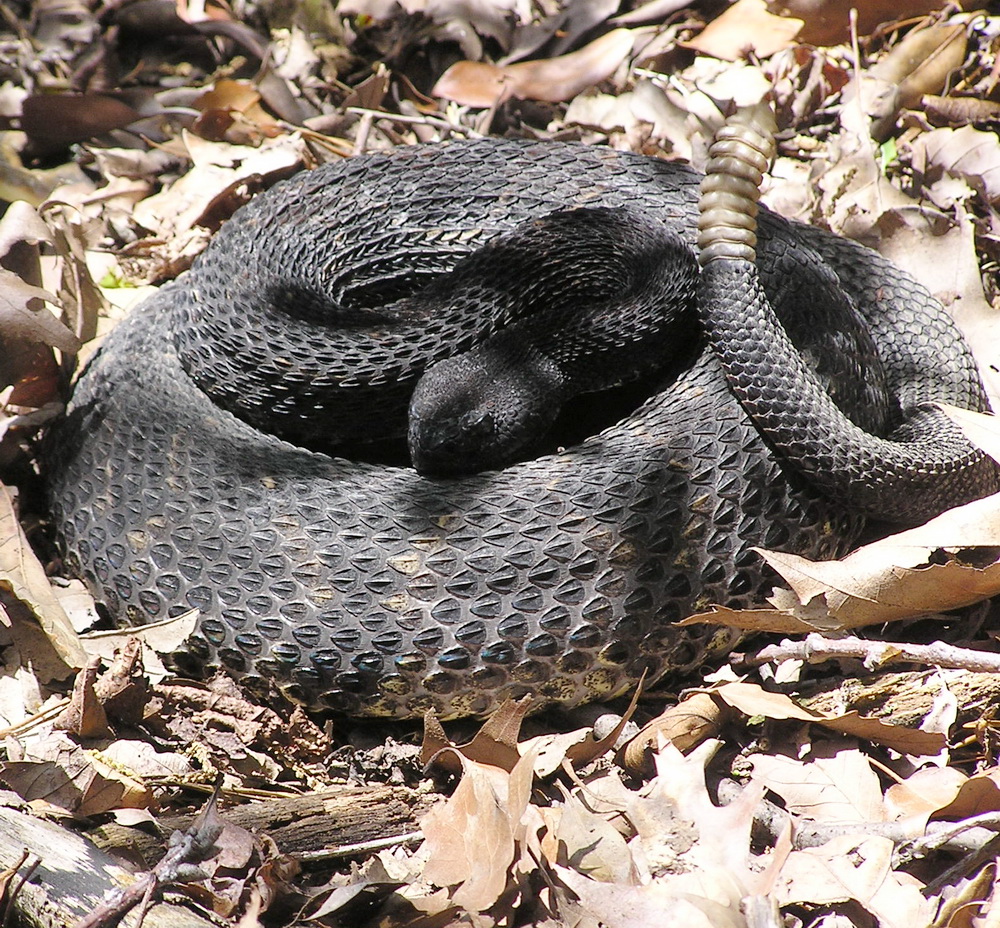
The black variant with keeled scales to prevent reflection and improve stealth.

Timber rattlesnakes, for the most part, are colored with earth tone banded markings to blend with the browns and blacks of the forest; this is the camouflage of crypsis which can be employed to deceive prey but is equally useful as concealment from predators. However, it should be noted that there are at least two different cryptic color variants: the first is the canebrake rattlesnake, which was once considered a separate species, – it is more brightly colored to match its cane field habitat; the second is a much darker, predominantly black variant which is an adaptation to promote nocturnal hunting. The stealth of coloration is enhanced by the snake’s keeled scales – each having a central ridge to interrupt the otherwise scintillating sheen of reflectance as is the case with snakes with smooth scales without keels (the etymology of the species name horridus). The overall effect is that the snake is well concealed against its prey, but also against its predators. The fundamental question remains―why did the rattle evolve?

The venom of the timber rattlesnake poses a different evolutionary question that has resulted in some hypotheses as to its origins. Darwin offered “It is admitted that the rattlesnake has a poison fang for its own defense, and for the destruction of its prey”  but offered no specifics as to its likely evolutionary origin. [11] Current thinking is that snakes evolved as large tree dwelling constrictors in the Miocene Epoch some 30 million years ago. When the climate changed so as to promote the grassy savannahs, the snakes became smaller and ground dwelling; some evolved a venomous chemistry for their saliva that promoted hunting and therefore their fitness to survive.  Snake venom evolved as a complex chemistry of protein synthesis; depending on the species of snake, it may have a predominant neurological effect or a predominant vascular effect. Viper venom is of the latter category; its most obvious and potentially fatal symptom is slowing of blood circulation due to coagulation. From the standpoint of its intended small mammal prey, the venom achieves its objective of immobilization attendant to consumption. While the venom can be and to some extent is used to attack predators, it is not very effective. The king snake is immune to rattlesnake venom and other predators are either unaffected or able to avoid its application. One firsthand account reports that a wild turkey held down a timber rattlesnake with both feet that was “repeatedly striking at the bird’s long, armored legs and folded-in wings, but to no avail.”  The turkey eventually killed the snake by cutting it through at the neck and then ate it. [12] Humans are another matter.

In any given year, approximately 45,000 people are reported to have been bitten by snakes in the United States; 6,000 of these are from venomous snakes and less than 10 results in fatalities – due almost entirely to the Eastern and Western variants of the Diamondback Rattlesnake. A larger number of domesticated animals are also bitten, though the numbers are of questionable merit as reporting is arbitrary and not required by law. The symptoms for snakebite vary according to the size of the snake and the amount of envenomation; about one fifth of poisonous snakebites are inflicted without the transfer of venom. This may be due to a dearth of venom after a recent kill or due to an intentional forbearance in order to preserve the venom for a future kill. The immediate symptoms of envenomation by a rattlesnake include intense pain at the point of penetration, edema and hemorrhaging. As the venom spreads through the body in the first few hours, the swelling and discoloration become more pronounced and systematic cardiovascular distress causes weakness, nausea and a diminution of the pulse to near imperceptibility. In the worst cases, a comatose state and death can result. In the twelve-to-twenty-four-hour period that follows, the affected limb suppurates and swells enormously, a condition that can also lead to cardiac arrest. In most cases, the symptoms abruptly cease after about three days as the body neutralizes the toxins. [13]

What to do in the case of a poisonous snakebite is and always has been a matter of some considerable conjecture.  Traditionally (the cowboy hero western paradigm), a tourniquet is established between the bite and the heart to arrest the flow of blood-borne toxin, the area of fang penetration is cut open to afford better access, and an oral suction is established to extract the venom. Snakebite kits were (and probably still are) sold that have a razor blade and a suction cup to carry out this procedure with some efficacy. According to current thinking, the cut and suck method does not work very well, though human trial data is probably nonexistent. But the logic against the cut and suck method is compelling. Applying a tourniquet concentrates the venom to a smaller area, where the damage will be more profound. It is actually better to allow the body to dilute it the venom to diminish its effects. The location of the penetration is not necessarily where the venom is concentrated, as the snake’s fangs are long and curved; cutting will likely only result in a greater potential for infection. Suction is not a good method to remove the viscous venom, as it will have immediately permeated the tissue to the extent that it cannot be extracted with a vacuum pressure.  The generally accepted procedure at present tends to a more plausible and less radical approach. After getting the victim clear of the immediate vicinity of the snake, the bite area should be cleaned with antiseptic wipes (if available), any jewelry or tight-fitting clothing should be removed to allow for swelling and the victim should then immediately be transported to a medical facility for the administration antivenom, which is now widely available. In the event that the snake bite has occurred in a remote area, the victim should be transported, either by being carried if possible or by slowly walking if not to the closest point of egress where medical attention can be obtained. [14] However, the only certain way to ensure survival from the bite of a timber rattlesnake is to not get bitten in the first place; if you see a timber rattlesnake on the trail, give it wide berth.

References:

1. Simpson, D. Cassell’s Latin Dictionary, Wiley Publishing, New York, 1968, pp 159,279.

2. Behler, J. and King, F. National Audubon Society Field Guide to North American Reptiles and Amphibians, Alfred A. Knopf, New York, 1979, pp 682-689

3. “Snake-handling W.Va. preacher dies after suffering bite during outdoor service”. The Washington Post. The Associated Press. May 31, 2012.

4. Öhman, A. and Mineka, S. “Fears, Phobias, and Preparedness: Toward an Evolved Module of Fear and Fear Learning” Psychological Review, 2001 Vol. 108 pp 483-522.

5. Hamilton, J. “Eeek, Snake! Your Brain has a Special Corner Just for Them” National Public Radio All Things Considered, 28 October 2013.

6. The Holy Bible, Revised Standard Edition, Thomas Nelson and Sons, Camden, New Jersey, 1952, p 3 Genesis 3:14.

7. Linzey, D and Clifford, M. Snakes of Virginia University of Virginia Press, Charlottesville, Virginia, 1981, p 134-138.

8. Demeter, B.  Herpetology expert for the Smithsonian Museum of Natural History. Private communication.

9. Linzey and Clifford, Op. cit.

10. Darwin, C. The Expression of the Emotions in Man and Animals. New York, D. Appleton & Company, 1872):  pp 102-103

11. Darwin, C. On the Origin of Species, Easton Press special edition reprint, Norwalk, Connecticut, 1976. p 166.

12. Furman, J. Timber Rattlesnakes in Vermont and New York, University Press of New England, Lebanon, New Hampshire, 2007.

13. Linzey and Clifford, pp 124-126

14. American Red Cross First Aid/CPR/AED Participants Manual pp 96-98. Available at https://www.redcross.org/content/dam/redcross/atg/PDFs/Take_a_Class/FA_CPR_AED_PM_sample_chapter.pdf