Ground Beetle

Ground beetles are apex predators of the teeming communities of invertebrates that inhabit the soil under logs, rocks, and leaf litter.

Common Name: Ground Beetle, Black Ground Beetle, Common Black Ground Beetle – Beetle, as insect, is of Old English origin as bitula from bitan a verb meaning “to bite”. This eventually devolved to bityl in Middle English, with the same pronunciation as the current spelling. Beetle can also mean a heavy wooden mallet in which case it is derived from the Old English bietel, which is derived from the verb “to beat”, as in Beatles [1]

Scientific Name: Pterostichus spp – The genus name is a combination of the Greek words pteron meaning “wing” and stichon meaning “divided by lines”. This refers to the pattern of parallel grooves that extend along the thicken wings called elytra (Greek meaning “sheath”) that cover and protect the dorsal side of beetles. The abbreviated spp signifies species pluralis and is used to refer to a genus and all of its species. There are 150 species of Pterostichus in North America. [2]

Potpourri: While it may seem that there could be nothing more mundane than a common black ground beetle, they are an important capstone species as apex predators of the detritus-covered soil that serves as the font for almost anything that grows. They are ubiquitous, also implied by mundane, which can mean worldly in addition to commonplace. Beetles comprise the order Coleoptera, the largest order in Kingdom Animalia, and make up about a third of all insects. There are some 300,000 species of beetles globally of which about ten percent are indigenous to North America. Coleoptera is a direct Latin translation of the Greek koleooptera meaning “sheathed wings”.  The most distinctive features of beetles are the hard, rigid anterior wings called elytra that are not used for flight but sheath and protect the underlying delicate membranous flight wings. [3] Darwin is frequently credited with the observation that “The Creator would appear as endowed with a passion for stars, on the one hand, and for beetles on the other, for the simple reason that there are nearly 300,000 species of beetle known, and perhaps more, as compared with somewhat less than 9,000 species of birds and a little over 10,000 species of mammals.” The quote is properly attributed to the Neo-Darwinist J. B. S. Haldane. [4]

Beetles are prolific in part because they have carved out unique and surprisingly innovative niches in the tangled web of diverse ecosystems. They come in many shapes and sizes to suit the specifics of their subsistence profile. Tiger beetles are close cousins of ground beetles that chase down their prey at high speed over open ground. Tumblebug scarabs roll up balls of dung as hatcheries and first home for their progeny. Lady bird beetles are divinely benign (called cows of the Virgin Mary in France) for devouring aphids that suck plant fluids and destroy crops. Japanese beetles are an invasive blight to any gardener seeking to specialize in roses or fruit trees. Carrion beetles finish off the carcasses of anything too small or unpalatable to larger predators. Blister beetles exude toxins to protect their eggs from being eaten, named for its effects on the flesh of humans. Ground beetles are the generalists of the lot, living quiet lives under logs, rocks, and wet leaves of the forest. Turn over any log and you are likely to find one or more.

Ground beetles comprise the family Carabidae and are therefore also known as carab beetles or simply carabids. The family name is from the Greek word karabos, originally a type of crab which probably carried over to ground beetles due to the similarity of the hardened outer shell, which serves as an armored shield. Both crab and beetle shells are held together with chitin, an organic polymer that is also the main structural component of most fungi and many algae. Chitin is underappreciated as an important biological compound relative to cellulose, the primary structural component of plant cell walls. Both are polysaccharides, comprised of a string of many (poly) sugars (saccharides). The saccharide of choice for both chitin and cellulose is glucose, better known for its role as animal blood sugar, joined end to end with oxygen bonds. About one half of all carbon that comprises earth’s organic life, sometimes referred to as the biosphere, is cellulose. This amounts to one exagram (10 with 18 zeroes) of carbon that is processed and degraded annually, the mass of a mid-sized asteroid. Chitin differs from cellulose in structure only in having one side-bonded acetyl molecule and is only slightly less abundant as a carbon repository. [5]

Ground beetles also proliferate due to physiological attributes that promote adaptability. The most obvious design feature is the hardened, protective carapace they develop as adults, a property of all beetles. Box turtles live long lives due to the coevolution of a similar structure that wards off all but the most determined assaults. Beetles are attacked by fewer predators than other insects. [6] But there is more to beetles than an “intelligent” design. A study of the response of ground beetles to a combination of abiotic factors such as temperature and humidity and biotic factors such as competition and parasites revealed three distinct advantages: (1) Ground beetles are eurytopic, meaning that they can withstand a wide range of environmental conditions; (2) Ground beetles are adventurous rovers that seek out and colonize new areas; (3) Ground beetles are omnivorous and will consume anything edible. [7] But, as Michael Pollan points out in The Omnivore’s Dilemma, there is some danger in food selections due to toxins and a balance of different nutrients is required. Ground beetle experiments have demonstrated an innate selectivity that accounts for overall nutrition. Beetles fed a pretreatment diet lacking protein subsequently sought out protein-rich foods. A similar behavior was found with lipid or fat nutrient levels.[8]

Of the 3,000 plus carabids in North America, most are voracious predators, both as larvae and as adults. The family Carabidae is in the suborder Adephaga, which literally means glutenous in Greek.  With strong jaws for crushing, they are surprisingly fast and agile. The larvae even have two claws at the end of each of their six legs called urogomfi (literally tail-tooth in Greek) for grasping writhing prey. Ground beetle consumption is prodigious. They can eat over twice their body weight in a single day. In the beetle version of the classic movie Cool Hand Luke in which Paul Newman eats 50 hard-boiled eggs, this would equate to fifty repetitions or 2,500 eggs.  This gustatory act, which would seem to violate the laws of physiology and maybe physics as well is empowered in part by the manner in which food is consumed. Ground beetles regurgitate digestive fluids that partially decompose the crushed carcass to facilitate ingestion as a partially liquified meal, a behavior they share with spiders. And what do they eat? Basically, anything organic that is smaller than they are, which typically consists mainly of invertebrates such as worms, mollusks, and the larvae of other insects (including caterpillars and cockroaches). [9]     

Because of their ubiquity and dining habits, ground beetles are generally good for agriculture, the science (and art) of farming. This is because they consume many things that are bad for agriculture. Crop pests are more frequently remediated with pesticides. Since chemicals that kill tend to be toxic to other living things that cohabit the targeted areas, applying them can also adversely affect the ground beetle population. As a case in point, a field experiment was conducted in Britain to measure the effects of pesticides applied to rid cabbage patches of the maggots (larvae) of the cabbage root fly. The surprising result was that the cabbage fields to which the chemical was applied suffered more maggot damage than those unsprayed as control. Investigation revealed that over 30 species of beetle ate the eggs and larvae of the offending predator and that the pesticide reduced their number to the extent that more root flies survived. [10] Two of the laws proposed by Barry Commoner, the father of ecology, are “Nature knows best,” and “Everything is connected to everything else.” Ground beetles are proof positive, and studies of cultivation practices have been conducted to determine best practices. These have shown that deep tillage depletes ground beetle population whereas reduced tillage with organic fertilization and green manuring promotes them. [11]

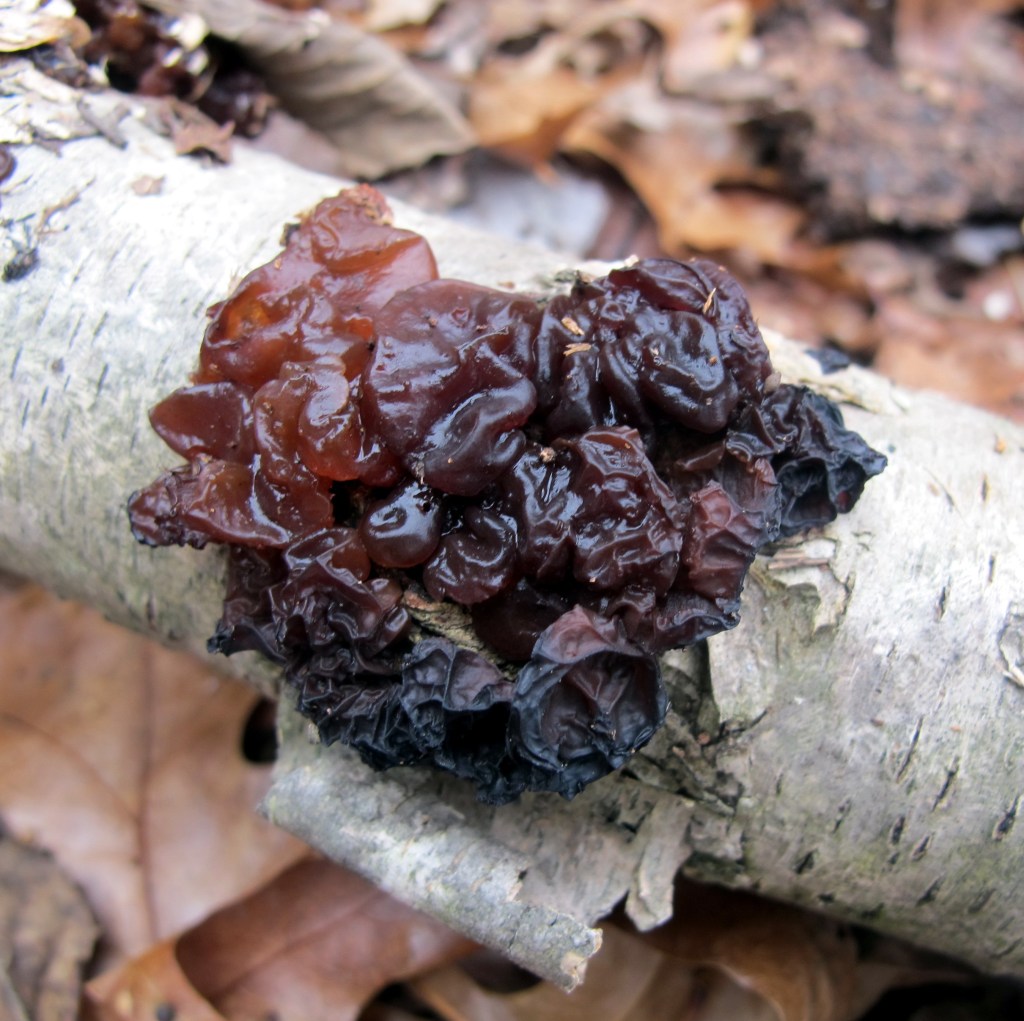
Most ground beetles look alike. In fact, the photograph above may very well be a bessbug, a similar beetle that lives in the same rotting log habitat but does not compete with ground beetles since bessbugs consume decaying wood and are not predatory. Even entomologists that specialize in beetles have trouble telling them apart.  The obscure French entomologist René Jeannel (1879 – 1965) spent most of his life studying the speciation of nearly identical cave beetles. After a career of detailed research, he discovered that one of the most reliable identification tools to distinguish one beetle from another was the shape of the male reproductive organ called aedeagus from the Greek aidoia meaning genitals. This practice has continued to the present; it is a relatively common practice for biologists to use both male and female genitalia as a key indicator of species.

Beetle aedeagi generally consist of a capsule-shaped organ from which an inflatable sac extends like a windsock. The extended “penis” is studded with bristles and spines, which must have some purpose as beetles are bisexual and intercourse is de rigueur for procreation. The current hypotheses is that male beetle semen contains chemicals that influence female sexual behavior and that this effect is enhanced by being directly transferred to the blood via spine puncture wounds. Recent experiments employed a micro laser gun to remove some male penal spines to form a test group to compare with a fully-spined control group. The end result was that females impregnated with the fully spined group produced more offspring. The presence of spines on the male sexual appendage is not as outlandish as it sounds. Spines (made of keratin, like hair) are also found on many primates and rodents and there is evidence based on residual DNA that they were they were at some point present on Homo sapiens. [12] So beetles do matter after all.

Footnote: No article on beetles would be complete without reference to the origins of the name of the inimitable Beatles. John, Paul, and George started out as the Quarry Men without a drummer in Liverpool in the late 1950’s. As they gradually developed the sound for which they are so well known today, they decided they needed a more memorable stage name. John is quoted as saying that he was “just thinking about what a good name the Crickets (Buddy Holly’s band) would be for an English group when the idea of beetles came into my head”. He is also credited with changing the spelling to Beatles “to make is look more like beat music, just as a joke”. The original spelling was Beatals.  After a short experiment with Long John and the Silver Beatals, presumably to sound more like Buddy Holly and the Crickets with a literary flourish, Beatals became simply Beatles and the rest is history. [13]

References:

1. Webster’s Third New International Dictionary of the English Language, Unabridged, Merriam Webster Co, Philippines, 1971, p 197.

2. Marshall, S. Insects. Their Natural History and Diversity, Firefly Books, Buffalo New York, 2006, pp 258-259, 287.

3. Milne, L. and M. The National Audubon Society Field Guide to Insects and Spiders, Alfred A. Knopf, New York, 1980, pp 533-621.

4. Haldane, J.B.S. What is life? The Layman’s View of Nature, L. Drummond, London. 1949, p 258 (Verified on paper by Stephen Goranson at Duke University)

5. Voet, D. and J. Biochemistry, John Wiley and Sons, New York, 1990, pp 255-257.

6. Gressitt, J. L. “Coleoptera” Encyclopedia Britannica Micropedia, Volume 4 pp 828-837 William and Helen Benton, publisher, University of Chicago. 1974.

7. Thiele, H. “Carabid Beetles in Their Environments. A Study on Habitat Selection by Adaptations in Physiology and Behavior”. Science August 1978, Volume 201 Issue 4357.

8. Mayntz, D. et al “Nutrient-Specific Foraging in Invertebrate Predators” Science 7 January 2005, Volume 307 Number 5706

9. Goncalves, M. “Relationship Between Time and Beetles in Mata de Cocal” Review of Brazilian Meteorology, Volume 32, Number 4, October 2017.  https://www.scielo.br/j/rbmet/a/kJPLKtB3gLTdfTcMB9vM4Vd/?lang=pt

10. Nardi, J. Life in the Soil, University of Chicago Press, Chicago, Illinois, 2007, pp 136-138

11. Kromp, B. “Carabid beetles in sustainable agriculture: a review on pest control efficacy, cultivation impacts and enhancement” Agriculture, Ecosystems, and Environment, Volume 74, Issues 1-3, June 1999 pp 187-228 https://www.sciencedirect.com/science/article/abs/pii/S0167880999000377?via%3Dihub   

12. Schilthuizen, M. Nature’s Nether Regions, What the Sex Lives of Bugs, Birds, and Beasts Tell Us About Evolution, Biodiversity, and Ourselves. Penguin House, New York, 2014, pp 28-31, and pp 150-157.

13. Spitz, B. The Beatles, Little, Brown and Company, New York, 2005. pp 175, 181, 196.

Corn Snake

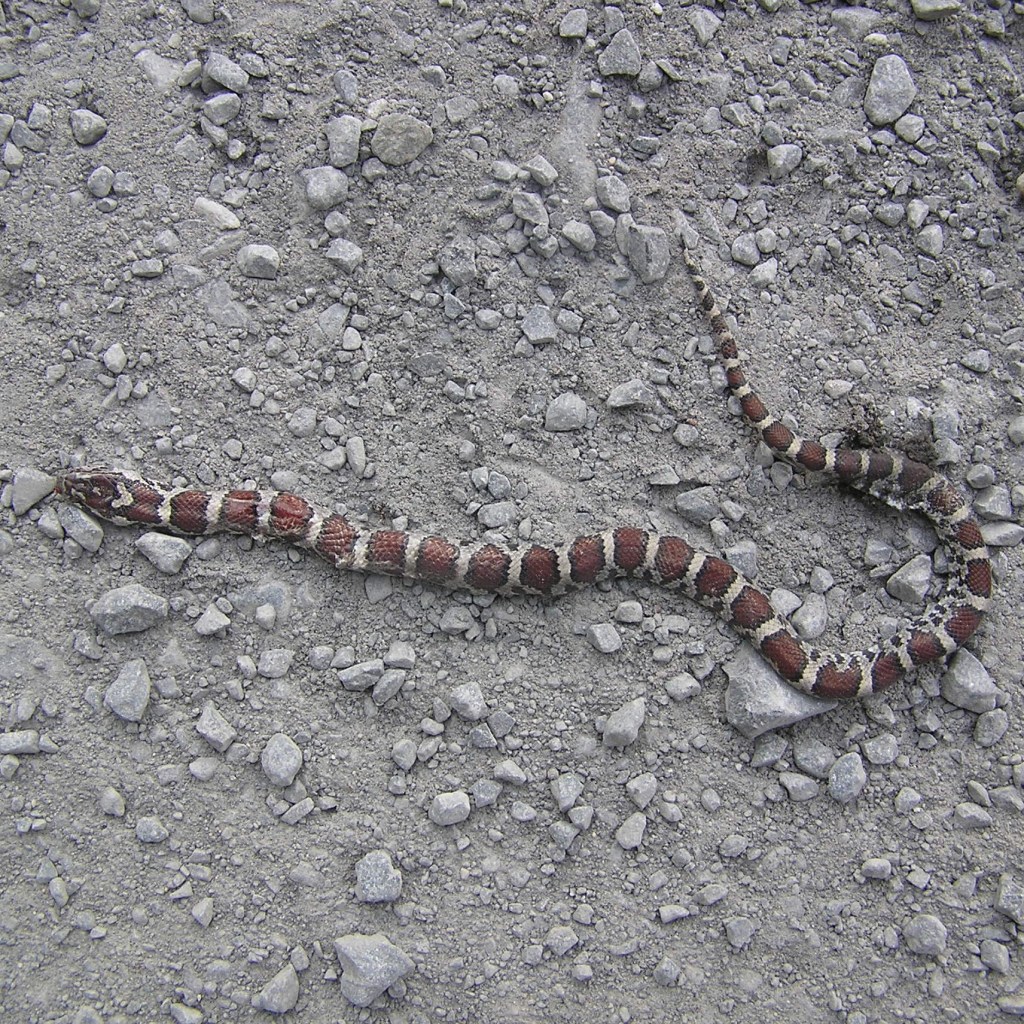
Corn Snakes are well camouflaged in the brown and tan leaf litter of forest soil.

Common Name: Corn Snake, Red rat snake, Red corn snake, Pine snake, Chicken snake – Corn may refer to habitat, as they frequent corn fields in search of rodents. Corn may also refer to appearance, as the alternating light and dark scales on the bottom, belly, or ventral side, resemble Indian corn with its similar contrast of light and dark kernels.

Scientific Name: Pantherophis guttata – The generic name means panther-snake (ophis) in Greek. The etymology of panther is not well established. Panthera is the genus of large cats (tigers, lions, leopards, and jaguars) that probably is from the Sanskrit word for tiger, pundarika. Panther widely applied to large cats that have a black coat for night stealth (i.e. black panther).[1] Its use in this case is likely due to the more common and prevalent black rat snake, also a member of the genus. The Latin word guttatim means “drop by drop” and may suggest a dappled pattern. [2] Formerly known as Elaphe guttata, the genus Elaphe has been reorganized in recent years due to DNA inconsistency but is still in wide usage in field guides. [3] Elaphe is Greek for deerskin, which may be due to tan color similarities.

Potpourri: Corn snakes are closely related to the more common black rat snakes and share many behavioral characteristics, especially a preference for rodents as repast. The alternative common name red rat snake is a measure of close association. Geographically, corn snakes inhabit only the warmer, southern regions of eastern North America, suggesting a preference for agricultural meadowlands where corn is common whereas their black cousins venture northward into New England. As with most snakes, the color and arrangement of scales are the main distinguishing feature. Corn snakes, though quite variable in hue with angular blotches that can range from red to brown to dark gray, are nonetheless distinct from the uniformly black scales of the black rat snake. [4] Since every aspect of an animals appearance and behavior must have arisen according to environmental factors as a matter of survival as a species, there must be a causal explanation for the color scheme.

Snakes comprise a physiologically consistent group of the class Reptilia in the suborder appropriately named Serpentes. Three lineages of reptiles emerged from the Permian extinction about 250 million years ago, when approximately 90 percent of all species were wiped out, most likely due to massive lava outflows incident to the formation of the supercontinent Pangaea. Two lineages survived through the succeeding Mesozoic era; the dominant dinosaurs of which birds are the only vestige; and the scaled reptiles which gave rise to lizards and then snakes. While the current, Cenozoic (post Pangaea) era is widely known as the age of mammals, it could equally be considered the age of birds, if numbers are more important, or the age of snakes if rapid adaptive radiation was the key criterion.  More than 90 percent of all reptiles living today are lizards or snakes, of which snakes are the vast majority with 2700 species on all continents except Antarctica. [5] Recent phylogenetic research has revealed through DNA associations that the ancestral rat snake arose in tropical Asia in the Eocene Epoch and crossed over the Beringian Land Bridge to North America in the Miocene about 25 million years ago, following the rodents that became their defining source of sustenance.[6]

The adaptive radiation of snakes to occupy new habitat niches precipitated changes in diet, behavior, and appearance as a matter of evolutionary mutations for survival. It is clear from the fossil record and from the presence of vestigial pelvic girdle and hind limb bones in some snakes that they evolved from four legged lizards. Legless reptiles are testimony to the irrefutable progression of Darwin’s evolution. Amphibians that first emerged from the oceans with fins needed legs for locomotion and scaly skin to maintain body fluids to continue as terrestrial reptiles. The success of snakes was necessarily advanced by the loss of quadrupedal capability. The most compelling rationale for this extreme retrogression is rodent burrows. Legs and feet get in the way when slithering down a rabbit hole to access its inhabitants. There was never going to be a case where a cold-blooded snake would chase down a warm-blooded mouse in the open, regardless of the ultimate outcome of Aesop’s tortoise and hare. Cornering rodents in their dens was the impetus and proto snakes with smaller legs were successful in survival, passing their genes down to their eventually legless progeny.[7]

Corn Snakes are often confused with milk snakes

The color scheme of corn rat snakes is also with purpose. For some animals, notably birds, colors are in many cases a matter of mate choice. This cannot be the case with reptiles with no visible distinction between the sexes save perhaps size. What is important is blending into the surrounding environment. If an animal is subject to predation, and most are, then being difficult to find is a survival asset. Snakes are subject to predation by carnivores like foxes, bobcats, and raccoons in addition to birds of prey like hawks. However, an equal and opposite reason for rat snake camouflage is stealth for predation. The black rat snake stands out, literally. Among the greens and dappled hues of the forest floor, jet black is hardly stealthy. Arguably, black confers stealth at night and this surely plays a role as black snakes hunt at night in summer and frequently climb trees in search of songbirds and squirrels. Corn snakes not so much, mostly lurking in underbrush like cornstalks in search of prey. While a limited data point, two corn snakes were eviscerated in Virginia in 1939 to reveal the remains of a field mouse, a skink lizard, and a wood-boring beetle. [8] The variable colors of corn snakes in darker blotches on a lighter background are not unlike those of other snakes like copperheads and timber rattlesnakes in addition to the nearly identical milk snake. It must be concluded that snake color pattern is not all that important as a survival attribute and color variability is therefore not constrained by it.

Detecting, localizing, overpowering, and killing prey for food is a matter of snake survival.  Sensory perception is therefore central to snake hunting success. Vision, hearing, and smell all play a role. Taste does not play a role, as snakes need no sensors to sample food swallowed whole and headfirst. The unblinking, lidless eyes of snakes are sinister and effective. Short range vision of corn rat snakes is good even under the low light conditions of darkness. Since snakes lack mammalian middle ears, connective eustachian tubes, and eardrums (tympana), they are relatively insensitive to airborne noise. However, sound induced ground vibrations are detected by conduction through the solid bones of the skeleton, allowing for initial detection of activity but lacking any directional specificity. Smell is the most important corn rat snake sense [9], enhanced by employing the tongue as an air sampling appendage. The twisting, forked tongue is an equally sinister snake attribute. Chemical molecules in the air that convey smell are sampled by the flickering tongue and deposited into two small ducts in the top of the mouth cavity. This repository is the vomeronasal, or Jacobson’s organ, which sends scent data to the brain for interpretation as food, foe, or friendly mate.[10] When a corn rat snake is encountered on the trail, it will first feel footsteps, localize with beady-eyed vision, and conduct a full evaluation with smells sampled lingually. It will respond according to instincts tempered by experience.

A corn rat snake’s reaction to its encounters with other animals depends on how its brain interprets what its sensory suite detects. According to the analogous mammalian amygdala, sometimes referred to as the reptilian brain, reactions include fight, flight, fear, and, if you happen to be a corn snake of the opposite gender, sex. The mnemonic used by neuroscientist students for these functions is “the 4 F’s” of the amygdala, substituting carnal knowledge fornication. If a threat is perceived and an escape route is open, corn snakes take flight and slither to safety. Laboratory testing has demonstrated that corn snakes are adept at finding an escape route based on spatial awareness and learning when confronted with multiple options. Fleeing to leaf litter bowers is a practiced strategy. [11] If cornered, corn rat snakes will fight, taking up a defensive, coiled, readiness to strike posture, bobbing and weaving to confront the threat. Corn rat snakes also vigorously shake their tails like rattlesnakes when threatened, lacking only the noise-making rattle. While the reason for this evolutionary trait is unknown, it is speculated that it is defensive, presenting a confusing tableau of a double-ended body to a potential predator. It is a relatively common trait among members of the Colubrid snake family.  However, if fear is not a factor according to the sensory profile and there are prospects for a meal or a mate, escape changes to engage.

The adaptations necessary and sufficient for snakes, obligate carnivores, to subdue their quarry without the benefit of arms and legs to hold and pummel or teeth to impale and tear is testimony to the consequential driving force of evolution.  Poisonous snakes engage in chemical warfare, injecting toxins with fangs to immobilize prey. The constrictors, like corn rat snakes, employ brute force. The widespread use of constriction among snakes suggests that it probably was an early adaptation, arising in the Paleocene Epoch, contributing to the rapid radiation of constrictor snakes to new habits. [12] An evaluation of prey handling complexity comparing constrictors with jaw holding and body pinning practiced by other species revealed the simplicity and effectiveness of the former. It is surmised that the constriction method evolved to subdue “vigorously struggling prey” which may have been necessitated to successfully catch and kill rodents. Constrictors mastered the physics of muscular compression. [13]

And then there is the matter of mating, which begins with sensory perception of a potential partner of the same species. Since snakes are solitary and mostly hidden from view over wide-ranging habitats, the importance of pheromones in mate localization cannot be understated. The search for a mate begins in early spring, and, if successful, results in the deposition by the female of up to 30 eggs in a secluded location chosen with enough heat (82 °F is ideal) and humidity to promote incubation. As with almost all reptiles, there is no parental support and protection. The eggs must remain undiscovered by predators for over 60 days when they hatch out as foot-long juveniles. In the three years that it takes to reach full size; many are lost to the gene pool due mostly to either becoming prey or due to the inability to find prey. [14] For corn rat snake population stability, one male and one female must, on average, survive, meet, and mate from each clutch of eggs. In the native habitat in the southeastern United States, corn rat snakes hold their own, in spite of being killed by humans, many of whom wrongfully fear all snakes. For those who like snakes, corn rat snakes make good pets, as they are docile and do not object to being handled. This has led to corn rat snakes becoming an invasive species in many of the islands of the Caribbean as they have been imported and escaped to a predator free habitat. [15]

References:

1. Webster’s Third New International Dictionary of the English Language, Unabridged, G. C. Merriam Company, Chicago, 1971, p 1632

2. Simpson, D. Cassell’s Latin Dictionary, Wiley Publishing, New York, 1968, p 211.

3. Crother, B.  “Scientific and standard English names of amphibians and reptiles of North America north of Mexico, with comments regarding confidence in our understanding” Society for the Study of Amphibians and Reptiles Herpetological Circular. 2012 Volume 39: pp 1–68

4. Behler, J. and King, F. National Audubon Society Field Guide to North American Reptiles and Amphibians, Alfred A Knopf, New York, 1979, pp 604-607

5. Starr, C. and Taggart, R. Biology 5th Edition, Wadsworth Publishing Company, Belmont, California, 1989, pp 580-585.

6. Burbrink F. and Lawson, R “How and when did Old World rat snakes disperse into the New World?”. Molecular Phylogenetics and Evolution. 27 September 2006 Volume 43 Number 1pp 173–189.

7. Title, O. et al “The macroevolutionary singularity of snakes” Science, 22 February 2024, Volume 383 Number 6685. pp 918-923.

8. Linzey, D. and Clifford, M. Snakes of Virginia, University of Virginia Press, Charlottesville, Virginia, 1981, pp 96-102

9. Saviola, A et al “Chemosensory responses to chemical and visual stimuli in five species of colubrid snakes”. Acta Herpetologica. 19 April 2012 Volume 7 Number 1 pp 91–103

10. Dowling, H. “Reptilia” Encyclopedia Brittanica, Macropedia, University of Chicago, Illinois, 1974. Volume 15 pp 725-739.

11. Holtzman, D. et al “Spatial learning of an escape task by young corn snakes, Elaphe guttata guttata“. Animal Behavior. January 1999 Volume 57 Number 1 pp 51–60.

12. Greene, H. and Burghardt, G.  “Behavior and Phylogeny: Constriction in Ancient and Modern Snakes”, Science 7 April 1978. Volume 200 Number 4337.

13. Saviola, A. and Bealor, M. “Behavioral complexity and prey-handling ability in snakes: gauging the benefits of constriction”. Behavior. 30 May 2007 Volume 144 Number 8 pp 907–929.

14. Smithsonian Zoo. Eastern corn snake | Smithsonian’s National Zoo and Conservation Biology Institute   

15. Commonwealth Agricultural Bureaux International. (CABI) database https://www.cabidigitallibrary.org/doi/10.1079/cabicompendium.84655

Mallard Duck

The brightly colored male drake is chosen by the camouflaged hen as her mate.

Common Name: Mallard – From the Old French mallart and Latin mallardus, a combination form derived from the word male. The etymology is not well defined, but it is likely that the distinctive plumage of the male duck is the basis for distinguishing the species with a name derived from “male of the wild duck.” In France, the mallard is known as le canard colvert, roughly translated as duck with the green feathers on the side of the head. Duck is derived from Middle Dutch as düken, to dive underwater. Mallard ducks duck but don’t dive.

Scientific Name: Anas platyrhynchos – The generic name is the Latin word for duck which is ascribed to the Sanskrit ati meaning aquatic bird.  The species name is from the Greek platy meaning flat and rhynchos meaning snout, bill, or beak. Taken together the scientific name literally means flat-billed duck. [1]

Potpourri: The contrast between male drake and female hen mallard, known as sexual dimorphism, is among the most extreme of all vertebrates, affording an unmistakable visual key for identification. Carl von Linné originally listed the male and female as different species in the Linnean taxonomy classification system, believing that they could not possibly be the same.  The male drake’s iridescent dark green head, white neck ring, chestnut brown breast, brownish gray back and white flanks stand in stark contrast to the female’s maculation of buff, ecru, and dark brown. Mallards are prolific, having spread across the northern hemisphere as a global species. The North American contingent of mallards can even be considered a single population. [2] The evident evolutionary success of mallards, even though they are preyed on by human duck hunters, is due to several factors. Drakes are aggressive sexual predators, even though those that succeed settle on a single partner. Hens are selective in choosing mates that meet their criteria, which must impart qualities in their combined offspring that advance favorable adaptability and survival traits. Mallards are masters of ponds and lakes, which provide a measure of protection from terrestrial predators, and furnish an ample supply of water plants, their primary food source. Mallards are a duck dynasty.

Mallards are members of the Anatidae family, named for its characteristic “type” species, the duck genus Anas. It is comprised of ducks, geese, and swans, consisting of 49 genera and 158 species that range across the globe on every continent except Antarctica, a cosmopolitan distribution. Anatids are adapted for aquatic habitats, employing open water as a means of transport. For the most part, they have webbed feet for paddling locomotion and large, round bodies due to the physics of floatation. [3] The buoyancy that provides an upward force to float a duck is equal (and opposite) to the gravitational weight of water displaced by its semi-submerged body. This is important for ship hull construction and duck anatomy, both of which are elongated, rounded cylinders. Waterfowl are also unusual in that they are one of only a few types of birds (3 percent) that have a penis, necessary to ensure successful sperm transfer in an aqueous environment. It is a given that the ancestral bird cum dinosaur had a penis as it was reptilian in origin. The reduction and eventual elimination of the male sexual appendage in most birds is attributed to social behavior. Mating is based on mutual choice with the female usually having the greater say in the matter; many partnerships are lifelong. Since penetration is not forced, the act of intercourse amounts to what is euphemistically called the cloacal kiss. The cloaca (Latin for sewer) is the channel that serves as the passage for excrement and, in some cases like most birds, reproduction. Geese and swans follow the normal bird arrangement of mutual, lifelong partnerships in spite of the retention of a shortened penis for aquatic penetration. In Greek Mythology, Zeus took the form of a swan to impregnate Leda, who gave birth to Helen of Troy. Mallard sex is altogether different.

The iridescent green head of the drake is limned by a white neck ring.

The sexual overdrive of mallards in particular and ducks in general can take extreme forms. In June 1995 a flying mallard collided with the glass front wall of the Rotterdam Natural History Museum in Holland and fell, limp and thoroughly dead at its base. A curator from the museum went to investigate and found not only the dead duck but also a live mallard actively engaged in intercourse that persisted for over an hour. The paper written on the subject, entitled “The First Case of Homosexual Necrophilia in the Mallard” won Harvard’s Ig Nobel prize in biology in 2003. The museum continues to celebrate “dead duck day”. While this particular observation may be an aberration, it is similar in sexuality if not in degree to other mallard drake behaviors such as gang rape. Groups of males are wont to chase after single hen females with repeated sexual assaults that sometimes results in fatal injuries. The cuckold whose mated hen was the object of the chase usually responds with aggressive assault to try to dissuade the rapists, manifesting male fitness evolution. [4] In the absence of available females, drakes have been observed attempting copulation with other (live) males. The evolution of mallard drake’s super libido is matched by the physical size and complexity of the penis. While the record goes to the Argentine lake duck with a 17-inch penis, the mallard is amply endowed with a spined member one third as long. It operates like a coiled party blowout noisemaker, unrolling and everting with lymphatic system pressure as it extends into the vagina of a willing or unwilling hen. In less than a second, it coils counterclockwise inward and upward as a flattened tape with a groove (the sulcus) on one side serving as sperm conduit.[5] However, male sexual dominance is not the whole duck story.

The only notable color of the hen mallard is the blue speculum on the trailing edge of the wing.

Female mallards exercise mate choice, just like most of their avian counterparts. It is not, however, a simple yes or no. The complex nature of duck sexual behavior became a matter of scientific interest early in the century. The explosive, almost instantaneous erection of the penis of mallards and several other ducks must have had some evolutionary origin and was a matter of some interest to the biological sciences. The first area of investigation led to the study of the vaginal structure of duck hens. A series of dissections of different species revealed considerable anatomical differences. While most ducks had simple, tubular passages as would be expected, mallard hens had convoluted structures with a number of side openings that led to dead ends. And, most surprisingly, the vagina was coiled clockwise, in the opposite direction of the counterclockwise drake penis. This led to the hypothesis that species of female ducks partnered males with intimidating sexuality had evolved a coping mechanism, coital sidetracking. To test the hypothesis, an ingenious experiment was devised in which male ducks were encouraged (using a hen as stimulation) to ejaculate into purpose-built glass vesicles that simulated either a corkscrew vagina with cul-de-sac outlets or a simple tubular design with no twists or turns. The data showed that the ducks using the straight, normal tubes were successful in full erections 80 percent of the time while those using the actual hen twisted coil arrangement were only 20 percent successful. This was supported by DNA testing of drakes, hens, and the resultant chicks showing that even though 40 percent of all mallard copulations are forced, no more than 5 percent of the chicks genetically matched to rogue drakes. In other words, the female was able to employ mate selection 95 percent of the time. [6

Scientific research conducted to unravel the complex sexuality of ducks contributes to a better understanding of birds in general and of biology more broadly. Mallards are particularly important for a number of reasons. One is population size. It is estimated that the 23 million individual mallards that make up the global population range over about 10 million square kilometers (one tenth) of the earth’s land surface. In some areas like the Chesapeake Bay, mallards are considered invasive. [7] A second is sexuality, for, in addition to assaulting hens and even dead males, mallard drakes are insatiable paramours. Introduced mallards interbreed with native duck populations to the extent that hybridization threatens to extirpate other duck species; it is estimated that 95 percent of New Zealand’s native gray ducks have been hybridized and that the Hawaiian duck has become completely hybridized on the island of Oahu. [8] Last but not least is human health and nutrition.  Ducks are the principal reservoir on Influenza A viruses, including the H5N1 variant, which, as recently as 2013, resulted in outbreaks in poultry in over 60 countries resulting in 622 human infections. [9] However, studying duck sex, when taken out of context, can sound ludicrous, not unlike many other scientific studies. As part of the political news cycle, the study was dubiously called Duckpenisgate and newscasters asked whether the public was aware that $385,000 of their tax dollars had been spent to study duck dicks. The war on science was just getting started.

Mallard behavior is hard-wired by genetic heritage, focused on reproduction. The annual cycle starts with the initiation of pair bonding in late fall that continues through to spring, migrating in most cases to breeding grounds for the mating season. [10] The sexual hormones ramp up from minimal during winter to what can only be described as overdrive as gonads grow thousands of times larger in only a few months.  Problems arise because the ratio of drakes to hens is skewed with the former outnumbering the latter, as is the case with most duck species. The problem is exacerbated by the concentration of ducks in their habitat. Ponds are limited in size and have an abundant food supply of aquatic plants. Since it would not be possible for any drake-hen couple to defend a pond, ducks are not territorial. [6] The combination of too many males in a restricted area with a large number of paired couples committed to copulation and reproduction is a recipe for mayhem. Males struggle to defend their mates from the testosterone driven bachelor drakes in search of fulfillment. After successful mating, controlled in part by hen selectivity, the favored drake continues to guard his mate during selection of a ground nest near the water and the laying of 9-13 eggs. The burden of sitting on the nest for a month and leading the hatched chicks to water rests entirely with the hen. The drake departs, molts and regrows flight feathers needed for the reverse migration to find a new mate for the next season. [11]

The love it and leave it behavior of male ducks is blighted according to human morality. Anthropomorphism, however, has no place in nature other than amongst us. The mallard drake dynasty is a product of time, space, and survival, as is the evolution of every other living thing. The evolution of the mallard is fairly recent, the genus Anas is thought to have originated sometime in the late Pliocene or early Pleistocene epoch, about two million years ago, probably in Siberia.[12] During the relatively brief geologic time scale period since then, the combination of aggressive males preying on females and the selectivity of females in their choice of males (presumably preferring those with coruscating green heads) has been a resounding success. The loss of hens sitting on ground nests to predators like foxes contributes to their numerical imbalance. The high demands on chick survival according to the same constraints would also result in survival of the strongest, usually male, of the species. There are therefore more males for the females to choose from to ensure that those with the “right stuff” get the reward of progeny. Drakes are aggressive because they have to be. Disney’s irascible Donald Duck character as foil to the benign Mickey Mouse is well cast.

References:

1.  Webster’s Third New International Dictionary of the English Language, Unabridged Meriam Webster Company, New York, 1971, pp 78, 698, 1267

2. Starr, C. and Taggart, R. Biology, The Unity and Diversity of Life, Fifth Edition, Wadsworth Publishing Company, Belmont, California, 1989, p 539, 543.

3. Alderfer, J. ed Complete Birds of North America, National Geographic Society, Washington, DC, 2006, pp 2-42.

4. Barash, D. “Sociobiology of Rape in Mallards (Anas platyrhynchos): Responses of the Mated Male” Science, Volume 197 Issue 4305, 19 August 1977, pp 788-789

5. Schilthuizen, M. Nature’s Nether Regions, Penguin Group, New York, 2014, pp 125-129.

6. Prum. R. The Evolution of Beauty, Doubleday, New York, 2017, pp 149-181. The relevant chapter is entitled “Make Way for Duck Sex”

7. Smithsonian Institution Invasive Species https://invasions.si.edu/nemesis/chesreport/species_summary/anas%20platyrhynchos

8. Levin D. Hybridization and Extinction” American Scientist, Volume 90 Number 3, May-Jun 2002, p. 254.

9. Huang, Y. et al. (2013). “The duck genome and transcriptome provide insight into an avian influenza virus reservoir species”. Nature Genetics. April 29, 2014, Volume 45 Number 7 pp 776–783.

10. Cornell University Ornithology Laboratory https://www.allaboutbirds.org/guide/Mallard/id

11. Rogers, D.  University of Michigan Ann Arbor Michigan, “ Anas platyrhynchoshttps://animaldiversity.org/accounts/Anas_platyrhynchos/

12. Johnsgard, P. “Anas platyrhynchos Linnaeus – Evolutionary relationships among the North American mallards”. The Auk.1961 Volume 78 Issue 1 pp 3–43

Destroying Angel – Amanita bisporigera

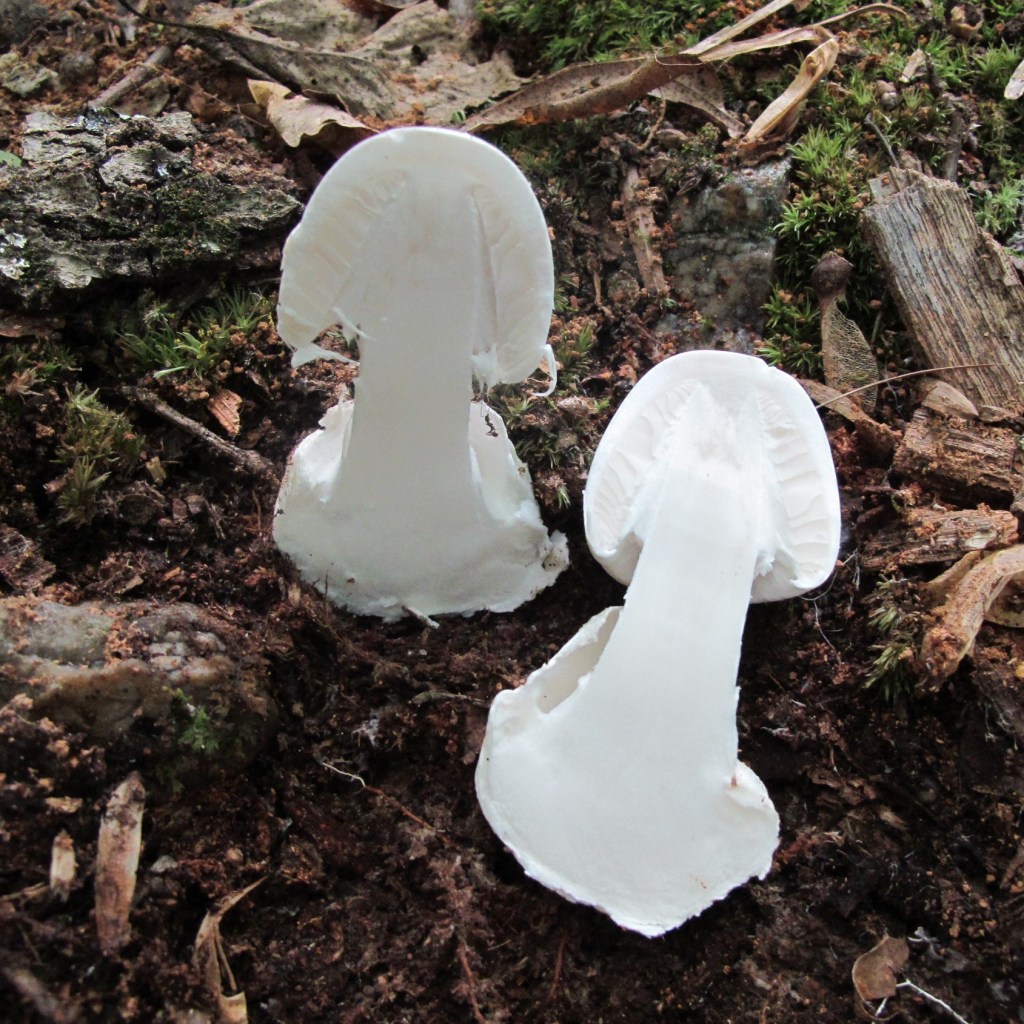
The key features of the Destroying Angel are the cup-like volva at the base of the stem, the stark whiteness of the stem, cap, and gills, and the partial veil hanging from the top of the stem just below the gills under the cap.

Common Name: Destroying Angel, Fool’s Mushroom, Death Angel, White Death Cap – The virginal whiteness of all parts of the mushroom are aptly described as angelic – beautiful, good, and innocent. The fact that it is anything but is conveyed by the addition of destroying with death-dealing toxicity.

Scientific Name: Amanita bisporigera – The generic name is taken directly from the Greek word amanitai, probably from the Amanus Mountains of southern Turkey where the noted Greek physician Galen may first have been identified the archetype, Amanita. [1] The specific name indicates that there are only two spores on each of its basidia in contrast to the four spores of other basidiomycete fungi. Virtually indistinguishable from Amanita virosa and Amanita verna which both frequently appear as synonyms in mushroom field guides.

Potpourri:  The destroying angel is a toadstool nonpareil. While the origin of the term toadstool is obscure, it cannot be a coincidence that tode stuhl means death chair in German, the language of the Saxons who emigrated to England. Its notoriety is not only because it is one of several mushrooms that contain deadly poisons called amatoxins, but also due to its close resemblance to Agaricus campestris, the edible field mushroom which is the cousin of the cultivated white button mushroom of supermarkets and salad bars. Both are white, similar in size and shape, and grow in the same habitat, primarily grass under or near trees. The destroying angel is the most dangerous of the numerous doppelgänger mushrooms as the deadly twin of a well-known and often consumed edible.  Misidentification absent knowledge of the subtle physical differences between the two can result in discovering the profound physiological differences with sometimes deadly result. The field white mushroom is nourishing. The angelic white mushroom is Shiva.

The cup at the bottom of the stem is the volva, the bottom half of the universal veil.

The key features that distinguish the destroying angel from similar mushrooms are straightforward if you know what to look for. First and foremost is the volva, (Latin for a covering like a husk or shell) which is the cuplike structure at the base of and surrounding the stem or stipe. The volva is frequently hypogeal, i. e. underground and out of sight. This means that it can only be positively identified by digging up the soil around the base of the mushroom. [2] However, it is the standard and preferred practice among mushroom gatherers to use a knife to cut through the stem cleanly at the base. This is done so the mycelium of the fungus from which the fruiting body mushroom grows is not seriously disturbed. The procedure is analogous to gathering apples from an apple tree. The fungal mycelium and the apple tree survive to produce new mushroom spores and fruit seeds for future generations. Using the standard harvesting technique, it is easy to see how the below the cut volva would not be noted.  White mushrooms must be dug out to the roots to avoid the dilemma of the death mushroom.

The only way to be certain that you have a puffball and not a Destroying Angel is to cut it in half.

The volva is the bottom part of what is known as a universal veil, a thin membrane that envelops the mushroom during the subterranean growth phase to protect the gills and the spores they hold from damage. The universal veil is a characteristic of all mushrooms in the Amanita Family. While there are a few other mushrooms that have a universal veil and its volva (such as the genus Volvariella named for this characteristic feature), it is a reliable identification feature for the destroying angel. All spore-bearing mushrooms are produced by the fungal mycelium underground as an ovoid called a primordium. Once they mature and environmental conditions are promising (like after rain) the extension of the stem causes the universal veil to tear around its circumference to expose the cap and gills of the fruiting body for spore dispersal. The volva is the lower part of the “eggshell” that remains attached to the bottom of the stem. Prior to upward extension, the destroying angel looks like a white egg, similar in appearance to a puffball, another type of edible fungus with which the destroying angel can be confused.  Some field guides include a picture of it in the puffball section to emphasize the danger of mistaken identity. [3] The only way to be absolutely sure is to cut the fungus lengthwise to reveal a cap and gills within.

Many mushrooms have what is known as a partial veil which also helps prevent damage to the reproductive gill surface. It is partial in that it only covers the underside of the cap, extending from the edges of the cap to the stem. When the mushroom cap expands fully, the partial veil also tears, in many cases leaving some remnants around the edges and a ring called an annulus attached to the stem just below the cap. In some cases, the partial veil remnant can be seen hanging like a draped clerical mozetta at the top of the stem. However, this annular ring is not well connected, and in many mushrooms with partial veils, there is no remnant. Most Amanita family mushrooms have both universal veils and partial veils with both a volva at the bottom and a ring around the stem as is the case with the destroying angel. The double protection afforded to the gills must have evolved due to the success of the species in propagation. Amanitas are one of the most prolific of all mushroom families. Partial veils and the remnant annulus are also a characteristic of the Agaricus family, which includes the edible field mushroom Agaricus campestris. They do not have universal veils with the tell tale volva.

The second prominent feature of the destroying angel is the stark whiteness of the cap, stem, and gills that has been described as having a “strange luminous aura that draws the eye” that is “easily visible from one hundred feet away with its serene, sinister, angelic radiance.” [4] The cap is smooth and usually described as viscid or tacky when wet.  This is to distinguish it from most of the other species in the Amanita genus that have warty patches on the cap from the dried out and cracking universal veil like the white dot warts on the bright red cap of the iconic fly agaric (Amanita muscaria).  The glowing purity of the whiteness is a reliable feature for initial field identification. Confirmation by looking for a picture or drawing of a white mushroom with a volva and annular stem ring using a field guide is another matter. One provides only Amanita verna or fool’s mushroom, prevalent only in spring (vernus in Latin). The common name implies that it fools the observer with its deception. [5] A second field guide provides both A. verna as the spring destroying angel, and Amanita virosa (virosus is poisonous in Latin) for mushrooms that appear in the fall with only a passing reference to A. bisporigera. [6] DNA sequencing of fungi has had a profound impact on the eighteenth-century Linnaean system basing taxonomy on physical similarity. It has been shown that all destroying angels of North America are A. bisporigera (with one additional species A. ocreata in California) and that A. verna and A. virosa are only found in Eurasia. Destroying angel is a universal common name for all species for the white mushrooms with volva.

The destroying angel is one of the deadliest mushrooms known. According to one account “misused as a cooking ingredient, its alabaster flesh has wiped out whole families.” [7] The toxic chemicals are called amatoxins (from the generic name Amanita), which are protein molecules made up of eight amino acids in a ring called a cyclopeptide with a molecular weight of about 900. The death dealing amatoxin variant is alpha-amanitin, which destroys RNA polymerase, a crucial metabolic enzyme. RNA polymerase transcribes the DNA blueprint, creating  messenger RNA that transport the codon amino acid recipe used  to make proteins on which all life depends. The ultimate result is rapid cell death. The gastrointestinal mucosa cells of the stomach, the hepatocytes of the liver, and the renal tubular cells of the kidneys are the most severely affected cells because they have the highest turnover rate and are rapidly depleted. The liver is most at risk because the hepatocytes that absorb alpha-amanitins are excreted with the bile and then reabsorbed. The initial stages of amatoxin poisoning start about ten hours after ingestion; the gastrointestinal mucosa cells are the first to be affected resulting in forcible eviction (aka vomiting) of the intruding poisons.  There follows a period of several days of calm as the stomach cells recover somewhat before the storm of  hepatic and renal debilitation. The third and final stage can in severe cases lead to the crescendo of convulsions, coma and death. The lethal dose for 50 percent of the population or LD50 is used by toxicologists as a benchmark for relative virulence. The LD50 for alpha-amanitin is 0.1 mg/kg.  A 70 kg adult will have a 50-50 chance of survival with a dose of 7 milligrams, the amount of alpha-amanitin in one small destroying angel. [8]

The North American Mycological Association (NAMA) received a total of 126 reports of amatoxin poisoning over a period of thirty years, about four annually. The fatality rate has historically been on the order of thirty percent attributed to liver and/or kidney failure; this number has improved over the last several decades to about five percent due to a better understanding of amatoxin physiology effects combined with aggressive therapy. The basic tenet of the treatment is to reduce the toxic concentration in the blood serum as rapidly as possible. Gastric lavation is used if the ingestion was recent enough followed by a thorough purging using emetics to induce vomiting and cathartics to induce evacuation of the bowels (essentially the same effect on the gastrointestinal mucosa cells to expel the poison).  Perhaps the most important therapy is the use of activated charcoal, as amatoxins have a high affinity for adsorption on its surface. Although there is no proven antidote, intravenous injections of penicillin have been used with some apparent benefit. A French physician named Bastien developed a three part procedure using intravenous injections of vitamin C and two types of  antibacterial drugs supplemented with penicillin to successfully treat 15 cases. To unequivocally prove its efficacy, he conducted the ultimate experiment by eating 70 grams of Amanita phalloides, the death cap cousin of the destroying angel and using the protocol on himself. [9] The most promising new treatment is silibinin, an extract of the blessed milk thistle (Silybum marianum), which is sold commercially as Legalon by a German pharmaceutical company. Liver transplant was once considered the last resort for amatoxin poisoning, but that may no longer be necessary. [10]

The destroying angel is not the only mushroom that produces amatoxin, nor is amatoxin the only substance produced by fungi that is inimical to humans. The identification of fungal toxins and the characterization of their imputed symptoms are among the most empirical of forensic science. The facts are based almost entirely on the anecdote. The identification of the mushroom that caused the condition under evaluation is usually a matter of conjecture since the victim has eaten the evidence. To add to the confusion, the alleged offending mushroom may have been consumed with a mixture of other wild foods and fungi gathered over a wide area in obscure nooks.  The dearth of fungal knowledge in the medical community contributes to uncertainly. Poison Control Centers (PCC) were established after World War II to deal with the proliferation of chemicals as clearing houses for information about poisons and their antidotes and treatment protocols. [11] Over the ensuing years, mushroom poisonings accounted for only one half of one percent of all PCC reports (1 in 200). Of those reported, only 10 percent included any information about the mushroom. Based on limited data, NAMA established a toxicology committee in 1985 and began to supplement the PCC data with a separate data base using the input from experienced mycologists and mushroom aficionados. The result to date is a more comprehensive accounting with fairly reliable identification of 80 percent of the mushrooms involved in poisoning. [12] This is a good start but has done little to assuage the beliefs of the general public that most if not all mushrooms are toadstools and that eating wild mushrooms is a fool’s errand, sometimes literally.

One example suffices to point out the irrational fear of amanita mushroom poisoning and the broader category of mycophobia. In 1991, the venerable French reference Petit Larousse Encyclopédie was recalled because the deadly amanita article lacked the appropriate symbol for poison. But this was not enough, since almost 200,000 copies had already been sold.  Several hundred students were hired to visit 6,000 stores throughout Europe and Canada to affix stickers with the appropriate symbol for poison on the pages and append a notice on the cover of the book that it was a new edition. [13]  History has impugned the mushroom as the source of the poison that has dispatched any number of notables, among them Claudius, the fourth Roman Emperor. The perpetrator is alleged to have been his fourth wife Agrippina who wanted her son Nero to succeed to the throne. The death is recounted by the philosopher Seneca the Younger in December 54 CE, only two months after the event occurred. According to his account, it happened quite quickly, the onset of illness and death being separated only by about an hour. [14] The mushroom assassination of Claudius is almost certainly apocryphal, as deadly mushrooms are relatively slow to act; those that act rapidly generally cause gastrointestinal distress that is rarely fatal. Hyperbole is not out of the question. One recent account attributes the disappearance of the Lost Colony of Roanoke to the relocation of the starving colonists to the island of Croatoan. Gorging themselves on the mushroom bounty that they found there, they died a horrible death of grotesque contortions. [15]

References:

1. McIlvaine, C. One Thousand American Fungi, Dover Publications, New York, 1973 pp 2-5

2. Roody. W. Mushrooms of West Virginia and the Central Appalachians, The University Press of Kentucky, Lexington, Kentucky, 2003, pp 62-63.

3. Lincoff, G. National Audubon Society Field Guide to North American Mushrooms, Alfred A. Knopf, New York, 1981. pp 551-552.

4. Russel, B. Field Guide to Wild Mushrooms of Pennsylvania and the Mid-Atlantic, The Penn State University Press, University Park, Pennsylvania, 1935, pp 67-69.

5. McKnight, K and McKnight, V.  Peterson Field Guide to Mushrooms of North America, Houghton Mifflin Company, Boston, 1987, pp 238-239, Plate 27.

6. Pacioni, G. (Lincoff, G, US editor) Guide to Mushrooms, Simon and Schuster, New York, 1981, pp 76-77.

7. Money, N. Mr. Bloomfield’s Orchard, Oxford University Press, Oxford. 2002 p 151

8. Hallen, H. et al. “Gene family encoding the major toxins of lethal Amanita mushrooms”. Proceedings of the National Academy of Sciences. 27 November 2007 Volume  104  Number 48  pp 19097–19101

9. Kendrick, B. The Fifth Kingdom, Focus Publishing, Newburyport, Massachusetts, 2000, pp 319-321.

10. Beug, M. in Fungi Magazine Volume 1 Number 2 Spring 2008. Beug is a Professor Emeritus at Evergreen State College and a member of the NAMA toxicology committee.

11. Wyckoff, A. “AAP Had First Hand in Poison Control Center” AAP News Sept. 2013 http://www.aappublications.org/content/34/10/45

12. Beug, M, et al “Thirty-Plus Years of Mushroom Poisoning: Summary of the Approximately 2,000 Reports in the NAMA Case Registry” Mcllvanea Volume 16 number 2 Fall 2006 pp 47-68.

13, Schaechter, E. In the Company of Mushrooms,  Harvard University Press, Cambridge, Massachusetts, 1997, pp 210-211.

14. Marmon, V. and Wiedemann, T. “The Death of Claudius” Journal of the Royal Society of Medicine, Volume 95, May 2002 pp. 260-261.

15. Spenser, S. “The First Case of Mass Mushroom Poisoning in the New World” Fungi Magazine, Volume 11, Number 4, Fall 2018, pp 30-33.

Cardinal

Male cardinal pausing between assaults on his reflection in window – Photo by A. Kholmatov

Common Name: Cardinal, Northern cardinal, Redbird, Common cardinal, Cardinal grosbeak – The eye-catching red color of the male plumage is almost identical to the color that distinguishes the echelon of ecclesiastical prelates that rank just below the pope in the Roman Catholic Church. While officially named the Northern cardinal to distinguish it from other members of the genus that predominate in Central and South America, its range from Maine to Florida and west to Texas leads to the more common use of cardinal throughout the United States.

Scientific Name: Cardinalis cardinalis –  The genus and species names are the original Latin form of the word cardinal, derived from cardo, meaning “hinge.” The implication is that it is something of central importance, like the cardinals of Rome, the cardinal (N,S,E.W) directions, and the cardinal (1,2,3 …) numbers. The double genus-species designation connotes that the northern cardinal is the type species for the genus, which in a way does stress centrality.

Potpourri: The male northern cardinal is arguably the most recognizable and popular bird in North America. It was chosen as the official bird by seven states, foregoing uniqueness for panache. It is the only team name shared by two professional teams―baseball in Saint Louis and  football in Arizona. It is one of the official color of colleges ranging from MIT in Massachusetts to Stanford in California. The cardinal was chosen for its eye-catching, strident redness and not for any particular avian vitality, ubiquity,  or the singularity of song.  The cardinal is not especially notable, just one of the many so-called songbirds of the order Passeriformes that flit from tree to tree in search of food, nest-building materials, or each other. And all the while, the female cardinal is swathed in the brown feathers to match the colors of the trees and soils. [1] Why then, is the male cardinal cloaked in cardinal red?

There is also a Sacred College of Cardinals, the source of both the name and the color of the bird. The first use of the term cardinal to indicate a person of pivotal importance (literally on which things hinged from the Larin word cardo) was the deacons that presided over the seven regions of Rome in the 6th century. These prelates eventually became a privileged class as Roman magistrates and adopted the red that had long been used in Roman society to indicate rank and importance. [2] Red has been a key color in almost every society in human history, from the red ochres used in cave drawings to the war paint of Native Americans. The red that later became the robes of royalty throughout Europe was a rare and expensive commodity, ranking just behind royal purple in prominence. Red that was symbolic of power and wealth in the Roman Empire was sourced from miniscule, sap-sucking insects of the genus Kermes that fed on oak trees in the Mediterranean basin that were collected, crushed, and strained. A great deal of painstaking labor went into making just a few drams of dye. The red bug goo color that passed from Roman centurion to cardinal in antiquity was and still is scarlet and not cardinal red.

So why are North American red birds called cardinals and not scarlets? The bird cannot have been seen by Europeans before the 15th century, when the mainland of North America was first colonized. The striking red bird was almost certainly noticed by the French moving their bateaux up the Saint Lawrence River to lay claim to the region as New France. Suffering a dearth of settlers, the French government, directed by Cardinal Richelieu, chief minister to King Louis XIII, encouraged emigration starting in the middle of the 17th century. The new settlers who expanded along the Saint Lawrence River from Quebec City to Montreal were in a sense his agents, eventually renaming a tributary the Richelieu River. A bird named cardinal as Richelieu’s signature color would be equally apt. The cardinal bird name probably carried south with commerce and cultural contact to reach English colonists moving inland from Boston. No friends of persecuting papists, they may have favored the cardinal name in mockery. This is not outside the guardrails of the bawdy humor of the age. When Mark Twain was presented a scarlet robe on his receipt of an honorary doctorate at Oxford, he remarked “There is no such red as outside the arteries of an archangel.” [3] The bird is cardinal in both French and English with only a change in pronunciation as distinctive.

Cardinals have some characteristics that distinguish them as unusual when compared to the other perching birds of the Order Passeriformes more commonly called songbirds. Their most obvious is the pronounced color difference between the male and the female, a trait called sexual dimorphism. While there are subtle differences in the hue of plumage between the sexes of many birds, none take it to the extreme of a scarlet red male and a forest brown female. One hackneyed rationale is that the male would draw predators away from the nest so that the female could remain hidden with the brood. More chicks would then survive to retain the color dichotomy in perpetuity. The female, as procreator, would therefore choose a more cardinal red mate to enhance the survival of her genes. This doesn’t make much sense, since mammal egg snatchers like foxes and ferrets cannot see red. While demonstrably true physiologically and experimentally, the reason mammals cannot see red (including bulls charging at capes) can only be a matter of conjecture. The operative theory is that mammalian origins in the shadows of the dominant dinosaurs was literally devoid of much light but movement mattered; smell and hearing were paramount. Over evolutionary time, mammals retained only  blue and green cones for rudimentary color vision, with a surfeit of rod cells for dim light peripheral movement perception. (Red cones were regained by primates like us as a consequence of taking to the trees to facilitate locating the bright colored fruits that became their mainstay diet). [4] The consequence is that the red male cardinal might as well be brown since its movement is all that would matter for a predator mammal.  There are other cardinal predators such as owls, hawks, and snakes that do see red, but there is no correlation between the degree of male redness, which is referred to as “ornamentation,” and predator avoidance behavior in field studies. In fact, female cardinals have been observed fighting back against predation with no reliance on male participation. [5]  

Mate choice is a more compelling reason for cardinal red. The selection of the most desirable male by a female has been well established in some species of birds. In New Guinea, there are male birds of paradise that put on elaborate feathered displays to impress females and male bowerbirds that build extravagant nests with colorful decorations that range from red fruits to green fungi as proffered bridal suites. [6] The elaborate tail of the peacock can have no other function than to impress the pea hen. Mate choice, however, is not just for the birds. To a greater or lesser extent, it is pervasive throughout the animal kingdom from fruit flies to fruit bats and especially humans. Our very identity depends on a random sequence of mate choices that were made by parents and grandparents that extends through hundreds of generations. Mate choice can be defined as “any pattern of behavior, shown by members of one sex, that leads to their being more likely to mate with certain members of the opposite sex than with others.” In biological jargon, these are called the courter and the chooser. While there is no serious scientific disagreement about the existence of mate choice as an essential component of the birds and the bees doctrine, there is neither consensus about its actual mechanisms nor understanding of the way it evolved. [7] It is complex, inclusive of combinations of sight, smell, sound, and perhaps touch (but rarely, if ever, taste). For female chooser cardinals, some combination of sight for color and sound for birdsong are the most likely factors.

The unusual characteristics of birds were not lost on Charles Darwin, whose evolution epiphany was inspired at least in part by the different beak sizes and shapes of Galapagos Island finches. The importance of what have come to be known as Darwin’s finches on his ultimate conclusions concerning survival of the fittest has been oversubscribed. In visiting the islands of the archipelago, Darwin was struck by the similarities of a Galapagos mocking-bird to one called Thenca that he had recently seen in South America. On traveling to a second island and finding a third type of mocking-bird and observing that the indigenous giant tortoises were equally varied, he first posited that there must be something about isolated islands that promotes variations. In his field notes, he wrote that “such facts would undermine the stability of species.” It was only on his return to England with his collected finch specimens that an ornithologist named John Gould reached the conclusion that the finches were “so peculiar as to form an entire new group containing twelve new species.” [8] In the seminal work Darwin published about twenty years later, his thoughts on birds were much more nuanced. In a chapter entitled “Difficulties with the Theory,” he observes that “beautiful colours” and “musical sounds” must be due to sexual selection since “natural selection acts by life and death.” He concluded that structures created “for the sake of beauty” would be “absolutely fatal to my theory.” [9]

Darwin’s radical theory of evolution was in direct contradiction to the Bible’s origin story of the Great Flood and Noah’s Ark, an issue that resonates to this day despite overwhelming DNA evidence of evolution’s veracity. He purposely excluded any discussion of mankind’s origins so as to mitigate shock and backlash from the ecclesiastical establishment of the Victorian Era. A decade later, he elected to take on Adam and Eve directly in a second book, The Descent of Man, with the almost forgotten subtitle and Selection in Relation to Sex. Here then is Darwin’s full blown retraction: “If female birds had been incapable of appreciating the beautiful colors, the ornaments and voices of their male partners, all the labor and anxiety exhibited by the latter in displaying their charms before the females would have been thrown away; and this it is impossible to admit.” He even alludes to the use of bird feathers in women’s fashion that was popular at that time to assert that “the beauty of such ornaments cannot be disputed.” [10] There must then exist a sexual selection based on perceived beauty that operates hand in hand with natural selection based of fitness that combine to produce the tree of life. The dating game of young adult humans only differs from the pairings of birds such as cardinals in range and scope.

Sexual color dimorphism in cardinals must have something to do with mate choice, but it may not be the only factor. The intricacy, variation and tonal quality of song is also considered to be one of the primary means by which male courters seek the attention of the female choosers among passerines. In most species, only the male sings, lending some credence to this behavior as mate related. However, cardinals are unusual in that both the male and the female sing. In fact, the songs are so similar between the two that to the human ear they are indistinguishable.  However, when the male and female cardinal songs are separately analyzed by frequency and amplitude, the two songs are shown to be distinct.[10] Since bird songs are learned and, in some cases, embellished by practice, the question would be whether males learned their version of the song from other males and females likewise learned if from other females. A third intriguing possibility is that the female learned from the male and then modified the sounds ever so slightly as a way to respond. The reverse, with the male learning from the female is also possible but unlikely. This would suggest that the male and female cardinal share in a more or less egalitarian fashion.

Female cardinal engaged in nest building.

Cardinals are very aggressive―males and females in almost equal measure. This is especially notable in the late spring and early summer when adequate and suitable territory for nesting is established. Any intruder cardinal that attempts to penetrate the guarded perimeter of a mate pair’s domain will be subject to assault by the male, the female, or both. With lowered crest and eyes fixed on the aggressor, defending cardinals have been observed lunging after the intruder, using their feet and beak as weapons to force expulsion. The physical onslaught is often augmented by vocalizations described as chips and pee-toos. Intruder bird chases can go on as long as thirty minutes. This pronounced defensive posture is the cause of one of the more notable cardinal behaviors. Since birds are not self-conscious like humans and a few other animals, they do not recognize themselves in reflective surfaces like window glass. Cardinals are therefore frequently given to aggressively attacking their image in a window or even a shiny car bumper, pecking at the imagined intruder that will never go away until they themselves do. Sapience as its benefits. They eventually cease in fatigue and probably frustration.

Cardinal appearance goes beyond the red color of the male plumage to the broader category of ornamentation, inclusive of the length of the crest, bill coloration, and face mask contrast. Many attempts have been made to correlate variations in cardinal ornamentation to variations in body size and condition, feather growth, parental care, territorial defense, and mating choices. In general, the results have failed to establish any definitive relationship between any ornamentation trait including male redness and any other aspect of cardinal behavior or physiology. For example, in a trial in a rural area of New York found that males with brighter colors were positively correlated with reproductive success but those in an urban area in Ohio were not. In a more controlled experiment called a captive mate trial, females showed no preference for colorful males. [12] The only variable that can be directly attributed to a cardinal’s relative redness is the availability of fruit during the molting period when feathers are renewed. Fruits are colored by the  chemicals called carotenoids that are found in many plants to augment chlorophyll by absorbing light energy from additional frequency bands. When cardinals are fed a diet devoid of carotenoids, they vary in color from pale red to yellow. [13]

Why are male cardinals red and female cardinals brown? There is clearly a mate choice of some sort in operation, but it is not a choice favoring redness. Cardinals have elaborate courting behaviors that demonstrate evolutionary development of sex related activities. Sex matters. Many if not most birds are monogamous, retaining the same mate for life. Cardinals are a bit less stoical, changing mates not regularly but on occasion. So there must be come choosing going on and that would be  under the purview of the female chooser. This is an evolutionary result related to the lack of an external male sexual organ in most birds. Sex therefore requires the consent of the female since copulation involves contact of the male and female cloacae, known euphemistically as the cloacal kiss. This could not happen without mutual consent. (Cloaca once meant  sewer, the name given to the opening in birds, reptiles, amphibians, and fish that serves for both excretion and conception). One hypothesis is that the female cardinal chooses a male for a mate due to his compatibility. Female and male cardinals have very similar behaviors that range from having almost identical songs to being equally aggressive. The hypothesis is that this similarity was the result of female cardinal mate choice. The complexities of human mate choice are equally qualitative. If this is the case, then the red color of the male cardinal is more likely a genetic coincidence incident to female selection of a companionable mate. This is not without precedent. Dogs bred for friendliness by humans develop rounded snouts and drooping ears.

References:

1. Alderer, J. editor, Complete Birds of North America, National Geographic Society, Washington, DC, pp 597-606.

2. “Cardinal” Encyclopedia Brittanica Micropedia, William Benton, Chicago, Illinois 1972.Volume 11, p. 560.

3. Rossi, M. The Republic of Color, University of Chicago Press, Chicago, 2019, p 132.

4. Drew, L. I, Mammal, Bloomsbury Sigma, London, 2017,  pp 254-256.

5. Jawor, J. and Breitwisch, R.. Multiple ornaments in male Northern Cardinals, Cardinalis cardinalis, as indicators of condition. Ethology 2004, Volume 110 Number 2 pp 113–126.

6. Prum, R. The Evolution of Beauty, Doubleday, New York, 2017, pp 184-205

7. Rosenthal, G. Mate Choice, Princeton University Press, Princeton, 2017, pp 3-30.

8. http://darwin-online.org.uk/EditorialIntroductions/Chancellor_Keynes_Galapagos.html  

9. Darwin, C. On the Origin of the Species, The Easton Press, Norwalk, Connecticut, 1976, pp 164-166, 360-366.

10. Darwin, C. The Descent of Man, The Easton Press, Norwalk, Connecticut, 1976, pp 79-80.

11. Yamaguchi, A. “A sexually dimorphic learned birdsong in the northern cardinal”. The Condor. 1 August 1998, Volume 100 Issue 3, pp 504–511.   

12. Cornell Lab of Ornithology. “Cardinalis cardinalis” at https://www.allaboutbirds.org/news/   and https://birdsoftheworld.org/bow/species/norcar/cur/behavior#sex    

13. McGraw, K. et al “The Influence of Carotenoid Acquisition and Utilization on the Maintenance of Species-Typical Plumage Pigmentation in Male American Goldfinches (Carduelis tristis) and Northern Cardinals (Cardinalis cardinalis)”. Physiological and Biochemical Zoology. University of Chicago Press. November, 2001 Volume 74 Number 6 pp 843–852.