Ground Beetle

Ground beetles are apex predators of the teeming communities of invertebrates that inhabit the soil under logs, rocks, and leaf litter.

Common Name: Ground Beetle, Black Ground Beetle, Common Black Ground Beetle – Beetle, as insect, is of Old English origin as bitula from bitan a verb meaning “to bite”. This eventually devolved to bityl in Middle English, with the same pronunciation as the current spelling. Beetle can also mean a heavy wooden mallet in which case it is derived from the Old English bietel, which is derived from the verb “to beat”, as in Beatles [1]

Scientific Name: Pterostichus spp – The genus name is a combination of the Greek words pteron meaning “wing” and stichon meaning “divided by lines”. This refers to the pattern of parallel grooves that extend along the thicken wings called elytra (Greek meaning “sheath”) that cover and protect the dorsal side of beetles. The abbreviated spp signifies species pluralis and is used to refer to a genus and all of its species. There are 150 species of Pterostichus in North America. [2]

Potpourri: While it may seem that there could be nothing more mundane than a common black ground beetle, they are an important capstone species as apex predators of the detritus-covered soil that serves as the font for almost anything that grows. They are ubiquitous, also implied by mundane, which can mean worldly in addition to commonplace. Beetles comprise the order Coleoptera, the largest order in Kingdom Animalia, and make up about a third of all insects. There are some 300,000 species of beetles globally of which about ten percent are indigenous to North America. Coleoptera is a direct Latin translation of the Greek koleooptera meaning “sheathed wings”.  The most distinctive features of beetles are the hard, rigid anterior wings called elytra that are not used for flight but sheath and protect the underlying delicate membranous flight wings. [3] Darwin is frequently credited with the observation that “The Creator would appear as endowed with a passion for stars, on the one hand, and for beetles on the other, for the simple reason that there are nearly 300,000 species of beetle known, and perhaps more, as compared with somewhat less than 9,000 species of birds and a little over 10,000 species of mammals.” The quote is properly attributed to the Neo-Darwinist J. B. S. Haldane. [4]

Beetles are prolific in part because they have carved out unique and surprisingly innovative niches in the tangled web of diverse ecosystems. They come in many shapes and sizes to suit the specifics of their subsistence profile. Tiger beetles are close cousins of ground beetles that chase down their prey at high speed over open ground. Tumblebug scarabs roll up balls of dung as hatcheries and first home for their progeny. Lady bird beetles are divinely benign (called cows of the Virgin Mary in France) for devouring aphids that suck plant fluids and destroy crops. Japanese beetles are an invasive blight to any gardener seeking to specialize in roses or fruit trees. Carrion beetles finish off the carcasses of anything too small or unpalatable to larger predators. Blister beetles exude toxins to protect their eggs from being eaten, named for its effects on the flesh of humans. Ground beetles are the generalists of the lot, living quiet lives under logs, rocks, and wet leaves of the forest. Turn over any log and you are likely to find one or more.

Ground beetles comprise the family Carabidae and are therefore also known as carab beetles or simply carabids. The family name is from the Greek word karabos, originally a type of crab which probably carried over to ground beetles due to the similarity of the hardened outer shell, which serves as an armored shield. Both crab and beetle shells are held together with chitin, an organic polymer that is also the main structural component of most fungi and many algae. Chitin is underappreciated as an important biological compound relative to cellulose, the primary structural component of plant cell walls. Both are polysaccharides, comprised of a string of many (poly) sugars (saccharides). The saccharide of choice for both chitin and cellulose is glucose, better known for its role as animal blood sugar, joined end to end with oxygen bonds. About one half of all carbon that comprises earth’s organic life, sometimes referred to as the biosphere, is cellulose. This amounts to one exagram (10 with 18 zeroes) of carbon that is processed and degraded annually, the mass of a mid-sized asteroid. Chitin differs from cellulose in structure only in having one side-bonded acetyl molecule and is only slightly less abundant as a carbon repository. [5]

Ground beetles also proliferate due to physiological attributes that promote adaptability. The most obvious design feature is the hardened, protective carapace they develop as adults, a property of all beetles. Box turtles live long lives due to the coevolution of a similar structure that wards off all but the most determined assaults. Beetles are attacked by fewer predators than other insects. [6] But there is more to beetles than an “intelligent” design. A study of the response of ground beetles to a combination of abiotic factors such as temperature and humidity and biotic factors such as competition and parasites revealed three distinct advantages: (1) Ground beetles are eurytopic, meaning that they can withstand a wide range of environmental conditions; (2) Ground beetles are adventurous rovers that seek out and colonize new areas; (3) Ground beetles are omnivorous and will consume anything edible. [7] But, as Michael Pollan points out in The Omnivore’s Dilemma, there is some danger in food selections due to toxins and a balance of different nutrients is required. Ground beetle experiments have demonstrated an innate selectivity that accounts for overall nutrition. Beetles fed a pretreatment diet lacking protein subsequently sought out protein-rich foods. A similar behavior was found with lipid or fat nutrient levels.[8]

Of the 3,000 plus carabids in North America, most are voracious predators, both as larvae and as adults. The family Carabidae is in the suborder Adephaga, which literally means glutenous in Greek.  With strong jaws for crushing, they are surprisingly fast and agile. The larvae even have two claws at the end of each of their six legs called urogomfi (literally tail-tooth in Greek) for grasping writhing prey. Ground beetle consumption is prodigious. They can eat over twice their body weight in a single day. In the beetle version of the classic movie Cool Hand Luke in which Paul Newman eats 50 hard-boiled eggs, this would equate to fifty repetitions or 2,500 eggs.  This gustatory act, which would seem to violate the laws of physiology and maybe physics as well is empowered in part by the manner in which food is consumed. Ground beetles regurgitate digestive fluids that partially decompose the crushed carcass to facilitate ingestion as a partially liquified meal, a behavior they share with spiders. And what do they eat? Basically, anything organic that is smaller than they are, which typically consists mainly of invertebrates such as worms, mollusks, and the larvae of other insects (including caterpillars and cockroaches). [9]     

Because of their ubiquity and dining habits, ground beetles are generally good for agriculture, the science (and art) of farming. This is because they consume many things that are bad for agriculture. Crop pests are more frequently remediated with pesticides. Since chemicals that kill tend to be toxic to other living things that cohabit the targeted areas, applying them can also adversely affect the ground beetle population. As a case in point, a field experiment was conducted in Britain to measure the effects of pesticides applied to rid cabbage patches of the maggots (larvae) of the cabbage root fly. The surprising result was that the cabbage fields to which the chemical was applied suffered more maggot damage than those unsprayed as control. Investigation revealed that over 30 species of beetle ate the eggs and larvae of the offending predator and that the pesticide reduced their number to the extent that more root flies survived. [10] Two of the laws proposed by Barry Commoner, the father of ecology, are “Nature knows best,” and “Everything is connected to everything else.” Ground beetles are proof positive, and studies of cultivation practices have been conducted to determine best practices. These have shown that deep tillage depletes ground beetle population whereas reduced tillage with organic fertilization and green manuring promotes them. [11]

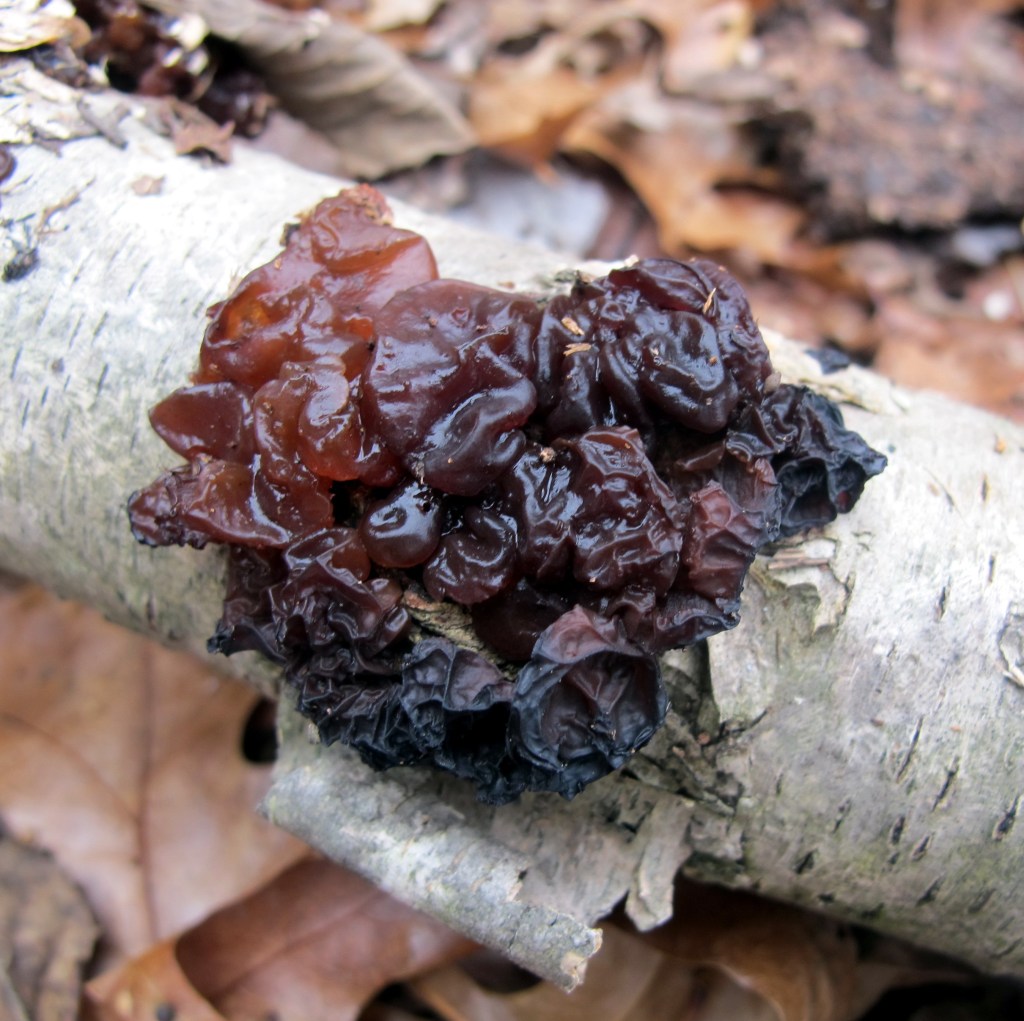
Most ground beetles look alike. In fact, the photograph above may very well be a bessbug, a similar beetle that lives in the same rotting log habitat but does not compete with ground beetles since bessbugs consume decaying wood and are not predatory. Even entomologists that specialize in beetles have trouble telling them apart.  The obscure French entomologist René Jeannel (1879 – 1965) spent most of his life studying the speciation of nearly identical cave beetles. After a career of detailed research, he discovered that one of the most reliable identification tools to distinguish one beetle from another was the shape of the male reproductive organ called aedeagus from the Greek aidoia meaning genitals. This practice has continued to the present; it is a relatively common practice for biologists to use both male and female genitalia as a key indicator of species.

Beetle aedeagi generally consist of a capsule-shaped organ from which an inflatable sac extends like a windsock. The extended “penis” is studded with bristles and spines, which must have some purpose as beetles are bisexual and intercourse is de rigueur for procreation. The current hypotheses is that male beetle semen contains chemicals that influence female sexual behavior and that this effect is enhanced by being directly transferred to the blood via spine puncture wounds. Recent experiments employed a micro laser gun to remove some male penal spines to form a test group to compare with a fully-spined control group. The end result was that females impregnated with the fully spined group produced more offspring. The presence of spines on the male sexual appendage is not as outlandish as it sounds. Spines (made of keratin, like hair) are also found on many primates and rodents and there is evidence based on residual DNA that they were they were at some point present on Homo sapiens. [12] So beetles do matter after all.

Footnote: No article on beetles would be complete without reference to the origins of the name of the inimitable Beatles. John, Paul, and George started out as the Quarry Men without a drummer in Liverpool in the late 1950’s. As they gradually developed the sound for which they are so well known today, they decided they needed a more memorable stage name. John is quoted as saying that he was “just thinking about what a good name the Crickets (Buddy Holly’s band) would be for an English group when the idea of beetles came into my head”. He is also credited with changing the spelling to Beatles “to make is look more like beat music, just as a joke”. The original spelling was Beatals.  After a short experiment with Long John and the Silver Beatals, presumably to sound more like Buddy Holly and the Crickets with a literary flourish, Beatals became simply Beatles and the rest is history. [13]

References:

1. Webster’s Third New International Dictionary of the English Language, Unabridged, Merriam Webster Co, Philippines, 1971, p 197.

2. Marshall, S. Insects. Their Natural History and Diversity, Firefly Books, Buffalo New York, 2006, pp 258-259, 287.

3. Milne, L. and M. The National Audubon Society Field Guide to Insects and Spiders, Alfred A. Knopf, New York, 1980, pp 533-621.

4. Haldane, J.B.S. What is life? The Layman’s View of Nature, L. Drummond, London. 1949, p 258 (Verified on paper by Stephen Goranson at Duke University)

5. Voet, D. and J. Biochemistry, John Wiley and Sons, New York, 1990, pp 255-257.

6. Gressitt, J. L. “Coleoptera” Encyclopedia Britannica Micropedia, Volume 4 pp 828-837 William and Helen Benton, publisher, University of Chicago. 1974.

7. Thiele, H. “Carabid Beetles in Their Environments. A Study on Habitat Selection by Adaptations in Physiology and Behavior”. Science August 1978, Volume 201 Issue 4357.

8. Mayntz, D. et al “Nutrient-Specific Foraging in Invertebrate Predators” Science 7 January 2005, Volume 307 Number 5706

9. Goncalves, M. “Relationship Between Time and Beetles in Mata de Cocal” Review of Brazilian Meteorology, Volume 32, Number 4, October 2017.  https://www.scielo.br/j/rbmet/a/kJPLKtB3gLTdfTcMB9vM4Vd/?lang=pt

10. Nardi, J. Life in the Soil, University of Chicago Press, Chicago, Illinois, 2007, pp 136-138

11. Kromp, B. “Carabid beetles in sustainable agriculture: a review on pest control efficacy, cultivation impacts and enhancement” Agriculture, Ecosystems, and Environment, Volume 74, Issues 1-3, June 1999 pp 187-228 https://www.sciencedirect.com/science/article/abs/pii/S0167880999000377?via%3Dihub   

12. Schilthuizen, M. Nature’s Nether Regions, What the Sex Lives of Bugs, Birds, and Beasts Tell Us About Evolution, Biodiversity, and Ourselves. Penguin House, New York, 2014, pp 28-31, and pp 150-157.

13. Spitz, B. The Beatles, Little, Brown and Company, New York, 2005. pp 175, 181, 196.

Masting Behavior of Trees

Acorn mast from white oak trees occurs about every 5 years, evidence of variability

Common Name: Masting – The production of copious quantities of deciduous tree nuts in a single year followed by several years of minimal nut production. The phenomenon involves all nut trees, regardless of species, within a well-defined geographical region.

 Scientific Name:  Seed masting or Mast Seeding – A slightly more technical term to emphasize that the purpose of masting is to accentuate seed propagation to promote new tree growth.

Potpourri: Mast is a noun of Anglo-Saxon origin (mæst in the original Old English form using the ligature æ) that refers to the accumulation of various kinds of nuts on the forest floor that served as food for farm animals, particularly domesticated hogs. Pannage is a mostly arcane term for the pasturing of animals in the forest to take advantage of the mast, a practice that played a major role in the sociological development of rural life in Europe. As the swine population grew in concert with the human population, the pannage season had to be restricted, traditionally from the feast of Saint Michael (September 29) to the last day of November.  Pigs were brought to the New World with the earliest expeditions, notably that of Hernando De Soto in the southeast from 1539 to 1542, the progenitors of the razorback. Hogs became central to the salt pork and fatback cultures of the Appalachian and Ozark Mountains, the oak-chestnut forests providing the mast for their sustenance. [1]

The process by which trees produce mast is called masting. The curious thing about masting is that it is not a continuous process but rather is cyclic. Every three to five years a tree will produce prodigious quantities of nuts; in between the “masts,” it will produce almost none. The span of time between masts varies according to tree species and a host of other ecological and climate factors and can be as long as ten years. It is a matter of common experience that many kinds of trees exhibit this behavior at the same time over a large geographic area. This poses two conundrums: (1) Why do the trees regulate their nut production in a boom or bust manner?; and (2) How do they manage to coordinate the same cycle with other trees over a large area? Individual tree masting is called variability and the coordination among masting trees is called synchrony. [2]

Variability has had two hypothetical explanations: resource responsiveness and economy of scale.  The basic precept of resource responsiveness is that an individual tree will respond to the resources at its disposal. In a good year with plenty of rain and sunlight, a tree would have more resources with which to manufacture more nuts, which would subsequently be more likely to propagate in a moist, nutrient rich environment.  The primary resources of interest (rain and an adequacy of sunlight) are determined by prevailing weather conditions. Since weather patterns extend over an extended geographic area, resource tracking could also explain synchrony, as all the trees would be subject to the same cycle of resources.

Nature is not that simple, however. The fact is that variations in weather do not correlate with masting; moist and sunny weather does not produce a mast crop any more than dry and overcast weather prevents one. Weather is not cyclic; a wet year is not necessarily followed by a dry year. Masting is much more consistent in periodicity and result, cycles of high nut production occurring on a regular, periodic basis. However, there is one aspect of resource utilization by masting trees that does track with mast cycles, the resources expended by the tree. A significant resource investment (estimated to be about 10 percent of its total nutrients) must be made by a tree to produce the flowers that, when fertilized, produce the seed nuts. What this means is that trees grow slowly during mast years and more rapidly in non-mast years as the resources are shifted from reproduction to growth.   This suggests that masting is part of a complex evolutionary behavior pattern that must derive from an ecological stimulus – economy of scale variability.

The term economy of scale refers to the general precept that benefits will be magnified by the scale of the population size. Buying in bulk lots distinguishes wholesale from retail with the former gaining the economy of scale reduced costs of larger quantities.  There are two corollaries associated with the economy of scale theory for masting variability – predator satiation and pollination efficiency. In predator satiation, masting is stimulated by a tree’s adaptive strategy for survival in a world of nut-eating predators (notably squirrels). By producing a super-sized nut crop, the predators become satiated so that an adequate number of nuts will survive to succeed for propagation of the tree species.

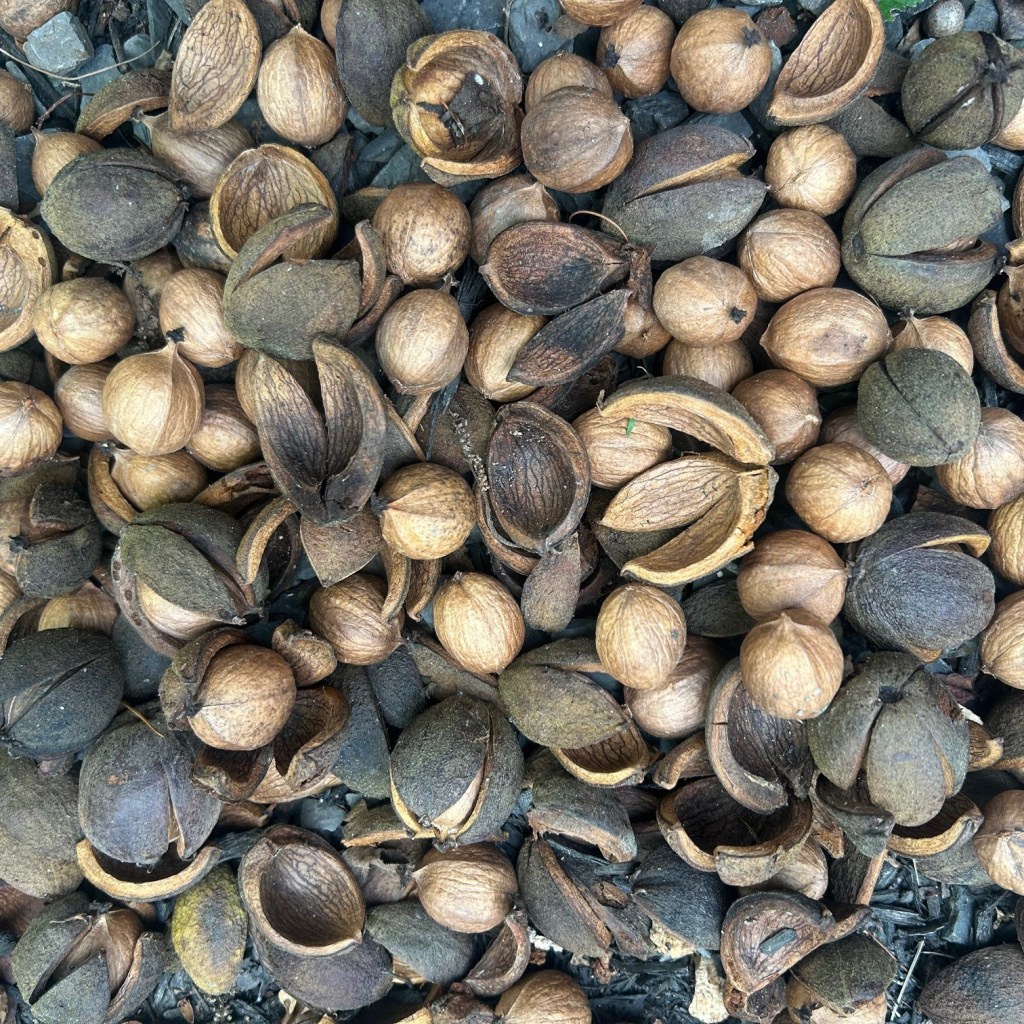
The seven white oaks in my backyard so overwhelm the squirrel population with acorns in a mast year that they scamper about in confusion with too many nuts to eat or bury. A rough calculation based on extrapolation yields a total over 200,000 acorns. When squirrels cross from the back yard to the front past the side of the house, they are confronted with an equally overwhelming mass of hickory nuts from the hickory trees there, which, of course, mast in synchrony with the oak trees. The predator population is held in check during the non-mast years, when the parsimony of production is reflected in declining populations. In the economy of scale paradigm, each nut in a mast year has a greater probability of escaping predation.

Hickory nut mast 10 meters away from acorn mast above, evidence of synchrony

Pollination efficiency is based on the notion that it is more efficient from the resource standpoint for a plant to successfully propagate if there are a large number of sites for germination. This is not true for all plants. Flowering (Angiosperm) plants employ insect pollination, meting out nectar advertised by their attractive flowers to take advantage of male pollen transport to the female ovary of another plant. Chicory is a good example, as only a few flowers open each day and each expires at day’s end. Oak and hickory trees are monecious (male and female flowers are on the same tree) and their pollen is transported from staminate to pistillate flowers by the wind.  From the standpoint of reproductive success, it is advantageous for oaks to fill the air with pollen from many trees at the same time, saving up energy during off-years. Fungi are also mostly wind-pollinated and accordingly produce spores in prodigal proportions; a giant puffball is estimated to contain about 7 trillion spores.

Field testing for experimental evidence of predator satiation and pollination efficiency as causative factors for the masting behavior of trees is difficult and the results tenuous. For example, a study of masting trees in a 6-hectare study area estimated pollination efficiency by counting the total number male flowers and the number of nuts produced from1988 to 1993. Testing for predator satiation is even more difficult; one must not only show that predators were satiated but also that the interval between masting events was sufficient to result in a decrease in predator population. The same study utilized the number of nuts that had evidence of insect predation relative to those that were undamaged as a measure of satiation. The year-to-year variance in nuts with evidence of insect predation was used to determine the mast interval. The study concluded that both effects were observable, pollination efficiency having a greater impact than predator satiation. [3]

But the real conundrum is not why trees mast as individuals (variability), but how they coordinate their activities over large areas and across different species (synchrony). It is a matter of direct observation and scientific study that they do. A survey of acorn production was initiated in 1994 to quantify acorn production of blue oaks at 10 different sites at separated by up to 700 kilometers in California. The conclusion, after eleven years of study was that “acorn production extends to pretty much every blue oak, a population of 100 to 200 million individuals.” A more comprehensive literature survey of relevant references on nut production by various trees was organized by W.D. Koenig, a professor at UC Berkeley. A review of 72 sites and 5,000 data points revealed that synchronization of seed production was statistically significant in populations separated by 2500 kilometers. [4] One may conclude that synchrony occurs over long distances and involves almost every tree. So how do they do it?

Three mechanisms are germane to any discussion of synchronization of activities among plants or animals: chemical, reproductive, and environmental. The use of chemicals to transmit signals among individuals is common. However, it is not likely that this is pertinent to the case of masting as chemicals act over much shorter ranges than is observed in masting tree populations. Reproductive synchronization in arboreal terms is called pollen coupling. The concept is that if a tree depends on the pollen from a second tree to produce the fruit nut, then it must be synchronized with it. Implicit in this is that the tree that is providing the pollen must be at some relevant distance away. The effective distance over which pollen is effective in achieving fertilization is of value in forest management; recently completed studies have revealed that pollen is only effective within a range of about 60 meters, hardly on the order of the observed ranges of masting behavior. [5] A second reason that this mechanism is irrelevant here is that both oak and hickory trees are monecious, so the pollen doesn’t need to travel more than a few meters. Since it is not likely that chemical or reproductive effects result in the long-distance synchrony of masting, one must conclude that the only other reasonable choice would be environmental.

The notion that resource responsiveness to the environment causes the masting behavior of individual trees, i.e. variability, was ruled out above based on field observation. The question is how environmental resources that could not cause masting variability would nonetheless be the cause for masting synchrony.  It is the difference between weather and climate, the former term referring to the short-term manifestation of the latter. The idea that the environment can cause synchronous fluctuation in population size is not new. It is called the Moran effect after the Australian statistician who showed that the correlation of two populations at different locations was equal to the correlation in their common environmental influence (if they were subject to the same basic parameters).  It has been demonstrated empirically in many organisms, from viruses in the body to caribou in Greenland. [6]

It is therefore possible that geographically wide-ranging climate conditions cause trees to mast in synchrony. It is not known at present what aspect of the climate is predominate, if, in fact, it is that simple. There is some evidence that temperature may be a key parameter. The study of the California oaks was correlated with the mean temperature in April over the course of the eleven years of data. April was chosen as the most important month for masting, as it is when the trees produce the male and female flowers that result in nuts that ultimately fall as mast. The spatial synchronization of April temperatures was found to be even more strongly correlated than the masting of the oaks. The rationale is clear: the periodic fluctuations of temperatures (perhaps caused by the cyclic El Nino phenomenon) operate in synchronization with masting over the same geographic area. [7]

Or maybe it is something else altogether. The recent demonstration of the communion of all of the trees in the forest in concert with their mutualistic fungal partners may offer an alternative hypothesis. It is demonstrably true that the stronger trees in a forest send nutrients to the weaker trees in the forest and the trees in the sun send nutrients to the understory trees in the shade in order to keep the forest ecosystem in balance [8], then why wouldn’t these same signal paths send the signal to make more nuts? As the nutrient levels build up in the tree roots and fungal mycelia during high growth years, a crescendo point is reached and each and every tree gets a boost of energy to make it a mast year. This would certainly explain synchrony, and, given the vast dimensions of the “wood-wide web” it would also explain regional geographic expanse. All of the trees in the forest would benefit from an increased likelihood of the growth of saplings that would eventually succeed their parent trees so that the forest as “mega-organism” survived.

A similar and probably related observation is that many fungi will gather their resources for years only to erupt in a single year that results essentially in what might be considered a mast of mushrooms. There are many similarities as fungal spores, like the pollen of trees, benefit from a large cohort; each germinating spore creates a hypha that must find a mate. The fact that oaks have an especially large number of fungi with which they form mycorrhizal associations is quite likely why they are so successful as climax forest tree species in part due to the benefits of masting to longevity in a healthy forest. [9]

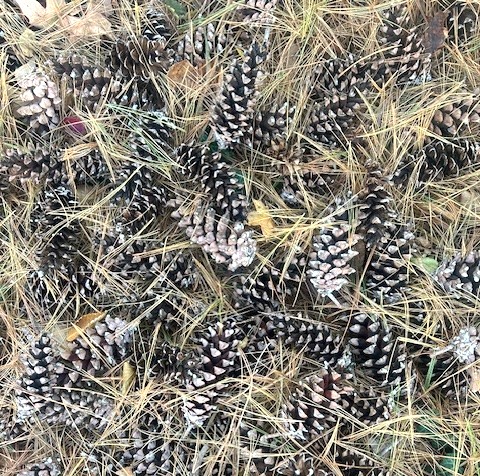
Another point to ponder at this juncture is why the masting phenomenon is restricted only to nut trees like oaks. What about the seed-bearing cones of conifers? It is not uncommon to traverse a pine forest, noting the soft tread of pine needles and a profusion of cones. The pine needles are indicative of a little noted characteristic of evergreens. They lose their needles just as deciduous trees shed their leaves. They just don’t do it all at once but take about four years to recycle all needles (longer for firs and spruces).  Cone masting is more of a challenge, however, because it takes three years to produce a cone. Year one requires moisture and sunlight to prime the cone by accumulating resources, year two must be dry to enhance pollination, and year three must be wet and sunny for cone growth. While cone trees “mast” based on field observation experience, there does not appear to be any synchrony between conifers masting cones and deciduous trees masting nuts. This has led to the hypothesis that cone bearing trees produce copious seeds when environmental conditions favor germination as opposed to the more social sharing behavior of nut trees.  [10]

Pine trees also produce many cones with their embedded pine nuts on a periodic basis like oak and hickory trees

Over the last twenty-five years, research to better understand tree masting and its effects of forest health has continued, expanding across the globe from its mostly North America and Europe roots and to involve specialists from fields other than botany. Of note is confirmation of the wide geographic range of masting synchrony that has been shown to be of intercontinental scale, extending to over thousands of kilometers. This suggests that fluctuating weather patterns driven by some environmental factor (the 11-year sunspot cycle has been proposed) must be key to synchrony as nothing else could be so widespread.  One of the more influential studies concluded that masting was the fundamental driver of animal behavior: “variable acorn crop size drives a chain reaction linking deer populations, ticks, and Lyme disease along with mouse populations, ground-nesting birds, and gypsy moths”.

The fundamental debate is now focused on the relative importance of resource matching (that masting depends on some limited resource), and economy of scale (that masting depends on genetic evolutionary trends of the tree species). A resource budget model has been proposed that unites the two with advantages of evolving to produce mountains of acorns weighed against the resources needed for synchronous reproduction. [11] The bottom line is that there is not (yet) an accepted comprehensive explanation for masting, despite its importance to the health of forests and the animals and fungi that live in them. It may well be that we are just at the threshold of understanding the real, complex nature of forests.

References:

1. DeVoto, B. The Course of Empire, The Easton Press, Norwalk, Connecticut, 1988. pp 23-31.

2. http://uslancaster.sc.edu/faculty/scarlett/acrnsmry.htm  

3. Shibata, M. et al “Causes and Consequences of Mast Seed Production of Four Co-occurring Carpinus species in Japan” Ecology, January 1998, pp 9 – 12 This paper documents a thorough field test of masting hypotheses.

4. Koenig, D. and Knops, J. “The Mystery of Masting in Trees” American Scientist Volume 93 July-August 2005. Pp 340-349.

5. Knapp, E. et al “Pollen-limited reproduction in blue oak: Implications for wind pollination for fragmented applications” Oecologia 128 March 2001 pp 48-55.

6. Moran, P. A. P. “The statistical analysis of the Canadian lynx cycle. II. Synchronization and meteorology” Australian Journal of Zoology, June 1953 pp. 291–298.

7. Koenig, D. and Knops, J. Op. cit.

8. Klein, T. et al “Belowground carbon trade among tall trees in a temperate forest.” Science 15 April 2016, Vol. 352, Issue 6283, pp. 342-344.

9. Binion, D. et al Macrofungi Associated with Oaks of Eastern North America, West Virginia University Press, Morgantown, WV, 2008.

10. Lauder, J.  “The Science of Masting: Why are there so many acorns (or cones)?” Sierra Streams Institute. 15 October 2024 https://sierrastreamsinstitute.org/2024/10/15/the-science-of-masting-why-are-there-so-many-acorns-or-cones/    

11. Koenig D. A Brief History of Masting Research Philosophical Transactions of the Royal Society, 26 March 2021 Volume 376

Cougar

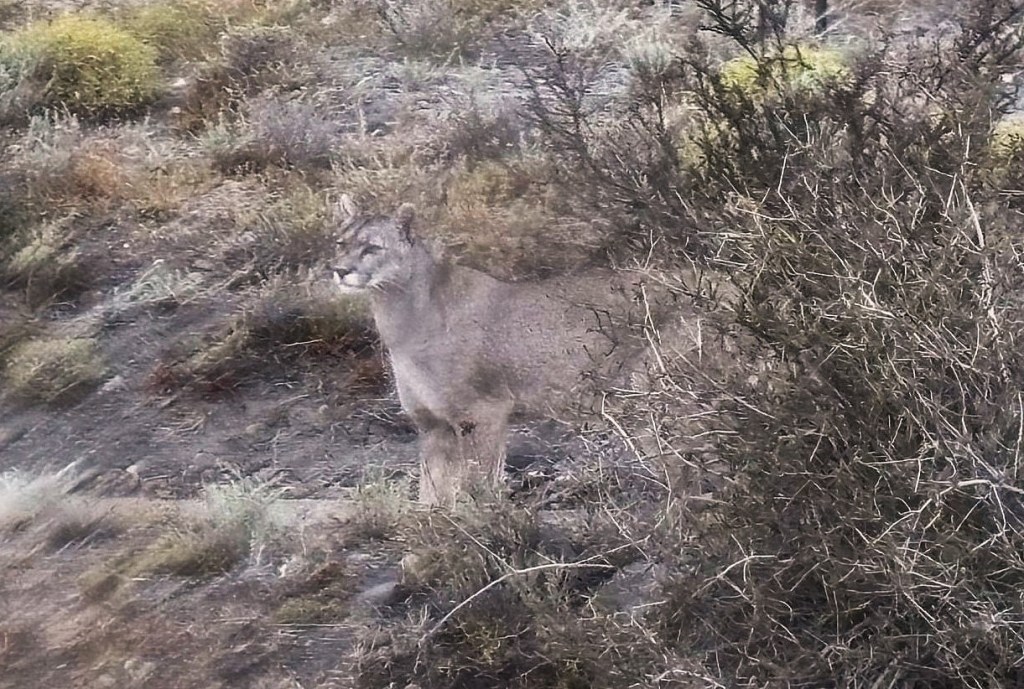
A cougar searches for guanacos, wild llamas indigenous to the grasslands of Patagonia, their primary prey

Common Name: Cougar, mountain lion, puma, catamount (cat of the mountain), panther, American lion, and many others – Cougar is derived from the language of the Tupi people, an indigenous group from central Brazil. The original name cuguacuarana was a modification of suasuarana, which literally meant false (rana) deer (suasu). This was presumably to distinguish the large cat with fur that was similar in color to deer from the jaguar, another large cat with spots which is also indigenous to South and Central America.

Scientific Name: Puma concolor – The generic name Puma is taken directly from the Quechua language of the natives of southern Peru in the Andes Mountains. Concolor means to have one, consistent color, noting the same attribute as the similarly colored deer – cougar etymology. Also listed on occasion as Felis concolor. Felis is the Latin word for cat. [1]

Potpourri:   The cougar has the largest geographic range of any terrestrial mammal in the Western Hemisphere, extending from the boreal forests of northern Canada and Alaska to the open grasslands of Patagonia at the southern tip of South America. As a solitary apex predator, it is without equal, adapting to extremes of climate and variety of prey from snowy tundra in the north across the desert Southwest into the rainforests of Brazil to elevations of over 15,000 feet in the Andes and back to sea level in southern Chile and Argentina. [2] Recognized and feared by many populations of people along the way, the cougar has accumulated a long list of common names … over forty applied according to the local languages of diverse tribal populations. The cougar/puma/mountain lion/et cetera holds the record for the most names of any mammal species [3] As a result, cougars convey a sense of mystery and intrigue in being somehow different animals even though they are the same.

Unlike most of the other large cats, cougars hunt day and night, favoring daylight in wilderness areas and night when near populated regions. Sightings by humans are almost universally fleeting resulting in frequent mistaken identities. The similarly colored bobcat (Lynx rufus) can easily look like a mountain lion based on a coup d’oeil of a darting large, brownish, furry animal. However, like the alleged encounters with yeti in the Himalayas and sasquatch in the Pacific Northwest, there have been no confirmed sightings of cougars in the Eastern United States for decades. This was the result of expanding settlement over the last two centuries and the near extirpation of the white-tailed deer, its primary food source. The last documented and validated records for cougar sightings were 1871 in Pennsylvania and 1887 in West Virginia. Further west confirmed sightings have been more recent; 1956 in Alabama and 1971 in Louisiana and Tennessee. [4] In 2008, the Smithsonian Conservation Biology Institute sponsored a six-month long program to assess the mammal populations along the Appalachian Trail corridor in Northern Virginia and Maryland using scented bait and a motion sensitive camera. With over 4,000 sightings including multiple bobcats, bears, and coyotes, among many others, there were no cougars.  While absence of evidence is not evidence of absence, it is indicative of rarity at the very least. That is not to say that cougars won’t be back, as the surge in white-tailed deer will likely draw the adventuresome seeking a reliable source of food at some point.

The near pole to pole range of the cougar is testimony to the geographic adaptability of the Felidae or cat family as a whole, which originated in Asia in the Oligocene Epoch 35 million years ago. The “intelligent” evolutionary design of the basic felid has stood the test of time as the 8 genera and 37 living species migrated globally. Almost all cats are solitary (only lions having pride in association) and share the characteristics of consummate predators―lithe, muscular bodies, tearing teeth and claws, keen senses, and camouflaged fur coats. This suite of attributes has changed little over the diaspora, testimony to the versatile success of cats. Based on DNA analysis of living cat species, the big cats of the genus Panthera, consisting of lions, tigers, leopards (including snow and clouded), and jaguars were first to become differentiated from ancestral species 10.8 million years ago in the Miocene Epoch, the age of mammals. Note that all the “big cats” could also be called panthers, and, for those with fur darkened by melanin for nocturnal hunting stealthiness like leopards and jaguars, the term black panther is widely used. It is hypothesized that an ancestral cat species migrated across the Beringian land bridge connecting Asia to Alaska 8 million years ago to give rise to the New World cats. The subsequent movement of cats through the Americas gave rise to cougars, lynxes, ocelots, and, ultimately, domestic cats. The closest DNA relative of the cougar is the cheetah, which evolved in North America and crossed back through Asia and into Africa about one million years ago to become the world’s fastest terrestrial animal. [5]

The cougar is not a “big cat” of the Panthera genus, a fact borne out by the observation that cougars don’t roar, a trait of note due in no small part to the MGM movie studio’s leonine opening sequence. The cougar might be thought of as the largest version of the domestic cat; both having diverse geographic and habitat adaptability suggests genetic similarity. The origins of cats as human companions has long stymied biologists since they don’t fit the pattern of domestication, lacking social group organization in which there is some sort of leadership hierarchy wherein the humans can become surrogate herd leaders. Herding cats is one of the maxims used to characterize missions impossible. The aloofness of cats is a matter of literary record; they are the “wildest of all wild animals” in Rudyard Kipling’s classic The Cat Who Walked by Himself. [6] Since the cat was proclaimed a sacred animal in the 5th dynasty of ancient Egypt about 4,000 years ago according to the hieroglyphic record, it was long thought that this led to domestication when cats proved their utility in ridding granaries of rodents. [7] However, recent archaeological and genetic research has revealed that domestication of cats began in Mesopotamia (Greek for mid river) between the Tigris and Euphrates over 10,000 years ago. DNA from 979 domestic and wild cats was analyzed to reveal that all cats evolved from Felis sylvestris lybica, the Middle East wild cat subspecies. In 2004, archaeologists digging on the island of Cyprus discovered a 9,500-year-old burial site containing a human and a cat, presumably imported as a pet from mainland Asia Minor (why else would they be buried together?). The current consensus is that domestic cats seeking rodent prey drawn by grain storage coevolved with humans in the Middle East as a matter of mutual benefit during the Neolithic (New Stone Age) Period. [8] Cougars that remained in the Americas sought larger prey and avoided human contact altorgether.

As an apex predator, cougars have a profound though largely unappreciated impact on ecosystems. Males occupy large, non-overlapping territories that range in size of over 500 square kilometers abutting several female territories that are about half that size. Other than biennial breeding during which they cohabitate for several weeks to propagate several cubs (not kittens), they live and hunt alone, which is the norm; 179 of 247 terrestrial carnivores are solitary. [9] A metanalysis of published research conducted several years ago revealed that puma-cougars preyed on 148 mammals, 36 birds, 14 reptiles and amphibians, and 5 fish. Of these, 40 species were found to avoid cougars due to fear effects, notably the cervids like deer of North America and camelids like the guanaco. the wild llamas of Patagonia. Predator avoidance results in reduced grazing, with evidence that 22 plant species benefited from the presence of cougars. Cougar deer kill has a more direct effect in removing on average one deer per week per cougar. The introduction of cougars to South Dakota is estimated to have saved over one million dollars due to a reduction in deer-vehicle collisions. [10] It is widely recognized that the burgeoning population of white-tailed deer in the Eastern United States is a matter of concern due to a combination of ecological damage in the consumption of seedling trees and the ever-present danger of running into one on the road. It is appropriate to at least entertain a change in public policy to promote the reintroduction of the mountain lion to the Appalachians.

There already is one population of cougars on the east coast in the state with the seventh highest population density. The Florida panther has struggled for survival against the onslaught of humanity for decades. Up until the beginning of the 20th century, the Puma concolor coryi, as the subspecies is designated taxonomically, ranged across the southeastern United States. Gradually, its preferred habitat of swampy forestland was cris-crossed by roads connecting population centers to the point that they retreated to southwestern Florida, where Big Cypress National Preserve and the adjacent Everglades National Park provide a survivable bastion. The population shrank to less than 50 animals and is now listed as threatened with projected extinction after 2050. [11] The problem is inbreeding, the bane of biology. Lack of mate variability promotes the advancement of harmful genetic traits, like low sperm count and heart murmurs in the case of the cougars. Over the last thirty years, efforts have been made to widen the gene pool. Eight Texas panthers were captured and released in south Florida in 1995. Thurty years later, sequencing of 29 genomes found “increased heterozygosity across the genome and reduced homozygous deleterious variants” which means increased diversity which promote survivability. [12] Florida panthers are so good at hunting white-tailed deer that there is some concern that deer hunting by humans needs to be curtailed as part of the statewide effort to save the panther, now that it is the official Florida state animal. [13] Having brought back bison, bears, eagles, condors, and wolves, it is high time for the renaissance of cougars.

References:

1. Webster’s Third New International Dictionary of the English Language, Unabridged, G. and C. Merriam Company, 1971.

2. The IUCN Red List of Threatened Species 2015: https://www.iucnredlist.org/species/18868/97216466      

3. Guiness Book of World Records –     https://www.guinnessworldrecords.com/search?term=cougar&page=1&type=all&max=20&partial=_Results&    

4. Whitaker, J. National Audubon Society Field Guide to North American Mammals, Alfred A. Knopf, New York, 1996. Pp 788-796.

5. Johnson, W. et al “The Late Miocene Radiation of Modern Felidae: A Genetic Assessment” Science, Volume 311 6 January 2006

6. Kipling, R. Just So Stories, The Odyssey Press, New York, 1902, pp 197-221.

7. “Cats” Encyclopedia Brittanica Macropedia, Willam and Helen Benton Publishers, Chicago, Illinois, 1972, pp 996-1000.

8. Driscoll, C. “The Taming of the Cat. Genetic and Archaeological findings hint that wildcats became housecats earlier- and in different place- than previously thought”. Scientific American. June 2009, Volume 300 Number 6 pp 68–75.https://pmc.ncbi.nlm.nih.gov/articles/PMC5790555/  

9. Elbroch, L. et al. “Adaptive social strategies in a solitary carnivore”. Science Advances. October 11, 2017, Volume3 Number 10.  

10. LaBarge, L. et al.  “Pumas Puma concolor as ecological brokers: a review of their biotic relationships”. Mammal Review. 18 January 2022, Volume 52, Number 3 pp 360–376. https://onlinelibrary.wiley.com/doi/10.1111/mam.12281  

11. Nowell, K. and Jackson, P.  “Wild Cats. Status Survey and Conservation Action Plan”. IUCN/SSC Cat Specialist Group. IUCN, Gland, Switzerland, 1996. p 131 http://carnivoractionplans1.free.fr/wildcats.pdf       

12. Simonti, C. “Saving the Florida Panther” Science 4 September 2025, Volume 389, Issue 6764.

13. Bled, F. et al “Balancing carnivore conservation and sustainable hunting of a key prey species: A case study on the Florida panther and white-tailed deer”Journal of Applied Ecology. 9 June 2022, Volume 59, Number 8 pp 2010–2022. https://besjournals.onlinelibrary.wiley.com/doi/10.1111/1365-2664.14201

Porcelain-berry

The multi-colored somewhat translucent berries are reminiscent of porcelain

Common Name: Porcelain-berry, Amur peppervine, Blueberry climber, Porcelain berry vine – Porcelain is a hard and translucent ceramic made from kaolin (a type of clay) mixed with a variety of other minerals such as feldspar and quartz noted for its aesthetic properties. The multi-colored berries of this grape family vine are similarly attractive.

Scientific Name: Ampelopsis brevipedunculataThe genus is derived from ampel, the Greek word for grapevine. The species name means short (brevi in Latin) peduncle, the main stem that holds the flower that becomes the seed-bearing berry when fertilized. Formerly (and more frequently) listed as A. glandulosa and more recently as A. glandulosa var brevipedunculata.

Potpourri: While kudzu may be the vine that ate the South, porcelain-berry is well on its way to becoming the vine that ate New England. Both are invasive plants of the first order, combining supercharged seed reproduction and rapid vegetative growth of up to 15 feet in a single season. They are also both vines, employing the insidious and parasitic characteristic of using stems of other plants for support, the floral equivalent of spineless. Both plants were intentionally introduced to North America in the late 19th century mostly for their appearance. In the age of horticultural innocence that then prevailed, the only consideration for importation of alien plants was as an attractive addition to a garden. All went well for a time, until the mass movement of people from cities to suburbia with lawns and gardens after 1950. Porcelain-berry went with them, now in close proximity to natural fields and forests to which it soon spread unchecked. The exponential growth of invasives in the last twenty years does not augur well for the future of humanities’ continuing diaspora into exurbs and beyond. [1] In that garden plants are selected by horticulturalists for their hardiness and rapid growth, their emergence as invasive species when unintentionally released is no surprise.

The name Amur peppervine is apropos, as the plant is native to the Amur River basin that extends from Mongolia eastward through central China into the Strait of Tartary and ultimately the Pacific Ocean. It is also indigenous to Japan, India and parts of Southeast Asia having spread southward and eastward. [2] On its home turf, where porcelain-berry evolved in concert with a community of native and competing flora and predatory fauna, it is held in check. All that is gone with transplantation an ocean away in an equally fertile and climatically consistent locality like North America. In the absence of any of the constraints that drove its evolutionary characteristics in its homeland, some plants (and animals) can spread unchecked and outcompete native species.

Invasion of porcelain-berry

There are several factors that contribute to the success of porcelain-berry over the native flora of North America. Success may seem an ill-chosen description for a nuisance invasive, but proliferation and dominance are the evolutionary goal of every living thing. In late spring to early summer, an array of small, greenish-white flowers appear in flat-topped clusters called cymes that offer the promise of nectar to visiting pollinators. Porcelain-berry is monoecious, meaning that each plant has both male and female flowers, facilitating fertilization by roving pollinators, mostly bees. In early fall, the now fertilized flowers give rise to the reproductive berries, that start out white and gradually change to yellow, lilac, green, and turquoise. The attractive multi-colored berries that have been compared to miniature bird eggs are what drew the horticulturalists and their gardener clients in the first place, giving rise to the name porcelain-berry as a marketing moniker to evoke the comparable beauty of its namesake ceramic. [3] It is ironic that China is the fons et origo of porcelain, dating from the Han Dynasty of the first century CE. Porcelain was called china without attribution in the United States for many years. It is doubly ironic that Japanese stilt grass, called packing grass for its functional purpose, was the material used to protect the imported porcelain/china during transit whence it escaped into the wild as discarded shipping waste to become invasive, now joined by porcelain-berry.

The rainbow-hued berries afford an appealing visual palette that must be attractive to animals, mostly birds; humans are somewhat more sophisticated animals with similar aesthetic preferences. Since the fruits produced by most plants are nearly universal in having a single hue when ripe, it is relevant to consider not only how color variability is accomplished, but also why. It is well established that the reds and blues of fruits and flowers are due to the chemical anthocyanin, which literally means “blue flower” in Greek. It was named colored cell sap by the German botanist Ludwig Marquart in 1835 when he determined that it formed by the reaction between the sugar produced by the plant and proteins in the sap. [4] Most plants leave it there, the green chlorophyll-colored fruits infused with colored cell sap to turn them mostly red but sometimes blue. The color change indicates ripeness to roving animals to promote fruit consumption that spreads the seeds of propagation for the next generation. Amur peppervine creates a second chemical from the broad category of phytochemicals called flavonols that interact with anthocyanin to produce color variability. [5] This must be by design and not by chance.

Flower and fruit colors are evolutionary elements that result from a random mutation that proved effective in advancing the porcelain-berry genetic code. Accordingly, it is probable that the color-changing flavonol, once initiated, resulted in increased consumption, propagation, and germination of new generations with the multi-colored fruits. Eventually, these became dominant to the extent that all future generations carried the flavonol genetic code. Or, if one were to follow the logic of Michael Pollan in The Botany of Desire, it could be that the driving force was human aesthetics, spreading the seeds in order to fulfill a desire for berries of porcelain beauty. [6] Whatever effects different colors may have on attracting animals, the facility with which porcelain-berry seeds germinate and their multi-year viability also contributes to its spread. And even if there are no seeds, the plant spreads vegetatively and asexually by sprouting from its roots. [7] Taken together, the end result of seed and vegetative growth is a highly invasive plant that “is making a bold attempt to take over the world.” [8]

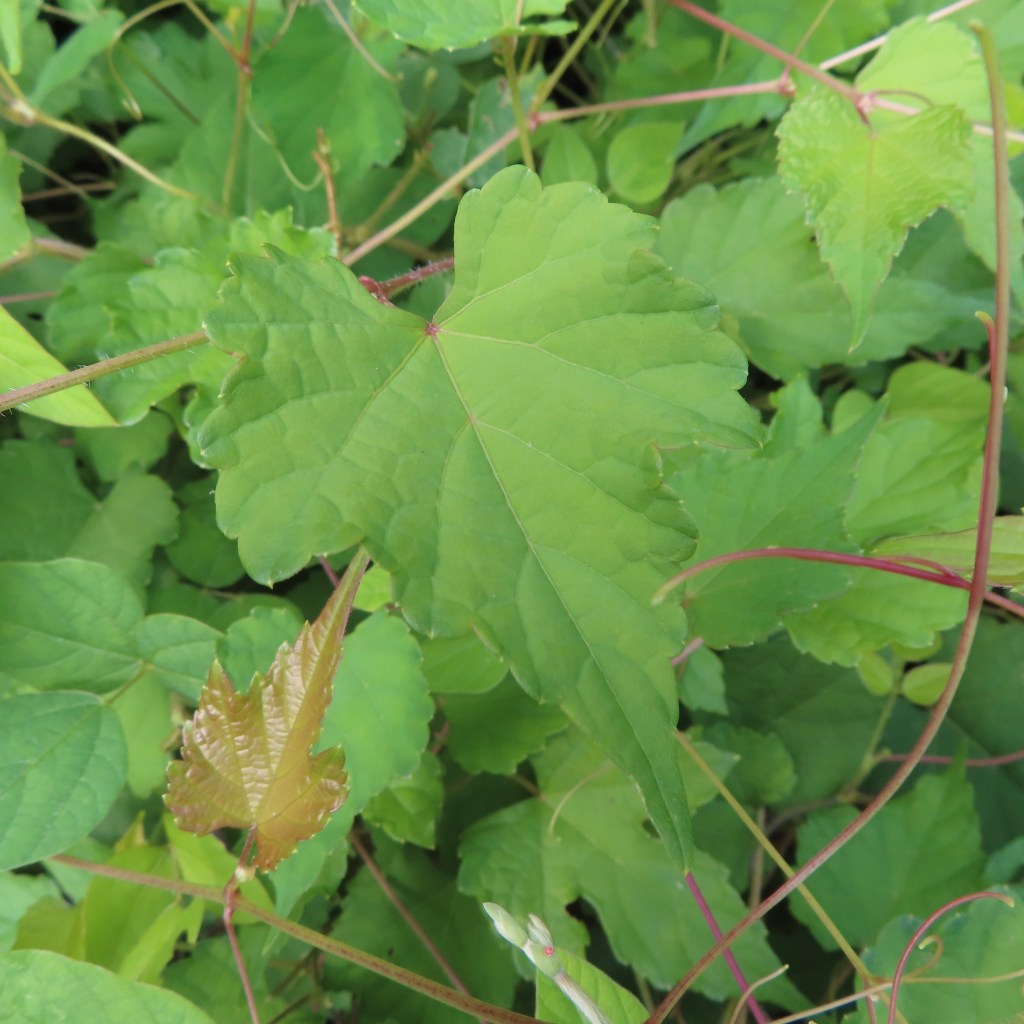
There is another good reason why the porcelain-berry was imported and widely planted without ecological concern or constraint. One of the key field identification features of porcelain-berry is that it has leaves that frequently look like those of the wild grape, although they can vary considerably, even on the same plant. This is because peppervine belongs to Viticeae, the grape family, cultivated since antiquity for fermentation as wine. When and where viniculture started is a matter of some conjecture, but the inclusion of Dionysus as the god of wine in Greek Mythology suggests a Paleolithic time frame. Recent research using DNA analysis of wine-stained chards from the Transcaucasian region provide evidence that modern wine making dates to at least 3,000 BCE. While 99 percent of modern wine is made from one of the many variants of Vitis vinifera var sylvestris, there are almost 1,000 species globally and it is almost certain that many other varieties were made into wine. [9] Therefore, most members of Homo sapiens that emerged in Africa about 50,000 BCE were familiar with some type of grape. The idiom I heard it through the grapevine has been around for awhile.

The unusual leaf shape of porcelain-berry is characteristic of Grape family plants.

Were it not for the alarming spread of porcelain-berry, it would be perceived as largely benign and even beneficial as are other grape family plants.  The porcelain-berry fruit can be safely eaten, providing some nutrition. However, it is not palatable, lacking the sugar content of cultivated grape varietals. In general, the two dozen species of wild grapes in North America, in which there is no reason not to include porcelain-berry, have edible fruits, shoots, and leaves. The average nutritional profile for 100 grams (~1/4 pound) of wild grape family fruits is 70 calories with several important minerals like potassium, calcium, phosphorous and iron and vitamins A and C in addition to the metabolically important B vitamins. [10] Similarly, wild grapes have a broad range of medicinal properties.  Native Americans used grape leaves made into a tea to treat stomachache and diarrhea and poulticed leaves were applied to treat rheumatism and headache. More recently, grape seed extracts have been shown to be effective in treating circulatory problems like varicose veins. [11] On the whole, it is reasonable to conclude that porcelain-berry is potentially a useful invasive.

References:

1. Young, J. National Research Council, Washington DC, “Fact Sheet, Porcelain-berry” National Park Service Plant Conservation Alliance Alian Plant Working Group, 20 May 2005, http://www.nps.gov/plants/alien

2. Zhiduan C. and Jun W. Ampelopsis glandulosa (Wallich) Momiyama, Bull. Univ. Mus. Univ. Tokyo. 2: 78. 1971″Flora of China online, vol. 12 p. 178-179.

3. Plants for a Future (PFAF) Charitable Database. “Porcelain Berry” https://pfaf.org/user/Plant.aspx?LatinName=Ampelopsis+brevipedunculata 

4. Hiker’s Notebook. “Autumn Leaf Color” at https://hikersnotebook.blog/2020/10/26/autumn-leaf-colors/

5. Nafici, S. “Weed of the Month, Porcelain Berry” Brooklyn Botanical Garden https://www.bbg.org/article/weed_of_the_month_porcelain_berry     

6. Pollan, M. The Botany of Desire, Random House, New York, 2001 pp. xiii-xxv.

7. Kling, A. “Invasions in your Woodland – Porcelain-berry” University of Maryland Extension. https://extension.umd.edu/resource/invasives-your-woodland-porcelain-berry-updated-2025/ 

8. Dingwell, S. “Unwanted and Unloved – Porcelain-berry” Virginia Native Plant Society. 12 August 2014.

9. McGovern, P. Ancient Wine, Princeton University Press, Princeton, New Jersey, 2003 pp 1-63.

10. Angier, B. Edible Wild Plants, Stackpole Books, Mechanicsburg, Pennsylvania, 2008, p. 80

11. Foster, S. and Duke, J., Medicinal Plants and Herbs, Houghton Mifflin Company, Boston, Massachusetts, 2000, p 338.

Many-Headed Slime

Many-headed slime in search of food, mostly bacteria

Common Name: Many-headed slime, Grape cluster slime, Slime mold – The many branches that radiate outward from the site of initial growth form clusters at food sources consumed as sustenance. The overall appearance is one of many small nodes that are metaphorically compared to heads.

Scientific Name: Physarum polycephalum – The genus name is from the Greek physarion, meaning small bellows, which may refer to the characteristic pulsating growth which appears to surge as if wind-driven. The species name from Greek poly meaning many and kephalikos (Latin cephalicus) meaning head.[1] The translation literally means many-headed.

Potpourri: Slime molds were saddled with one of the most pejorative names in biology. The Animal Kingdom’s most despicable attribute of slime is sometimes applied to humans as the penultimate insult. The Fungi Kingdom’s worst form is mold, destroyer of agricultural crops and promoter of human respiratory disease. Even so, slime mold is an apt name in describing an unusual form of life. Slime molds bridge the gap between animals and fungi in transitioning from a mold-like spore that then germanites into an amoeba-like animalcule that moves like Lewis Carrol’s “slithy toves”.  The onerous task of organizing living things into a comprehensible structure has been a work in progress for centuries. With DNA replacing appearance as its organizing principle, phylogenetics has upended the historical hierarchical taxonomy of Carolinas Linnaeus. This transition is just beginning. Placing slime mold into its proper niche in the web of living things on the TBD list. For now, it is classified as a protist.

Numerous attempts have been made by intellectually curious, sapient humans to impose order on the entangled complexity of their surroundings. Schemes based on geographical locale, patterns of fruits and seeds, and gross morphology were all found to be impractical for field application. Linnaeus had the insightful idea of using sex as the organizational principal for plants, forming 26 categories based on the numbers and arrangement of the (all important) male stamens. Calling them vegetable letters he correlated stamen arrangements to the alphabet as a mnemonic. Praeludia Sponsaliorum Plantarum (Prelude to the Betrothal of Plants) was published in 1730, which garnered international interest that was both supportive and dismissive. Linnaeus forged ahead, and, based on the premise that “Minerals grow; Plants grow and live; Animals grow, live, and have feeling” settled on three kingdoms as his foundation. [2] The inclusion of inanimate rocks as an integral part of the tree of life is testimony to the ignorance of the times.

On December 13, 1735, the first edition of Linnaeus’s Systema Naturae (System of Nature) went on sale in Leyden, Netherlands with a section on the Mineral Kingdom and the Animal Kingdom to supplement the extant alphabetic Plant Kingdom. Minerals were dived into three categories named Petrae for simple stones, Minerae for simple stone mixtures, and Fossilia for aggregate rocky particles (that may or may not have an impression of an animal or plant); the system never made it into the work of Charles Lyell, who correctly classified sedimentary, metamorphic and igneous as the three types of rocks. [3] The Animal Kingdom was to have far reaching impact on the future of biology. Linnaeus devised the canonical format Kingdom, Class, Order, Genus, and Species to establish the first enduring method to catalogue living things into what became known as taxonomy.  He identified six classes of animals with 549 species: Quadrupeds (which included the Order Anthropomorpha and thus two-legged humans); Birds; Amphibians; Fish; Insects; and a final class as catchall named Vermes that included everything from reptiles to squid. A seventh group was tacked on at the end named Paradoxa for those animals that were missing from the rankings, as the semi-animal slime mold would have been.

Some twenty kilometers south of Leyden lay Delft, the home of Antonie van Leeuwenhoek, the unlikely father of microbiology.  As the owner of a fabric shop, the need for an improved method of magnification to inspect thread quality essential to the drapery business led him to the field of lens grinding, at which he excelled. In fabricating the first practical microscope, he was able to penetrate the heretofore unseen and unknown domain of the minuscule. An investigation of pond water yielded the presence of moving objects which he (correctly) interpreted to be animalcules. Over the course of the next century, as Leeuwenhoek’s hypothesis gained credence, the idea that these ubiquitous simple organisms must represent the origins of life gave rise to the term Protozoa, literally “fist life”. In the modern era, biology has yielded its operating system in the form of DNA coding for protein synthesis. Fungi were added to the kingdom count in the late 20th century (long after rocks had been expelled) but there were still outliers. This gave rise to Kingdom Protista, implying the same notion of first-ness for those living things that were neither animals, nor plants, nor fungi.  In addition to the slime molds, protists are inclusive of the animal/plant Euglenoids which are mobile photosynthesis factories, and brown algae aquatic Chrysophytes like kelp. [4]

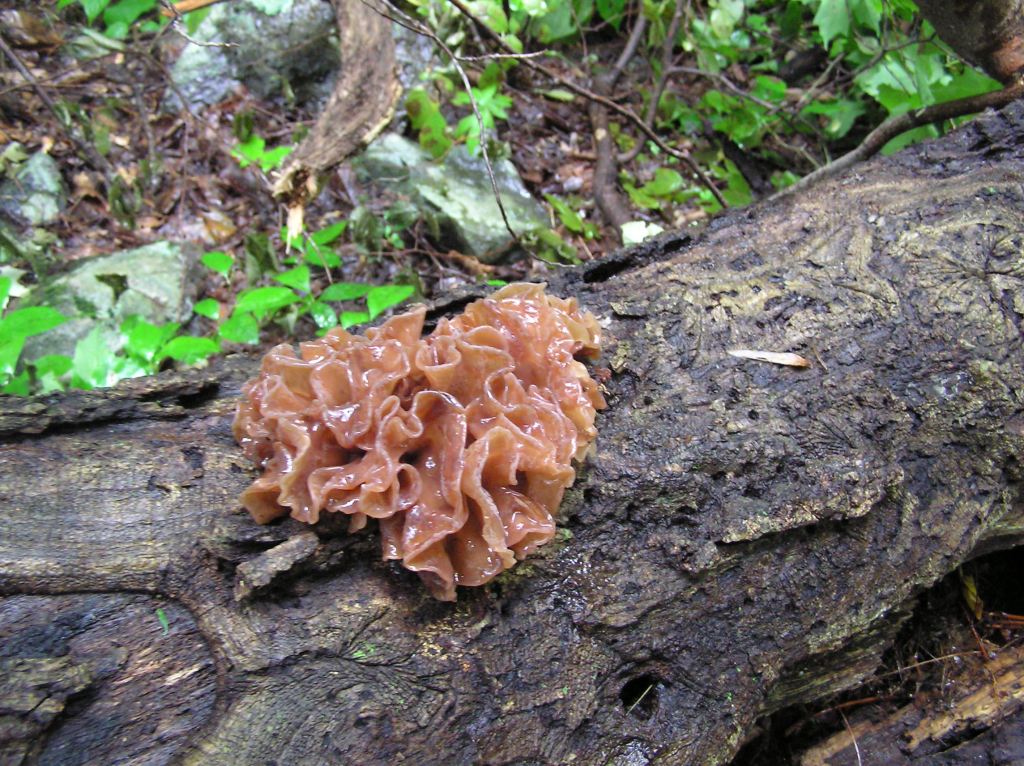
It is tempting to think of slime mold as an evolutionary alternative that was successful enough to survive but not sufficient for mutation and expansion to higher levels of organization. Slime molds have been referred to as Dr. Jeckel and Mr. Hyde due to similar extremes of form and behavior that a single individual might manifest. [5] The slime mold life cycle starts with a wind-blown spore that germinates under appropriate environmental conditions of temperature, water, and nutrients. Slime mold spores form one of two structures: a blob called a myxamoeba that can divide making multiple copies; or a body called a swarm cell that has a flagellum at one end for locomotion. The sexual union of two compatible myxamoebas or two compatible swarm cells yields a fertilized egg cell or zygote. Individual zygotes fuse into a multi-nucleus structure called a plasmodium that surges back and forth in search of food, the mysterious surging mass occasionally seen on woodland jaunts. When the food runs out or if conditions otherwise deteriorate, fruiting bodies are erected and new spores are ejected to comprise the next generation.[6] Thus, a slime mold can be considered as fungus, plant, or animal according to what stage is considered central. Like the ancient parable of the blind men and the elephant, which is like a snake if one first encounters the trunk but like a spear if one encounters the tusk, slime molds are different things to different people.

Scrambled egg slime, aptly named.

Slime molds have traditionally been categorized as myxomycetes from the Greek myxa meaning nasal slime and mykes meaning fungus, a name first applied in 1654. For the next 300 years, fungi were part of the Kingdom Plantae in the Phylum Thallophyta, a collective for primitive plants which also included lichens and algae. Even with sequestration of fungi as the separate kingdom Eumycota, slime molds were considered an integral member. Only recently were they relegated to Kingdom Protista. There are currently about 1,000 species of slime mold taxonomically categorized in 5 orders, 14 families, and 62 genera. [7] Fuligo septica is the best. known of the slime molds. Commonly called either scrambled egg or dog vomit slime (according to age and color) it often grows on garden mulch and can get quite large; a world record F. septica was recorded in Texas in 2016 that was 30 inches long and 22 inches wide. [8] Physarum polycephalum has recently gained the reputation as the slime mold of science due to its demonstrated ability to make what seem to be intelligent choices about the location of food sources and the best way to access them. This is of some interest to developing a better understanding the evolution of cooperation among individual organisms, such as that of social insects like ants and bees.

A scientific experiment conducted at Japan’s Hokkaido University in 2000 found that P. polycephalum was capable of determining the shortest path through a maze that connected two caches of oat flakes, a slime mold favorite.[9] The award of an Ig Nobel prize recognizing this unusual and thought-provoking experiment garnered international slime mold stardom.  Ten years later, researchers followed up on the maze trial with a map simulating Tokyo and its many train terminals marked by oat flakes. The objective was to determine if many-headed slime could find the best network route between them. The result, after only 26 hours of probing growth, was nearly identical to the extant Tokyo rail system, which presumably was the most efficient in practice and took decades to build. [10] The notion that slime molds could apparently make intelligent decisions led inevitably to media hype before settling down to the scientific underpinnings in recent years.

Slime mold replicating the train system of Tokyo (Reference 10)

 The New York Times proclaimed the wisdom of slime in 2012, noting that it behaved as though it were “extremely intelligent” in creating networks that optimized the transport of nutrients. To promote interest for an American audience, a map of the United States was created with oat flakes marking 20 urban centers with slime mold propagating outward from the simulated location of New York City. The resultant connections nearly replicated the interstate highway system in four separate trials. [11] Broadcast media followed up this somewhat scientific finding with a report that slime mold could “solve problems even though it doesn’t have a brain” and had 720 sexes instead of only the boring two. [12] (Since slime molds don’t have bathrooms or sports teams, their social issues should be manageable). Research on the mechanisms employed by slime molds to locate and exploit food along the most favorable paths continues. The physical process is thought to be similar to the movement of fluids in the intestines, known as peristalsis, with slime mold tubes containing cytoplasmic fluid that surges and retracts in reaction to food quantity and quality. [13] From the perspective of a neurologist, the selection process is called emergence and is similar to the scouting methods used by ants to locate the best nesting site and bees to locate the best food source. In the case of slime molds, tubes are sent in all directions as “scouts” and retracting the unsuccessful paths to flow fully in the food direction. [14] An experiment to evaluate slime mold food preferences is not unlikely.

References:

1. Webster’s Third New International Dictionary of the English Language Unabridged, G. & C. Merriam Company, Philippines, 1971.

2. Roberts, J. Every Living Thing, Random House, New York 2024, pp 45-95.

3. Cazeau, C, Hatcher, R. and Siemankowski, F. Physical Geology, Principles, Processes and Problems, Harper and Row New York 1976, pp 6-11.

4. Starr. C. and Taggart, R. Biology, Wadsworth Publishing Company, Belmont, California, 1989, pp 62, 600-609.

5.Lincoff, G. The Audubon Field Guide to North American Mushrooms, Alfred A. Knopf, New York, 1981, pp 843-854.     

6. Kendrick, B. The Fifth Kingdom, Focus Publishing, Newburyport, Massachusetts, 2000. P 10.

7. Keller, H. Everhart, S. and Kilgore, C.  “The Myxomycetes: Nature’s Quick-Chage Artists” American Scientist, Volume 112, September-October 2024 pp 352-359.

8. Keller, H, “World Record Myxomycete Fuligo septica Fruiting Body (Aethalium)” Fungi Volume 9 Number 2, September 2016 pp 6-11.

9. Nakagaki, T. et al. “Intelligence: Maze-solving by an amoeboid organism”. Nature. 28 September 2000 Volume 407 Number 6803 page 470.

10. Wogan T. “Ride the Slime Mold Express” Science 21 January 2010.

11. Adamatzky, A and Ilachinski, A, “The Wisdom of Slime” New York Times, 12 May 2012.

12. Zaugg J. “The ‘blob’: Paris zoo unveils unusual organism which can heal itself and has 720 sexes”. CNN. 17 October 2019.

13. Alim, K et al. “Random network peristalsis in Physarum polycephalum organizes fluid flows across an individual”. Proceedings of the National Academy of Science USA. 29 July 2013 Volume 110 Number 33. pp 13306–11.

14. Sapolsky, R. Determined, A Science of Life without Free Will, Penguin Press, New York, 2023, pp 154-166.

Corn Snake

Corn Snakes are well camouflaged in the brown and tan leaf litter of forest soil.

Common Name: Corn Snake, Red rat snake, Red corn snake, Pine snake, Chicken snake – Corn may refer to habitat, as they frequent corn fields in search of rodents. Corn may also refer to appearance, as the alternating light and dark scales on the bottom, belly, or ventral side, resemble Indian corn with its similar contrast of light and dark kernels.

Scientific Name: Pantherophis guttata – The generic name means panther-snake (ophis) in Greek. The etymology of panther is not well established. Panthera is the genus of large cats (tigers, lions, leopards, and jaguars) that probably is from the Sanskrit word for tiger, pundarika. Panther widely applied to large cats that have a black coat for night stealth (i.e. black panther).[1] Its use in this case is likely due to the more common and prevalent black rat snake, also a member of the genus. The Latin word guttatim means “drop by drop” and may suggest a dappled pattern. [2] Formerly known as Elaphe guttata, the genus Elaphe has been reorganized in recent years due to DNA inconsistency but is still in wide usage in field guides. [3] Elaphe is Greek for deerskin, which may be due to tan color similarities.

Potpourri: Corn snakes are closely related to the more common black rat snakes and share many behavioral characteristics, especially a preference for rodents as repast. The alternative common name red rat snake is a measure of close association. Geographically, corn snakes inhabit only the warmer, southern regions of eastern North America, suggesting a preference for agricultural meadowlands where corn is common whereas their black cousins venture northward into New England. As with most snakes, the color and arrangement of scales are the main distinguishing feature. Corn snakes, though quite variable in hue with angular blotches that can range from red to brown to dark gray, are nonetheless distinct from the uniformly black scales of the black rat snake. [4] Since every aspect of an animals appearance and behavior must have arisen according to environmental factors as a matter of survival as a species, there must be a causal explanation for the color scheme.

Snakes comprise a physiologically consistent group of the class Reptilia in the suborder appropriately named Serpentes. Three lineages of reptiles emerged from the Permian extinction about 250 million years ago, when approximately 90 percent of all species were wiped out, most likely due to massive lava outflows incident to the formation of the supercontinent Pangaea. Two lineages survived through the succeeding Mesozoic era; the dominant dinosaurs of which birds are the only vestige; and the scaled reptiles which gave rise to lizards and then snakes. While the current, Cenozoic (post Pangaea) era is widely known as the age of mammals, it could equally be considered the age of birds, if numbers are more important, or the age of snakes if rapid adaptive radiation was the key criterion.  More than 90 percent of all reptiles living today are lizards or snakes, of which snakes are the vast majority with 2700 species on all continents except Antarctica. [5] Recent phylogenetic research has revealed through DNA associations that the ancestral rat snake arose in tropical Asia in the Eocene Epoch and crossed over the Beringian Land Bridge to North America in the Miocene about 25 million years ago, following the rodents that became their defining source of sustenance.[6]

The adaptive radiation of snakes to occupy new habitat niches precipitated changes in diet, behavior, and appearance as a matter of evolutionary mutations for survival. It is clear from the fossil record and from the presence of vestigial pelvic girdle and hind limb bones in some snakes that they evolved from four legged lizards. Legless reptiles are testimony to the irrefutable progression of Darwin’s evolution. Amphibians that first emerged from the oceans with fins needed legs for locomotion and scaly skin to maintain body fluids to continue as terrestrial reptiles. The success of snakes was necessarily advanced by the loss of quadrupedal capability. The most compelling rationale for this extreme retrogression is rodent burrows. Legs and feet get in the way when slithering down a rabbit hole to access its inhabitants. There was never going to be a case where a cold-blooded snake would chase down a warm-blooded mouse in the open, regardless of the ultimate outcome of Aesop’s tortoise and hare. Cornering rodents in their dens was the impetus and proto snakes with smaller legs were successful in survival, passing their genes down to their eventually legless progeny.[7]

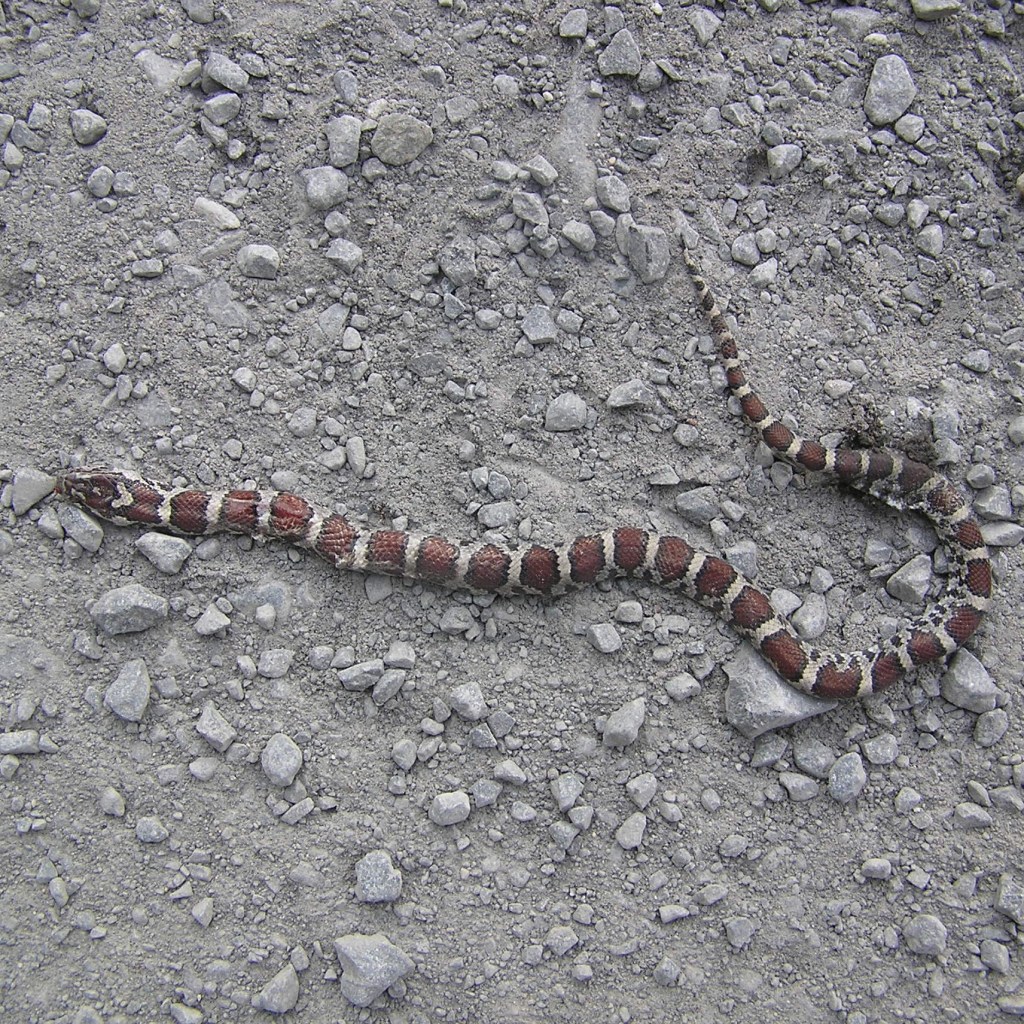
Corn Snakes are often confused with milk snakes

The color scheme of corn rat snakes is also with purpose. For some animals, notably birds, colors are in many cases a matter of mate choice. This cannot be the case with reptiles with no visible distinction between the sexes save perhaps size. What is important is blending into the surrounding environment. If an animal is subject to predation, and most are, then being difficult to find is a survival asset. Snakes are subject to predation by carnivores like foxes, bobcats, and raccoons in addition to birds of prey like hawks. However, an equal and opposite reason for rat snake camouflage is stealth for predation. The black rat snake stands out, literally. Among the greens and dappled hues of the forest floor, jet black is hardly stealthy. Arguably, black confers stealth at night and this surely plays a role as black snakes hunt at night in summer and frequently climb trees in search of songbirds and squirrels. Corn snakes not so much, mostly lurking in underbrush like cornstalks in search of prey. While a limited data point, two corn snakes were eviscerated in Virginia in 1939 to reveal the remains of a field mouse, a skink lizard, and a wood-boring beetle. [8] The variable colors of corn snakes in darker blotches on a lighter background are not unlike those of other snakes like copperheads and timber rattlesnakes in addition to the nearly identical milk snake. It must be concluded that snake color pattern is not all that important as a survival attribute and color variability is therefore not constrained by it.

Detecting, localizing, overpowering, and killing prey for food is a matter of snake survival.  Sensory perception is therefore central to snake hunting success. Vision, hearing, and smell all play a role. Taste does not play a role, as snakes need no sensors to sample food swallowed whole and headfirst. The unblinking, lidless eyes of snakes are sinister and effective. Short range vision of corn rat snakes is good even under the low light conditions of darkness. Since snakes lack mammalian middle ears, connective eustachian tubes, and eardrums (tympana), they are relatively insensitive to airborne noise. However, sound induced ground vibrations are detected by conduction through the solid bones of the skeleton, allowing for initial detection of activity but lacking any directional specificity. Smell is the most important corn rat snake sense [9], enhanced by employing the tongue as an air sampling appendage. The twisting, forked tongue is an equally sinister snake attribute. Chemical molecules in the air that convey smell are sampled by the flickering tongue and deposited into two small ducts in the top of the mouth cavity. This repository is the vomeronasal, or Jacobson’s organ, which sends scent data to the brain for interpretation as food, foe, or friendly mate.[10] When a corn rat snake is encountered on the trail, it will first feel footsteps, localize with beady-eyed vision, and conduct a full evaluation with smells sampled lingually. It will respond according to instincts tempered by experience.

A corn rat snake’s reaction to its encounters with other animals depends on how its brain interprets what its sensory suite detects. According to the analogous mammalian amygdala, sometimes referred to as the reptilian brain, reactions include fight, flight, fear, and, if you happen to be a corn snake of the opposite gender, sex. The mnemonic used by neuroscientist students for these functions is “the 4 F’s” of the amygdala, substituting carnal knowledge fornication. If a threat is perceived and an escape route is open, corn snakes take flight and slither to safety. Laboratory testing has demonstrated that corn snakes are adept at finding an escape route based on spatial awareness and learning when confronted with multiple options. Fleeing to leaf litter bowers is a practiced strategy. [11] If cornered, corn rat snakes will fight, taking up a defensive, coiled, readiness to strike posture, bobbing and weaving to confront the threat. Corn rat snakes also vigorously shake their tails like rattlesnakes when threatened, lacking only the noise-making rattle. While the reason for this evolutionary trait is unknown, it is speculated that it is defensive, presenting a confusing tableau of a double-ended body to a potential predator. It is a relatively common trait among members of the Colubrid snake family.  However, if fear is not a factor according to the sensory profile and there are prospects for a meal or a mate, escape changes to engage.

The adaptations necessary and sufficient for snakes, obligate carnivores, to subdue their quarry without the benefit of arms and legs to hold and pummel or teeth to impale and tear is testimony to the consequential driving force of evolution.  Poisonous snakes engage in chemical warfare, injecting toxins with fangs to immobilize prey. The constrictors, like corn rat snakes, employ brute force. The widespread use of constriction among snakes suggests that it probably was an early adaptation, arising in the Paleocene Epoch, contributing to the rapid radiation of constrictor snakes to new habits. [12] An evaluation of prey handling complexity comparing constrictors with jaw holding and body pinning practiced by other species revealed the simplicity and effectiveness of the former. It is surmised that the constriction method evolved to subdue “vigorously struggling prey” which may have been necessitated to successfully catch and kill rodents. Constrictors mastered the physics of muscular compression. [13]

And then there is the matter of mating, which begins with sensory perception of a potential partner of the same species. Since snakes are solitary and mostly hidden from view over wide-ranging habitats, the importance of pheromones in mate localization cannot be understated. The search for a mate begins in early spring, and, if successful, results in the deposition by the female of up to 30 eggs in a secluded location chosen with enough heat (82 °F is ideal) and humidity to promote incubation. As with almost all reptiles, there is no parental support and protection. The eggs must remain undiscovered by predators for over 60 days when they hatch out as foot-long juveniles. In the three years that it takes to reach full size; many are lost to the gene pool due mostly to either becoming prey or due to the inability to find prey. [14] For corn rat snake population stability, one male and one female must, on average, survive, meet, and mate from each clutch of eggs. In the native habitat in the southeastern United States, corn rat snakes hold their own, in spite of being killed by humans, many of whom wrongfully fear all snakes. For those who like snakes, corn rat snakes make good pets, as they are docile and do not object to being handled. This has led to corn rat snakes becoming an invasive species in many of the islands of the Caribbean as they have been imported and escaped to a predator free habitat. [15]

References:

1. Webster’s Third New International Dictionary of the English Language, Unabridged, G. C. Merriam Company, Chicago, 1971, p 1632

2. Simpson, D. Cassell’s Latin Dictionary, Wiley Publishing, New York, 1968, p 211.

3. Crother, B.  “Scientific and standard English names of amphibians and reptiles of North America north of Mexico, with comments regarding confidence in our understanding” Society for the Study of Amphibians and Reptiles Herpetological Circular. 2012 Volume 39: pp 1–68

4. Behler, J. and King, F. National Audubon Society Field Guide to North American Reptiles and Amphibians, Alfred A Knopf, New York, 1979, pp 604-607

5. Starr, C. and Taggart, R. Biology 5th Edition, Wadsworth Publishing Company, Belmont, California, 1989, pp 580-585.

6. Burbrink F. and Lawson, R “How and when did Old World rat snakes disperse into the New World?”. Molecular Phylogenetics and Evolution. 27 September 2006 Volume 43 Number 1pp 173–189.

7. Title, O. et al “The macroevolutionary singularity of snakes” Science, 22 February 2024, Volume 383 Number 6685. pp 918-923.

8. Linzey, D. and Clifford, M. Snakes of Virginia, University of Virginia Press, Charlottesville, Virginia, 1981, pp 96-102

9. Saviola, A et al “Chemosensory responses to chemical and visual stimuli in five species of colubrid snakes”. Acta Herpetologica. 19 April 2012 Volume 7 Number 1 pp 91–103

10. Dowling, H. “Reptilia” Encyclopedia Brittanica, Macropedia, University of Chicago, Illinois, 1974. Volume 15 pp 725-739.

11. Holtzman, D. et al “Spatial learning of an escape task by young corn snakes, Elaphe guttata guttata“. Animal Behavior. January 1999 Volume 57 Number 1 pp 51–60.

12. Greene, H. and Burghardt, G.  “Behavior and Phylogeny: Constriction in Ancient and Modern Snakes”, Science 7 April 1978. Volume 200 Number 4337.

13. Saviola, A. and Bealor, M. “Behavioral complexity and prey-handling ability in snakes: gauging the benefits of constriction”. Behavior. 30 May 2007 Volume 144 Number 8 pp 907–929.

14. Smithsonian Zoo. Eastern corn snake | Smithsonian’s National Zoo and Conservation Biology Institute   

15. Commonwealth Agricultural Bureaux International. (CABI) database https://www.cabidigitallibrary.org/doi/10.1079/cabicompendium.84655

Mallard Duck

The brightly colored male drake is chosen by the camouflaged hen as her mate.

Common Name: Mallard – From the Old French mallart and Latin mallardus, a combination form derived from the word male. The etymology is not well defined, but it is likely that the distinctive plumage of the male duck is the basis for distinguishing the species with a name derived from “male of the wild duck.” In France, the mallard is known as le canard colvert, roughly translated as duck with the green feathers on the side of the head. Duck is derived from Middle Dutch as düken, to dive underwater. Mallard ducks duck but don’t dive.

Scientific Name: Anas platyrhynchos – The generic name is the Latin word for duck which is ascribed to the Sanskrit ati meaning aquatic bird.  The species name is from the Greek platy meaning flat and rhynchos meaning snout, bill, or beak. Taken together the scientific name literally means flat-billed duck. [1]

Potpourri: The contrast between male drake and female hen mallard, known as sexual dimorphism, is among the most extreme of all vertebrates, affording an unmistakable visual key for identification. Carl von Linné originally listed the male and female as different species in the Linnean taxonomy classification system, believing that they could not possibly be the same.  The male drake’s iridescent dark green head, white neck ring, chestnut brown breast, brownish gray back and white flanks stand in stark contrast to the female’s maculation of buff, ecru, and dark brown. Mallards are prolific, having spread across the northern hemisphere as a global species. The North American contingent of mallards can even be considered a single population. [2] The evident evolutionary success of mallards, even though they are preyed on by human duck hunters, is due to several factors. Drakes are aggressive sexual predators, even though those that succeed settle on a single partner. Hens are selective in choosing mates that meet their criteria, which must impart qualities in their combined offspring that advance favorable adaptability and survival traits. Mallards are masters of ponds and lakes, which provide a measure of protection from terrestrial predators, and furnish an ample supply of water plants, their primary food source. Mallards are a duck dynasty.

Mallards are members of the Anatidae family, named for its characteristic “type” species, the duck genus Anas. It is comprised of ducks, geese, and swans, consisting of 49 genera and 158 species that range across the globe on every continent except Antarctica, a cosmopolitan distribution. Anatids are adapted for aquatic habitats, employing open water as a means of transport. For the most part, they have webbed feet for paddling locomotion and large, round bodies due to the physics of floatation. [3] The buoyancy that provides an upward force to float a duck is equal (and opposite) to the gravitational weight of water displaced by its semi-submerged body. This is important for ship hull construction and duck anatomy, both of which are elongated, rounded cylinders. Waterfowl are also unusual in that they are one of only a few types of birds (3 percent) that have a penis, necessary to ensure successful sperm transfer in an aqueous environment. It is a given that the ancestral bird cum dinosaur had a penis as it was reptilian in origin. The reduction and eventual elimination of the male sexual appendage in most birds is attributed to social behavior. Mating is based on mutual choice with the female usually having the greater say in the matter; many partnerships are lifelong. Since penetration is not forced, the act of intercourse amounts to what is euphemistically called the cloacal kiss. The cloaca (Latin for sewer) is the channel that serves as the passage for excrement and, in some cases like most birds, reproduction. Geese and swans follow the normal bird arrangement of mutual, lifelong partnerships in spite of the retention of a shortened penis for aquatic penetration. In Greek Mythology, Zeus took the form of a swan to impregnate Leda, who gave birth to Helen of Troy. Mallard sex is altogether different.

The iridescent green head of the drake is limned by a white neck ring.

The sexual overdrive of mallards in particular and ducks in general can take extreme forms. In June 1995 a flying mallard collided with the glass front wall of the Rotterdam Natural History Museum in Holland and fell, limp and thoroughly dead at its base. A curator from the museum went to investigate and found not only the dead duck but also a live mallard actively engaged in intercourse that persisted for over an hour. The paper written on the subject, entitled “The First Case of Homosexual Necrophilia in the Mallard” won Harvard’s Ig Nobel prize in biology in 2003. The museum continues to celebrate “dead duck day”. While this particular observation may be an aberration, it is similar in sexuality if not in degree to other mallard drake behaviors such as gang rape. Groups of males are wont to chase after single hen females with repeated sexual assaults that sometimes results in fatal injuries. The cuckold whose mated hen was the object of the chase usually responds with aggressive assault to try to dissuade the rapists, manifesting male fitness evolution. [4] In the absence of available females, drakes have been observed attempting copulation with other (live) males. The evolution of mallard drake’s super libido is matched by the physical size and complexity of the penis. While the record goes to the Argentine lake duck with a 17-inch penis, the mallard is amply endowed with a spined member one third as long. It operates like a coiled party blowout noisemaker, unrolling and everting with lymphatic system pressure as it extends into the vagina of a willing or unwilling hen. In less than a second, it coils counterclockwise inward and upward as a flattened tape with a groove (the sulcus) on one side serving as sperm conduit.[5] However, male sexual dominance is not the whole duck story.

The only notable color of the hen mallard is the blue speculum on the trailing edge of the wing.

Female mallards exercise mate choice, just like most of their avian counterparts. It is not, however, a simple yes or no. The complex nature of duck sexual behavior became a matter of scientific interest early in the century. The explosive, almost instantaneous erection of the penis of mallards and several other ducks must have had some evolutionary origin and was a matter of some interest to the biological sciences. The first area of investigation led to the study of the vaginal structure of duck hens. A series of dissections of different species revealed considerable anatomical differences. While most ducks had simple, tubular passages as would be expected, mallard hens had convoluted structures with a number of side openings that led to dead ends. And, most surprisingly, the vagina was coiled clockwise, in the opposite direction of the counterclockwise drake penis. This led to the hypothesis that species of female ducks partnered males with intimidating sexuality had evolved a coping mechanism, coital sidetracking. To test the hypothesis, an ingenious experiment was devised in which male ducks were encouraged (using a hen as stimulation) to ejaculate into purpose-built glass vesicles that simulated either a corkscrew vagina with cul-de-sac outlets or a simple tubular design with no twists or turns. The data showed that the ducks using the straight, normal tubes were successful in full erections 80 percent of the time while those using the actual hen twisted coil arrangement were only 20 percent successful. This was supported by DNA testing of drakes, hens, and the resultant chicks showing that even though 40 percent of all mallard copulations are forced, no more than 5 percent of the chicks genetically matched to rogue drakes. In other words, the female was able to employ mate selection 95 percent of the time. [6

Scientific research conducted to unravel the complex sexuality of ducks contributes to a better understanding of birds in general and of biology more broadly. Mallards are particularly important for a number of reasons. One is population size. It is estimated that the 23 million individual mallards that make up the global population range over about 10 million square kilometers (one tenth) of the earth’s land surface. In some areas like the Chesapeake Bay, mallards are considered invasive. [7] A second is sexuality, for, in addition to assaulting hens and even dead males, mallard drakes are insatiable paramours. Introduced mallards interbreed with native duck populations to the extent that hybridization threatens to extirpate other duck species; it is estimated that 95 percent of New Zealand’s native gray ducks have been hybridized and that the Hawaiian duck has become completely hybridized on the island of Oahu. [8] Last but not least is human health and nutrition.  Ducks are the principal reservoir on Influenza A viruses, including the H5N1 variant, which, as recently as 2013, resulted in outbreaks in poultry in over 60 countries resulting in 622 human infections. [9] However, studying duck sex, when taken out of context, can sound ludicrous, not unlike many other scientific studies. As part of the political news cycle, the study was dubiously called Duckpenisgate and newscasters asked whether the public was aware that $385,000 of their tax dollars had been spent to study duck dicks. The war on science was just getting started.

Mallard behavior is hard-wired by genetic heritage, focused on reproduction. The annual cycle starts with the initiation of pair bonding in late fall that continues through to spring, migrating in most cases to breeding grounds for the mating season. [10] The sexual hormones ramp up from minimal during winter to what can only be described as overdrive as gonads grow thousands of times larger in only a few months.  Problems arise because the ratio of drakes to hens is skewed with the former outnumbering the latter, as is the case with most duck species. The problem is exacerbated by the concentration of ducks in their habitat. Ponds are limited in size and have an abundant food supply of aquatic plants. Since it would not be possible for any drake-hen couple to defend a pond, ducks are not territorial. [6] The combination of too many males in a restricted area with a large number of paired couples committed to copulation and reproduction is a recipe for mayhem. Males struggle to defend their mates from the testosterone driven bachelor drakes in search of fulfillment. After successful mating, controlled in part by hen selectivity, the favored drake continues to guard his mate during selection of a ground nest near the water and the laying of 9-13 eggs. The burden of sitting on the nest for a month and leading the hatched chicks to water rests entirely with the hen. The drake departs, molts and regrows flight feathers needed for the reverse migration to find a new mate for the next season. [11]

The love it and leave it behavior of male ducks is blighted according to human morality. Anthropomorphism, however, has no place in nature other than amongst us. The mallard drake dynasty is a product of time, space, and survival, as is the evolution of every other living thing. The evolution of the mallard is fairly recent, the genus Anas is thought to have originated sometime in the late Pliocene or early Pleistocene epoch, about two million years ago, probably in Siberia.[12] During the relatively brief geologic time scale period since then, the combination of aggressive males preying on females and the selectivity of females in their choice of males (presumably preferring those with coruscating green heads) has been a resounding success. The loss of hens sitting on ground nests to predators like foxes contributes to their numerical imbalance. The high demands on chick survival according to the same constraints would also result in survival of the strongest, usually male, of the species. There are therefore more males for the females to choose from to ensure that those with the “right stuff” get the reward of progeny. Drakes are aggressive because they have to be. Disney’s irascible Donald Duck character as foil to the benign Mickey Mouse is well cast.

References:

1.  Webster’s Third New International Dictionary of the English Language, Unabridged Meriam Webster Company, New York, 1971, pp 78, 698, 1267

2. Starr, C. and Taggart, R. Biology, The Unity and Diversity of Life, Fifth Edition, Wadsworth Publishing Company, Belmont, California, 1989, p 539, 543.

3. Alderfer, J. ed Complete Birds of North America, National Geographic Society, Washington, DC, 2006, pp 2-42.

4. Barash, D. “Sociobiology of Rape in Mallards (Anas platyrhynchos): Responses of the Mated Male” Science, Volume 197 Issue 4305, 19 August 1977, pp 788-789

5. Schilthuizen, M. Nature’s Nether Regions, Penguin Group, New York, 2014, pp 125-129.

6. Prum. R. The Evolution of Beauty, Doubleday, New York, 2017, pp 149-181. The relevant chapter is entitled “Make Way for Duck Sex”

7. Smithsonian Institution Invasive Species https://invasions.si.edu/nemesis/chesreport/species_summary/anas%20platyrhynchos

8. Levin D. Hybridization and Extinction” American Scientist, Volume 90 Number 3, May-Jun 2002, p. 254.

9. Huang, Y. et al. (2013). “The duck genome and transcriptome provide insight into an avian influenza virus reservoir species”. Nature Genetics. April 29, 2014, Volume 45 Number 7 pp 776–783.

10. Cornell University Ornithology Laboratory https://www.allaboutbirds.org/guide/Mallard/id

11. Rogers, D.  University of Michigan Ann Arbor Michigan, “ Anas platyrhynchoshttps://animaldiversity.org/accounts/Anas_platyrhynchos/

12. Johnsgard, P. “Anas platyrhynchos Linnaeus – Evolutionary relationships among the North American mallards”. The Auk.1961 Volume 78 Issue 1 pp 3–43

Bradford (Callery) Pear

A Bradford Pear tree on a ridge above the Shenandoah River probably escaped from a nearby development.

Common Name: Bradford pear, Callery pear, Braford Callery pear – The common name Bradford is eponymous, given to the tree to recognize the horticulturist who was the head of the USDA Plant Introduction Station in Glen Dale, Maryland where the cultivar of the Callery pear was first bred. Pear is from pirum, the Latin word for the fruit.

Scientific Name: Pyrus calleryana – The generic name is a variant of the Latin word for pear tree. The species name honors Joseph Callery (Giuseppe Calleri in his native Italian), a Catholic missionary to China who collected specimens of Asian native plants during his tenure there. He is recognized for having introduced the Callery pear to Europe in the 19th century.

Potpourri: Just as kudzu gained notoriety as the vine that ate the South, the Bradford pear is rapidly becoming the shrub that swallowed suburbia. As the Callery pear, it was originally imported from China in the early 20th century as an integral part of a United States Department of Agriculture (USDA) program to save the commercial pear industry from the devastation of a bacterial blight. The plan to use robust root stock resistant to blight from Callery pears grafted with the commercial, French pear was sound, as a similar method had been used in the late 19th century to resolve the “Great French Wine Blight” using American vine roots resistant to the American insect pest (a type of aphid) that caused it. [1] The French pear trees grafted to Chinese root stock flourished. Had it ended there, the monoculture stands of white petaled trees and shrubs that line many roads and dominate disturbed areas would never have occurred. The history of Bradford pear, like that of kudzu, is a cautionary tale of human intervention in ecosystems without a full understanding of the complexities of nature and evolution.

Before invasives demonstrated their ability to devastate native flora and fauna in the aughts of the 21st century, moving species randomly around the globe, sometimes purposely, was not only tolerated, but encouraged. Tomatoes, corn, and potatoes originated in the New World to become staples of European cuisine just as wheat, cotton and rice were imported and widely planted in the Americas. The genus and species scientific classification system of Carolinus Linnaeus still in use after over three hundred years was undertaken to organize the thousands of newly discovered plants submitted and named by field naturalists augmented by a list of descriptive nouns and adjectives, mostly in Latin. [2] The intentional importation of alien plants was mostly benign, with the exception of plants like dandelion, plantain, and garlic mustard that spread, crowding out the native species due to their superior resiliency. Bradford pears occupy a middle ground, having been introduced with good purpose, then intentionally hybridized to satisfy consumer demand for landscape trees. 

The story begins in the decades following the Civil War as Conestoga wagons forged ever westward to colonize the verdant valleys on the windward side of the Sierra Nevada. As herding gave way to agriculture in the late 19th century, the search for plants that would flourish there became the mission of the purposely established USDA Foreign Seed and Plant Introduction Office. Due to similarities in climate, east Asia was considered the best potential source for candidate botanicals. A stout-hearted  Dutch immigrant gardener cum naturalist named Frank Meyer with no fear of travel to remote areas to forage in relative isolation was recruited to undertake the mission. Like Darwin’s mission to collect specimens around the Pacific rim on HMS Beagle from 1841 to 1846, Meyer collected a wide variety of cereal grains, leguminous vegetables and fruits between 1905 and 1915 that eventually led to many of the food crops that have been cultivated in North America for over a century. Meyer’s initial forays did not seek out pears, as they were already well established in California,  Washington and Oregon. [3]

The genus Pyrus probably originated in the Tian Shen Mountains in the Xinjiang Province of western China. Pear trees hybridized as they spread throughout Eurasia as a natural progression by animals, especially birds, eating the much smaller fruit of wild pear trees and defecating its seeds. Cultivation of larger, sweeter pears preferred by Europeans predates historical records but probably started in Mesopotamia. The resultant European pear (P. communis) was brought to the colonies of the Americas by both the British and French from the east and the Spanish from the south giving rise to orchards as early as the 18th century. Pear groves proliferated, particularly in the Pacific Northwest to make pears the third most consumed fruit in the United States, trailing only apples and peaches. As with most commercially grown fruit trees, grafting is used to grow an appealing pear variant onto rootstock selected for its hardiness Since pear trees are therefore essentially identical clones―a genetic monoculture―they are subject to epidemics as a microbe that infests one will spread to them all. This is precisely what happened to the pear industry in the early 1900s. [4][5]

Meyer returned to the United States in 1916 to observe the effects of the fire blight caused by the bacterium Erwinia amylovora on pear orchards. Professor Frank Reimer of Oregon State University had initiated a program in 1912 to find a North American pear species that was resistant to the blight to no avail and enlisted the aid of Meyer to find an Asian pear species. When he returned to China in 1918, Meyer focused on Pyrus calleryana, noting in a communiqué to the USDA that the “form from the Yangtze Valley seems to be better suited for Oregon than the one from South China.” After trekking though China for some months to seek out the tree, he concluded in another letter that “Pyrus calleryana is simply a marvel. One finds it growing under all sorts of conditions; one time on dry, sterile mountain slopes; then again with its roots in standing water at the edge of a pond.”  In 1918, he proceeded to collect and ship 100 pounds of seeds back to the USDA for testing and began his journey home. He never made it, falling overboard to his death from a ship on the Yangtse River. His body was found thirty miles downriver on June 9, 1918. His colleague Reimer wrote “Mr. Meyer was one man in many thousands. He possessed a great brain and also a great heart.” [6] A suitable epitaph would be Frank Pearseed to stand beside John Chapman of Appleseed fame in the pantheon of American agronomy.

The showy spring florescence is one of the appeals of Bradford pear as a landscaping tree.

The seeds sent by Meyer were provided to USDA Plant Introduction Stations in Corvallis, Oregon and Glenn Dale, Maryland to assess the viability of P. calleryana as both root stock and as a new pear variant. The root stock proved to be resilient to the ravages of fire blight and was subsequently used to reestablish of pear orchards, saving the pear industry from devastation. Over three decades later, one of the Callery pear trees planted in Maryland caught the attention of a USDA employee named John Creech. Noting the glossiness of the leaves, the aesthetic, geometric balance of its spreading branches, and the lack of sharply spurred twigs that were typical of pear trees,  he concluded that it would make an exceptional landscaping tree. By grafting branches from the original tree onto rootstock of P. calleryana, he cloned a cultivar variant that he named the Bradford pear in honor of a horticulturist employed by the Glenn Dale facility. The landscaping tree was commercially released in 1962 and quickly became popular due to the attributes that drew Creech. According to a respected and seminal plant guide, “The Bradford pear, a selection of P. calleryana, has recently become popular as an ornamental because of its profuse spring flowers and red fall color.”  [7]

Bradford pear thicket along a road in Maryland

The Bradford pear became one of the primary trees lining the streets of American suburban sprawl built outward, a mecca from the noise and congestion of cities in the second half of 20th century. To satisfy the insatiable demand for variety in the cookie cutter sameness of burgeoning developments, twenty four variants of the Callery pear were introduced with catchy names ranging from Whitehouse to Autumn Blaze to augment the original Bradford cultivar. Like the ancestral Callery pears of China lauded by Meyer for their stamina and ubiquity, the Bradford pear and its variants were indomitable, thriving in poor soil that could be wet or dry, acidic or alkaline, resistant to disease, and reliably radiating branches of bouquets in spring and brilliant red fall foliage reminiscent of New England’s maples in autumn. Millions were planted across the country from California to Connecticut. [8] By 2015, Bradford pears had become the third most popular tree in New York City with a population of 58,000. The transition from desirable landscaping tree to pernicious pest occurred slowly, as the phalanxes of flowering white trees lining major roads could no longer be dismissed as part of a normal spring renaissance. [9]

What happened was hybridization. This was unexpected but could have been anticipated. Since Bradford pears and their ilk were clones in having been propagated by grafting small branches onto robust root stock (mostly P. calleryana), they were not able to cross pollinate and produce seeded fruits due to genetic incompatibility. However, the different horticultural cultivars were produced from pear seeds that were originally gathered by Meyer from all over China resulted in hybrids with different genotypes. This is the essence of the genetic diversity that Darwin first observed among the different specie of finches in the Galapagos Islands. As long as different hybrids are within individual bumble bee collection zones, chances are that eventually the pollen from a Bradford pear will find itself in the ovule of a receptive clone. The resultant fruit with its now mutant and fertile seeds, carried away for consumption by birds, especially European starlings and American robins, spread wherever and whenever the birds went, literally. Eventually, as a matter of evolutionary dynamics, a variant emerged that was super survivable. The Bradford/Callery pear has been listed as a “plant invader” by the US Fish and Wildlife Service in the mid Atlantic states since 2008. [10]


There is a certain amount of irony in introducing Callery pears to save the commercial pear industry from fire blight and then hybridizing it to create the hardy and aesthetic Bradford pear that has become a pernicious invasive. While other trees, like “tree of heaven” ailanthus and “empress tree” royal paulownia, have been introduced and become invasive, Bradford pears are unique in having been created by USDA plant breeders as a perceived public service. Contributing to the irony is that the fire blight bacterium that was the reason for the introduction of P. calleryana in the first place has reemerged as a major problem in the commercial pear industry due to its own evolutionary mutations. Walt Kelly’s Pogo cartoon for the first Earth Day provides the adage of the age: “We have met the enemy and he is us.” Barry Commoner, the father of ecology, proposed the law that “everything is connected to everything else,” a testimony to the complexities of the natural world. The only option at this point is to stop planting Bradford pears and their peers intentionally as landscape trees and to remove them whenever they spread into new habitats. There is evidence that the word is out. A sign posted at the trailhead at a Virginia State Park read “Wanted, Dead, not Alive, Callery Pear,” asking the public to “be on the lookout for this invasive intruder” and alert park staff so that it can be removed. The enemy strikes back.

References:

  1. Lukacs, P. Inventing Wine, A New History of one of the World’s Most Ancient Pleasures W. W. Norton and Company, New York, 2012, pp 169-174
  2. Wilson, C. and Loomis, W. Botany, 4th edition, Holt, Rinehart, and Winston, New York, 1967, pp 365-367.
  3. Culley, T. “The Rise and Fall of the Ornamental Callery Pear,” Arnoldia, Volume 74 Issue 3, 18 February 2017. https://arboretum.harvard.edu/stories/the-rise-and-fall-of-the-ornamental-callery-pear-tree/
  4. U.S. Department of Agriculture. “Pyrus Crop Germplasm Committee: Report and genetic vulnerability statement, September 2004” September 2004, Germ Resources Information Network (GRIN), pages 5-7
  5. Little, E. Field Guide to North American Trees, Alfred A. Knopf, New York, 1993, p 509
  6. Meyer, F. N. 1918. South China Explorations: Typescript, July 25, 1916–September 21, 1918. The National Agricultural Library. Available online at: https://archive.org/details/CAT10662165MeyerSouthChinaExplorations
  7. Brown, R. and Brown, M. Woody Plants of Maryland, University of Maryland, Port City Press, Baltimore, Maryland, 1999, p. 132.
  8. Higgins, A “Scientists thought they had created the perfect tree. But it became a nightmare” Seattle Times. 17 September 2018. https://www.seattletimes.com/nation-world/scientists-thought-they-had-created-the-perfect-tree-but-it-became-a-nightmare/
  9. McConnaughey, J. “Invasive Callery pear trees become a real menace” Washington Post, 17 May 2022

Cut-leaved Toothwort

The deeply lobed leaves are the most reliable feature for field identification.

Common Name: Cut-leaved toothwort, Pepperwort, Pepper-root, Spring blossom, Lady’s smock, Milkmaid, Large toothwort – The deeply indented leaves are an unmistakable key to the identification of this spring ephemeral. The root is a thick, white rhizome that is divided into segments having the appearance of a jawbone with teeth. Wort is from the Old English word wyrt meaning herb, plant, or root and is usually used in combination for an herbaceous plant. [1] It does convey a sense of medicinal use, as the word herb is sometimes construed.

Scientific Name: Cardamine concatenata – The genus name is from the Greek kardamine, a word meaning water cress. The species name is taken directly from the Latin concatenatus meaning linked together like a chain, recognizable in English as concatenate. This refers to the jointed “tooth” rhizome. Dentaria laciniata appears in many older texts with the genus having clear reference to teeth, the dent prefix in Latin. Laciniate means cut into deep and irregular lobes, also directly from Latin translation. The former scientific name translates to “tooth-like with deep lobes,”  the antithesis of cut-leaved toothwort. [2]

Potpourri: Spring ephemerals are the first harbingers of winter’s end and the start of the growing season powered by radiation from the sun and nurtured by water now unfrozen. The name is apropos, deriving from the Greek word ephemeros, lasting for one day. It is generally used for anything fleeting, including ideas, maladies, data, and especially cultural arts (out, out brief candle, life is but a walking shadow that struts and frets his hour upon the stage and then is heard no more).  Flowers that proliferate along the trail are the epitome of ephemeral in their brevity of growth, maturity of florescence, and the decay of death over the course of just a few days. In addition to the cut-leaved toothwort, the other notable ephemerals are bloodroot, hepatica, trout lily, spring beauty, and trilliums. As a trait shared among a number of unrelated species, ephemerality is the end result of a successful evolutionary response to environmental constraints that favors transience. Such traits are called convergent evolution as plants (and animals) converge to the same form and function independently.

The reason flowers trend toward the frenetic pace necessary to become ephemeral is neither recondite nor one of nature’s innumerable oddities. It results from the logical and successful strategy to take advantage of the short window of time during which there is little competition, other than from other ephemerals doing the same thing. Plants need the sun’s energy to make hydrocarbons and (most) flowering plants need pollinators to satisfy sexual needs (but not desires). Sunlight at ground level is abundant in early spring as the canopy trees have not yet foliated to absorb its energy for their own photosynthetic purpose (which is why trees grow ever upward in branches of leafy arrays). As insect pollinators first emerge in the cold blush of early spring in search of nutritive nectar, ephemeral flowers are abundant with showy blossoms offering the promise of a meal. There is little else to choose from.

Ephemerals make insect propagation easier by being generalists, meaning that any roving insect will do (many flowers – notably the orchids – are “designed” to attract a specific insect pollinator), and by being self-compatible, meaning that the pollen from the stamens in a flower will fertilize the ovaries in the pistil of the same flower. Bumblebees are the most adapted to pollinating ephemerals as they emerge early and feed abundantly to get a jump start on establishing a colony, a prodigious feat that must be completed by fall, a scant six months away. Their furry bodies shield them from cold and their continuous buzzing vibrations generate heat.  [3] While self-pollination is not a strategy conducive to long term survival in that it suppresses the genetic diversity of mixing genes, the raison d’être for sexuality, it suffices for ephemerals. Most plants reproduce by combining self pollination with sexual cross pollination to promote propagation with enough diversity to prevent extinction. [4] Whatever the mechanism, the evolutionary success of ephemerals is undeniable, as they are ubiquitous along forested pathways in the springtime to the extent that they define it as a time of resurgent life.

Cut-leaved toothworts employ a supplemental growth feature in the form of a root structure called a rhizome that extends horizontally from each plant to enable vegetative growth. The name toothwort is due to the resemblance of the rhizome to a jawbone with bumps that suggest teeth along its length. The bumps-cum-teeth are the origination points for individual flower stems that grew upward over the course of previous spring emergence. [5] This is a feature of a perennial plant, taking advantage of a well established root structure from which to grow and spread. While the four-petaled white to pink flower is what attracts ambling hikers for its beauty and itinerant insects for its pollen and nectar, it is the root for which it is named that  establishes a niche in the ethnobotanical catalogues as both a food and as a medicinal. While cut-leaved toothwort flowers each produce about ten seeds, amounting to as many as 100 seeds per plant, their fertilization and growth is infrequent, relying mostly on the anastomosis of spreading rhizomes for extension into new frontiers. [6]

The rhizome or root has the appearance of a jawbone with emergent teeth.

The most obvious, if least effective, human use of tooth-like roots was as a treatment for toothache and related oral maladies. [7] Prior to the modern era, disease was more fearsome as there was little knowledge of cause and remedies amounted to patent quackery like blood-letting and bat wing potions. In Western civilization, Christianity offered the only solace against the scourges of nature and a loving God was thought to have intervened to help believers survive (and prosper and, of course, propagate the faith and faithful). This was the origin of The Doctrine of Signatures in the 17th century, a theory that God left his mark/signature on plants to signify their use. It was only necessary to determine the divine purpose through enlightened human inspection. Heal-all would soothe sore throats because it looked like an open mouth and sassafras cured syphilis because the leaves are shaped like a penis (stretching credulity). [8] The use of a plant that had roots that looked like teeth was much more obvious. It could only have had an ameliorative placebo effect among the early colonists, many of whom came to the alien shores of North America aided and abetted by their profound faith.

The Native Americans knew better, having survived for thousands of years by applying the tried and true practices of trial and error to develop an herbal pharmacopeia passed down through generations by word of mouth. They did not use toothwort for toothache. But they used it for many other purposes ranging from aphrodisiac to food. The six tribes of the Iroquois Confederation of the Northeast are treated as a singular group even as their cultural traditions are diverse as reflected in their toothwort use. It was used not only as a medicine to treat specific conditions like headache and heart palpitations but as a kind of panacea to treat any injury, known as “little water medicine.” More imaginatively, the toothwort plant was rubbed over things like traps and fishing lines as a “hunting medicine.” The root was placed inside the mouth which produced an aura thought to attract the opposite sex as a “love medicine.” There is no evidence that any of these treatments were effective in improving love, hunting, or health.    

The one use of cut-leaved toothwort that transcends Native American practices and colonist adaptation to the current era is as wild food. The different applications imply some significant diversity in American Indian cuisine. The Cherokee of the Carolinas cooked the plant and roots with other greens as a vegetable medley. Further west, the Ojibwa made something of a stew with potatoes, deer meat, and corn flavored with the peppery taste of the roots. [9] The pungency of phytochemicals is one of the characteristics of the Mustard Family (Brassicaceae or Cruciferae) to which toothwort belongs. According to current tastes, the pungent roots can be added to a sandwich or to a salad for piquancy with a specific recipe to “scrape or grate several of these sharply flavored root stocks, mix with vinegar, and set on the table in a little covered pot.” [10] However, harvesting ephemeral flowers to eat their roots is neither an appropriate nor necessary way to interact with the natural world. Better to admire them as you walk through the woods in spring.

References

1. Webster’s Third New International Dictionary of the English Language, Unabridged. Encyclopedia Brittanica, Inc. Helen Benton Publisher Chicago, Illinois, 1971, p. 2637.

2. Simpson, D. Cassell’s Latin Dictionary, Wiley Publishing, New York 1968, pp 179,333.

3. Kricher, J. and Morrison, G. A Field Guide to Eastern Forests, Houghton Mifflin, Boston, 1988, pp.163-169.

4. Wilson, C. and Loomis, W. Botany, 4th Edition, Holt, Rinehart and Winston, New York, pp 347-362.

5. Niering, W. and Olmstead, N. National Audubon Society Field Guide to North American Wildflowers, Alfred A. Knopf, New York, 1998, pp 428-429.

6. Mahr, S. University of Wisconsin – Madison Horticultural Extension https://hort.extension.wisc.edu/articles/cutleaf-toothwort-cardamine-concatenata/ 

7. Foster, S and Duke, A. Medicinal Plants and Herbs of Eastern and Central North America, Houghton Mifflin, Boston, 2000, pp 38-39.

8. Needham, W. The Compleat Ambler, Outskirts Press, Denver, Colorado, 2020, pp 28-30.

9. Native American Ethnobotany Database. http://naeb.brit.org/uses/search/?string=toothwort

10. Angier, B, Field Guide to Edible Wild Plants, 2nd edition, Stackpole Books, Mechanicsburg, Pennsylvania, 2008, pp 234-235.