Porcelain-berry

The multi-colored somewhat translucent berries are reminiscent of porcelain

Common Name: Porcelain-berry, Amur peppervine, Blueberry climber, Porcelain berry vine – Porcelain is a hard and translucent ceramic made from kaolin (a type of clay) mixed with a variety of other minerals such as feldspar and quartz noted for its aesthetic properties. The multi-colored berries of this grape family vine are similarly attractive.

Scientific Name: Ampelopsis brevipedunculataThe genus is derived from ampel, the Greek word for grapevine. The species name means short (brevi in Latin) peduncle, the main stem that holds the flower that becomes the seed-bearing berry when fertilized. Formerly (and more frequently) listed as A. glandulosa and more recently as A. glandulosa var brevipedunculata.

Potpourri: While kudzu may be the vine that ate the South, porcelain-berry is well on its way to becoming the vine that ate New England. Both are invasive plants of the first order, combining supercharged seed reproduction and rapid vegetative growth of up to 15 feet in a single season. They are also both vines, employing the insidious and parasitic characteristic of using stems of other plants for support, the floral equivalent of spineless. Both plants were intentionally introduced to North America in the late 19th century mostly for their appearance. In the age of horticultural innocence that then prevailed, the only consideration for importation of alien plants was as an attractive addition to a garden. All went well for a time, until the mass movement of people from cities to suburbia with lawns and gardens after 1950. Porcelain-berry went with them, now in close proximity to natural fields and forests to which it soon spread unchecked. The exponential growth of invasives in the last twenty years does not augur well for the future of humanities’ continuing diaspora into exurbs and beyond. [1] In that garden plants are selected by horticulturalists for their hardiness and rapid growth, their emergence as invasive species when unintentionally released is no surprise.

The name Amur peppervine is apropos, as the plant is native to the Amur River basin that extends from Mongolia eastward through central China into the Strait of Tartary and ultimately the Pacific Ocean. It is also indigenous to Japan, India and parts of Southeast Asia having spread southward and eastward. [2] On its home turf, where porcelain-berry evolved in concert with a community of native and competing flora and predatory fauna, it is held in check. All that is gone with transplantation an ocean away in an equally fertile and climatically consistent locality like North America. In the absence of any of the constraints that drove its evolutionary characteristics in its homeland, some plants (and animals) can spread unchecked and outcompete native species.

Invasion of porcelain-berry

There are several factors that contribute to the success of porcelain-berry over the native flora of North America. Success may seem an ill-chosen description for a nuisance invasive, but proliferation and dominance are the evolutionary goal of every living thing. In late spring to early summer, an array of small, greenish-white flowers appear in flat-topped clusters called cymes that offer the promise of nectar to visiting pollinators. Porcelain-berry is monoecious, meaning that each plant has both male and female flowers, facilitating fertilization by roving pollinators, mostly bees. In early fall, the now fertilized flowers give rise to the reproductive berries, that start out white and gradually change to yellow, lilac, green, and turquoise. The attractive multi-colored berries that have been compared to miniature bird eggs are what drew the horticulturalists and their gardener clients in the first place, giving rise to the name porcelain-berry as a marketing moniker to evoke the comparable beauty of its namesake ceramic. [3] It is ironic that China is the fons et origo of porcelain, dating from the Han Dynasty of the first century CE. Porcelain was called china without attribution in the United States for many years. It is doubly ironic that Japanese stilt grass, called packing grass for its functional purpose, was the material used to protect the imported porcelain/china during transit whence it escaped into the wild as discarded shipping waste to become invasive, now joined by porcelain-berry.

The rainbow-hued berries afford an appealing visual palette that must be attractive to animals, mostly birds; humans are somewhat more sophisticated animals with similar aesthetic preferences. Since the fruits produced by most plants are nearly universal in having a single hue when ripe, it is relevant to consider not only how color variability is accomplished, but also why. It is well established that the reds and blues of fruits and flowers are due to the chemical anthocyanin, which literally means “blue flower” in Greek. It was named colored cell sap by the German botanist Ludwig Marquart in 1835 when he determined that it formed by the reaction between the sugar produced by the plant and proteins in the sap. [4] Most plants leave it there, the green chlorophyll-colored fruits infused with colored cell sap to turn them mostly red but sometimes blue. The color change indicates ripeness to roving animals to promote fruit consumption that spreads the seeds of propagation for the next generation. Amur peppervine creates a second chemical from the broad category of phytochemicals called flavonols that interact with anthocyanin to produce color variability. [5] This must be by design and not by chance.

Flower and fruit colors are evolutionary elements that result from a random mutation that proved effective in advancing the porcelain-berry genetic code. Accordingly, it is probable that the color-changing flavonol, once initiated, resulted in increased consumption, propagation, and germination of new generations with the multi-colored fruits. Eventually, these became dominant to the extent that all future generations carried the flavonol genetic code. Or, if one were to follow the logic of Michael Pollan in The Botany of Desire, it could be that the driving force was human aesthetics, spreading the seeds in order to fulfill a desire for berries of porcelain beauty. [6] Whatever effects different colors may have on attracting animals, the facility with which porcelain-berry seeds germinate and their multi-year viability also contributes to its spread. And even if there are no seeds, the plant spreads vegetatively and asexually by sprouting from its roots. [7] Taken together, the end result of seed and vegetative growth is a highly invasive plant that “is making a bold attempt to take over the world.” [8]

There is another good reason why the porcelain-berry was imported and widely planted without ecological concern or constraint. One of the key field identification features of porcelain-berry is that it has leaves that frequently look like those of the wild grape, although they can vary considerably, even on the same plant. This is because peppervine belongs to Viticeae, the grape family, cultivated since antiquity for fermentation as wine. When and where viniculture started is a matter of some conjecture, but the inclusion of Dionysus as the god of wine in Greek Mythology suggests a Paleolithic time frame. Recent research using DNA analysis of wine-stained chards from the Transcaucasian region provide evidence that modern wine making dates to at least 3,000 BCE. While 99 percent of modern wine is made from one of the many variants of Vitis vinifera var sylvestris, there are almost 1,000 species globally and it is almost certain that many other varieties were made into wine. [9] Therefore, most members of Homo sapiens that emerged in Africa about 50,000 BCE were familiar with some type of grape. The idiom I heard it through the grapevine has been around for awhile.
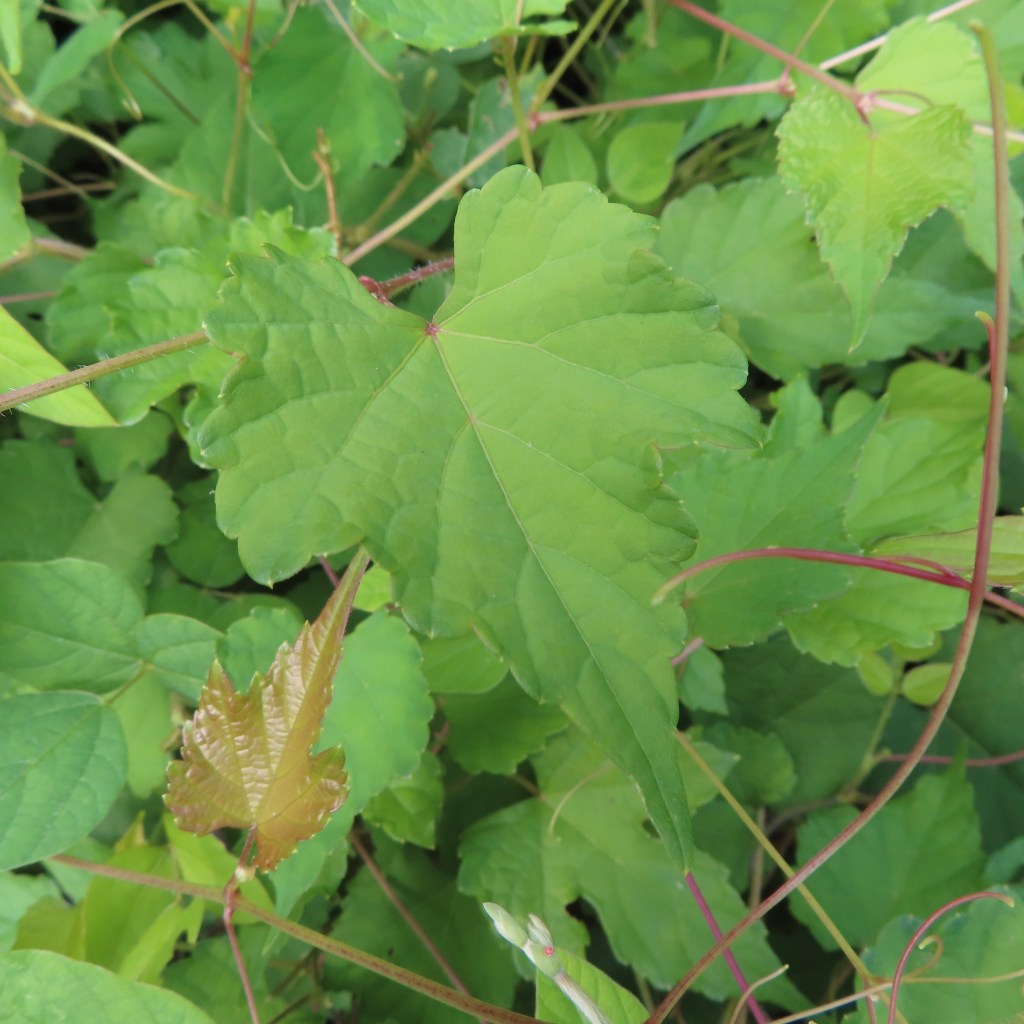
The unusual leaf shape of porcelain-berry is characteristic of Grape family plants.

Were it not for the alarming spread of porcelain-berry, it would be perceived as largely benign and even beneficial as are other grape family plants.  The porcelain-berry fruit can be safely eaten, providing some nutrition. However, it is not palatable, lacking the sugar content of cultivated grape varietals. In general, the two dozen species of wild grapes in North America, in which there is no reason not to include porcelain-berry, have edible fruits, shoots, and leaves. The average nutritional profile for 100 grams (~1/4 pound) of wild grape family fruits is 70 calories with several important minerals like potassium, calcium, phosphorous and iron and vitamins A and C in addition to the metabolically important B vitamins. [10] Similarly, wild grapes have a broad range of medicinal properties.  Native Americans used grape leaves made into a tea to treat stomachache and diarrhea and poulticed leaves were applied to treat rheumatism and headache. More recently, grape seed extracts have been shown to be effective in treating circulatory problems like varicose veins. [11] On the whole, it is reasonable to conclude that porcelain-berry is potentially a useful invasive.

References:

1. Young, J. National Research Council, Washington DC, “Fact Sheet, Porcelain-berry” National Park Service Plant Conservation Alliance Alian Plant Working Group, 20 May 2005, http://www.nps.gov/plants/alien

2. Zhiduan C. and Jun W. Ampelopsis glandulosa (Wallich) Momiyama, Bull. Univ. Mus. Univ. Tokyo. 2: 78. 1971″Flora of China online, vol. 12 p. 178-179.

3. Plants for a Future (PFAF) Charitable Database. “Porcelain Berry” https://pfaf.org/user/Plant.aspx?LatinName=Ampelopsis+brevipedunculata 

4. Hiker’s Notebook. “Autumn Leaf Color” at https://hikersnotebook.blog/2020/10/26/autumn-leaf-colors/

5. Nafici, S. “Weed of the Month, Porcelain Berry” Brooklyn Botanical Garden https://www.bbg.org/article/weed_of_the_month_porcelain_berry     

6. Pollan, M. The Botany of Desire, Random House, New York, 2001 pp. xiii-xxv.

7. Kling, A. “Invasions in your Woodland – Porcelain-berry” University of Maryland Extension. https://extension.umd.edu/resource/invasives-your-woodland-porcelain-berry-updated-2025/ 

8. Dingwell, S. “Unwanted and Unloved – Porcelain-berry” Virginia Native Plant Society. 12 August 2014.

9. McGovern, P. Ancient Wine, Princeton University Press, Princeton, New Jersey, 2003 pp 1-63.

10. Angier, B. Edible Wild Plants, Stackpole Books, Mechanicsburg, Pennsylvania, 2008, p. 80

11. Foster, S. and Duke, J., Medicinal Plants and Herbs, Houghton Mifflin Company, Boston, Massachusetts, 2000, p 338.

Cut-leaved Toothwort

The deeply lobed leaves are the most reliable feature for field identification.

Common Name: Cut-leaved toothwort, Pepperwort, Pepper-root, Spring blossom, Lady’s smock, Milkmaid, Large toothwort – The deeply indented leaves are an unmistakable key to the identification of this spring ephemeral. The root is a thick, white rhizome that is divided into segments having the appearance of a jawbone with teeth. Wort is from the Old English word wyrt meaning herb, plant, or root and is usually used in combination for an herbaceous plant. [1] It does convey a sense of medicinal use, as the word herb is sometimes construed.

Scientific Name: Cardamine concatenata – The genus name is from the Greek kardamine, a word meaning water cress. The species name is taken directly from the Latin concatenatus meaning linked together like a chain, recognizable in English as concatenate. This refers to the jointed “tooth” rhizome. Dentaria laciniata appears in many older texts with the genus having clear reference to teeth, the dent prefix in Latin. Laciniate means cut into deep and irregular lobes, also directly from Latin translation. The former scientific name translates to “tooth-like with deep lobes,”  the antithesis of cut-leaved toothwort. [2]

Potpourri: Spring ephemerals are the first harbingers of winter’s end and the start of the growing season powered by radiation from the sun and nurtured by water now unfrozen. The name is apropos, deriving from the Greek word ephemeros, lasting for one day. It is generally used for anything fleeting, including ideas, maladies, data, and especially cultural arts (out, out brief candle, life is but a walking shadow that struts and frets his hour upon the stage and then is heard no more).  Flowers that proliferate along the trail are the epitome of ephemeral in their brevity of growth, maturity of florescence, and the decay of death over the course of just a few days. In addition to the cut-leaved toothwort, the other notable ephemerals are bloodroot, hepatica, trout lily, spring beauty, and trilliums. As a trait shared among a number of unrelated species, ephemerality is the end result of a successful evolutionary response to environmental constraints that favors transience. Such traits are called convergent evolution as plants (and animals) converge to the same form and function independently.

The reason flowers trend toward the frenetic pace necessary to become ephemeral is neither recondite nor one of nature’s innumerable oddities. It results from the logical and successful strategy to take advantage of the short window of time during which there is little competition, other than from other ephemerals doing the same thing. Plants need the sun’s energy to make hydrocarbons and (most) flowering plants need pollinators to satisfy sexual needs (but not desires). Sunlight at ground level is abundant in early spring as the canopy trees have not yet foliated to absorb its energy for their own photosynthetic purpose (which is why trees grow ever upward in branches of leafy arrays). As insect pollinators first emerge in the cold blush of early spring in search of nutritive nectar, ephemeral flowers are abundant with showy blossoms offering the promise of a meal. There is little else to choose from.

Ephemerals make insect propagation easier by being generalists, meaning that any roving insect will do (many flowers – notably the orchids – are “designed” to attract a specific insect pollinator), and by being self-compatible, meaning that the pollen from the stamens in a flower will fertilize the ovaries in the pistil of the same flower. Bumblebees are the most adapted to pollinating ephemerals as they emerge early and feed abundantly to get a jump start on establishing a colony, a prodigious feat that must be completed by fall, a scant six months away. Their furry bodies shield them from cold and their continuous buzzing vibrations generate heat.  [3] While self-pollination is not a strategy conducive to long term survival in that it suppresses the genetic diversity of mixing genes, the raison d’être for sexuality, it suffices for ephemerals. Most plants reproduce by combining self pollination with sexual cross pollination to promote propagation with enough diversity to prevent extinction. [4] Whatever the mechanism, the evolutionary success of ephemerals is undeniable, as they are ubiquitous along forested pathways in the springtime to the extent that they define it as a time of resurgent life.

Cut-leaved toothworts employ a supplemental growth feature in the form of a root structure called a rhizome that extends horizontally from each plant to enable vegetative growth. The name toothwort is due to the resemblance of the rhizome to a jawbone with bumps that suggest teeth along its length. The bumps-cum-teeth are the origination points for individual flower stems that grew upward over the course of previous spring emergence. [5] This is a feature of a perennial plant, taking advantage of a well established root structure from which to grow and spread. While the four-petaled white to pink flower is what attracts ambling hikers for its beauty and itinerant insects for its pollen and nectar, it is the root for which it is named that  establishes a niche in the ethnobotanical catalogues as both a food and as a medicinal. While cut-leaved toothwort flowers each produce about ten seeds, amounting to as many as 100 seeds per plant, their fertilization and growth is infrequent, relying mostly on the anastomosis of spreading rhizomes for extension into new frontiers. [6]

The rhizome or root has the appearance of a jawbone with emergent teeth.

The most obvious, if least effective, human use of tooth-like roots was as a treatment for toothache and related oral maladies. [7] Prior to the modern era, disease was more fearsome as there was little knowledge of cause and remedies amounted to patent quackery like blood-letting and bat wing potions. In Western civilization, Christianity offered the only solace against the scourges of nature and a loving God was thought to have intervened to help believers survive (and prosper and, of course, propagate the faith and faithful). This was the origin of The Doctrine of Signatures in the 17th century, a theory that God left his mark/signature on plants to signify their use. It was only necessary to determine the divine purpose through enlightened human inspection. Heal-all would soothe sore throats because it looked like an open mouth and sassafras cured syphilis because the leaves are shaped like a penis (stretching credulity). [8] The use of a plant that had roots that looked like teeth was much more obvious. It could only have had an ameliorative placebo effect among the early colonists, many of whom came to the alien shores of North America aided and abetted by their profound faith.

The Native Americans knew better, having survived for thousands of years by applying the tried and true practices of trial and error to develop an herbal pharmacopeia passed down through generations by word of mouth. They did not use toothwort for toothache. But they used it for many other purposes ranging from aphrodisiac to food. The six tribes of the Iroquois Confederation of the Northeast are treated as a singular group even as their cultural traditions are diverse as reflected in their toothwort use. It was used not only as a medicine to treat specific conditions like headache and heart palpitations but as a kind of panacea to treat any injury, known as “little water medicine.” More imaginatively, the toothwort plant was rubbed over things like traps and fishing lines as a “hunting medicine.” The root was placed inside the mouth which produced an aura thought to attract the opposite sex as a “love medicine.” There is no evidence that any of these treatments were effective in improving love, hunting, or health.    

The one use of cut-leaved toothwort that transcends Native American practices and colonist adaptation to the current era is as wild food. The different applications imply some significant diversity in American Indian cuisine. The Cherokee of the Carolinas cooked the plant and roots with other greens as a vegetable medley. Further west, the Ojibwa made something of a stew with potatoes, deer meat, and corn flavored with the peppery taste of the roots. [9] The pungency of phytochemicals is one of the characteristics of the Mustard Family (Brassicaceae or Cruciferae) to which toothwort belongs. According to current tastes, the pungent roots can be added to a sandwich or to a salad for piquancy with a specific recipe to “scrape or grate several of these sharply flavored root stocks, mix with vinegar, and set on the table in a little covered pot.” [10] However, harvesting ephemeral flowers to eat their roots is neither an appropriate nor necessary way to interact with the natural world. Better to admire them as you walk through the woods in spring.

References

1. Webster’s Third New International Dictionary of the English Language, Unabridged. Encyclopedia Brittanica, Inc. Helen Benton Publisher Chicago, Illinois, 1971, p. 2637.

2. Simpson, D. Cassell’s Latin Dictionary, Wiley Publishing, New York 1968, pp 179,333.

3. Kricher, J. and Morrison, G. A Field Guide to Eastern Forests, Houghton Mifflin, Boston, 1988, pp.163-169.

4. Wilson, C. and Loomis, W. Botany, 4th Edition, Holt, Rinehart and Winston, New York, pp 347-362.

5. Niering, W. and Olmstead, N. National Audubon Society Field Guide to North American Wildflowers, Alfred A. Knopf, New York, 1998, pp 428-429.

6. Mahr, S. University of Wisconsin – Madison Horticultural Extension https://hort.extension.wisc.edu/articles/cutleaf-toothwort-cardamine-concatenata/ 

7. Foster, S and Duke, A. Medicinal Plants and Herbs of Eastern and Central North America, Houghton Mifflin, Boston, 2000, pp 38-39.

8. Needham, W. The Compleat Ambler, Outskirts Press, Denver, Colorado, 2020, pp 28-30.

9. Native American Ethnobotany Database. http://naeb.brit.org/uses/search/?string=toothwort

10. Angier, B, Field Guide to Edible Wild Plants, 2nd edition, Stackpole Books, Mechanicsburg, Pennsylvania, 2008, pp 234-235.

Horsenettle

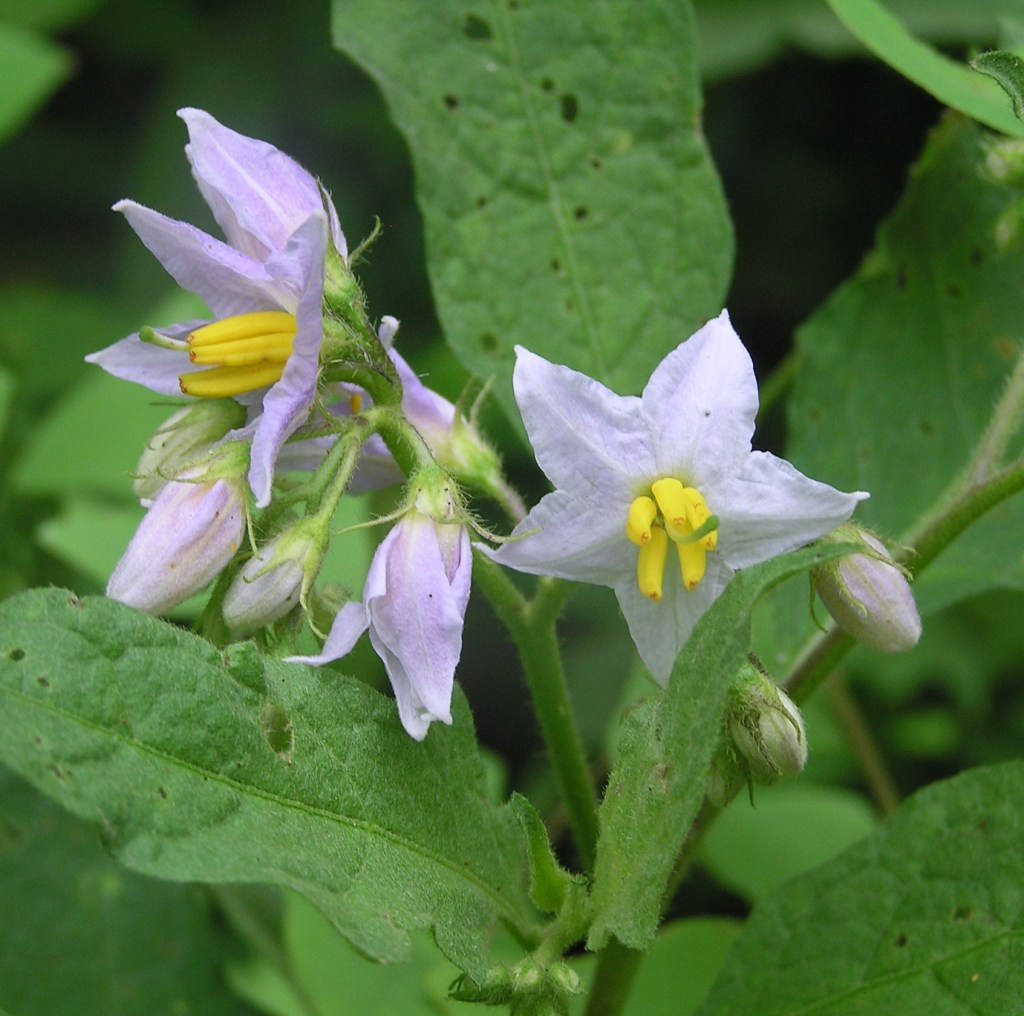
Horsenettle flowers range from light purple to white, all with tubular yellow stamens to attract pollinators

Common Name:  Horsenettle, Bull nettle, Carolina horse nettle, Apple of Sodom, Devil’s potato, Thorn apple, Wild tomato, Poisonous potato – A nettle is a plant of the genus Urtica noted for stinging hairs. The name has been widely applied to other plants that have prickles like the horsenettle. The horse association is likely due to the fact that horsenettle plants are commonly found in pastures, like those fenced off for horses.

Scientific Name: Solanum carolinense – Solanum is Latin for nightshade. The genus name is attributed to Pliny the Elder (Gaius Plinius Secundus), a Roman military commander and naturalist in the first century AD. The origins of Solanum are unclear, but sol is Latin for sun; there is a sunberry flower in the nightshade family. The similarity in spelling to the Latin word solamen which means comfort is another possible etymology. [1] Plants of the Solanum genus have historically been widely used as medicine for a variety of ailments and conditions.  The species name is reference to the North American colony Carolina where it was first noted, probably before its division between north and south.

Potpourri: The horsenettle is a weed according to the standard definition as it grows where humans don’t want it to grow and crowds out preferred plants. If weediness is a matter of garden aesthetics, however, an argument can be made that the five-petalled white or purplish star with five yellow elongated stamens projecting from the center has some appeal. If weediness is detrimental to food crops like soybeans and wheat awaiting harvest from farm fields, then eradication with herbicides may be justified. Horsenettle is also poisonous to the extent that it is included in edible wild plant field guides as a cautionary measure to prevent gathering the wrong things when edible plants are sought. [2] But it is also medicinal, having been used by Native Americans and subsequently by colonizing Europeans for centuries. This, too, is not unusual, as horsenettle is a member of the Nightshade family, a rogue’s gallery of deadly plants that also includes potatoes, tomatoes, peppers, and eggplants, mainstay edibles of western cuisines. Horsenettle is bad weed, good medicine, and has ugly prickles.

Another thing that can be said about weeds like horsenettle is that they are successful plants, able to flourish in marginal soils and spread outward in profusion. That is what all living things aspire to do, perpetuating their own kind following the recipe for survival by being fittest. Darwin came to recognize that competition among plants was equal to if not more than that among animals, even as Galapagos finch beaks became his focus. As a backyard scientist with inimitable curiosity, he conducted an field test in his backyard by clearing six square feet down to bare soil to observe the emergence of native weeds. He noted that “out of 357 no less than 295 were destroyed, chiefly by slugs and insects,” the detail testimony to thoroughness. As confirmation, he repeated the experiment on a second area of established turf, noting that “out of twenty species … nine species perished” because the “more vigorous plants gradually kill the less vigorous.” [3] It is evident that becoming a successful weed is an evolutionary feat rather than a routine event. It is also apparent that the weeds that persist and become human problems are the cream of the weed crop, exceptionally evolved with propagative efficiency.

Horsenettles are poisonous because they produce an alkaloid chemical named solanine, the name derived from Solanaceae, the Nightshade family of almost 4,000 plant species in nearly 100 genera. Alkaloids are complex organic chemical compounds that can in many cases have physiological effects on animals ranging from medicinal like morphine, hallucinogenic like mescaline, and stimulants like nicotine (the “ine” suffix is prescribed). The root alkali is derived from the Arabic word for the calcined ashes of the saltwort plant, and refers to molecules that are basic (pH > 7), the opposite of acidic. Alkaloids are mostly bitter, which is undoubtedly the reason why bitter is one of the five tastebud types also including sweet for sugars, salt for minerals, sour for ripeness, and savory for proteins. Bitterness warns of  poison and most animals avoid bitter plants like horsenettle. The genetic code for bitterness taste sensors was retained by the survivors; individuals that lacked sensitivity learned about bitter poisons the hard way. Up until the nineteenth century, plant compounds were only known through trial and error. The alkaloid associated with the poison hemlock (coniine) was the first to be synthesized in 1886. [4]

The taxonomy of plants is based on familial similarities. The production of a specific alkaloid is typically a shared characteristic. This is true of the nightshades (Solanaceae) just as it is of buttercups (Ranunculaceae), poppies (Papaveraceae) and barberries (Berberidaceae). Alkaloid concentrations vary among the different species of a plant from plentiful to nearly nonexistent. The nightshades range from almost no alkaloid in tomatoes, potatoes, and eggplant to substantial amounts in horsenettle and tobacco. Why plants produce alkaloids is uncertain. Experiments have shown that tomatoes grafted onto tobacco stems produce no solanine.  Conversely, tobacco grafted onto tomato stocks does. This would indicate that solanine isn’t involved in growth or metabolism. However, that is not to say that there is not a purpose for a plant to make a complex chemical compound, which takes energy and raw materials. There is more to life than growth and there is more to genetics than the here and now. Alkaloids may be vestigial remnants that once had a purpose in the evolutionary past but which is no longer relevant.

Horsenettle fruits look like small tomatoes

Alkaloids may also have a role in reproduction, as some plants produce high levels during seed and fruit formation which become depleted when the seed is ripe. Horsenettle fruits look like miniature tomatoes. Whether they are toxic or not is an open question. One source says “the berries are the most toxic when they are mature” [5] and another says “all parts of the plants, except the mature fruit, are capable of poisoning livestock” [6] Since poisoning experiments on humans and livestock are not ethically acceptable, almost all reports of poisoning are anecdotal. It is probable that immature fruits are poisonous and mature, ripe fruits are not. This makes sense, as plants produce fruit to be eaten by animals so that the seeds are distributed in a dollop of fertilizing manure. For example, all parts of the mayapple are poisonous except the ripe fruit. Experiments with livestock that consumed ripe horsenettle fruits have shown that the seeds pass through the gut unharmed, exactly as would be intended and predicted. [7]

The relationships between animals and plants are complex. This is particularly true when it comes to alkaloids. Ostensibly, plants produce the bitter compounds through random genetic mutation and eventually a formulation occurs that keeps animal predation in check. However, in the niche-centric ecology of survival, the opposite must also occur. That is, animals that evolve some form of immunity to certain alkaloids in certain plants gain the advantage of abundant food avoided by competitive herbivores. The example of the monarch butterfly caterpillars eating milkweed that is poisonous to nearly all other animals is well known. Experimentation has shown that this is more the rule than the exception. When the Panama Canal was built in the early twentieth century, the flooding of Gatun lake created Barro Colorado Island where a Smithsonian Field Station was opened in 1924 to conduct long term experiments of evolution in an isolated biosphere. A recent study of the 174 caterpillars found on the island found that they were “picky eaters” is choosing which types of over 200 toxic compounds they would consume. This “encourages diversification, as new species with new, temporarily insect-proof toxin profiles emerge.” [8] It is not therefore surprising that a fair number of insects, and some animals, eat horsenettle leaves, stems, and fruit.

The vast majority of twenty first century humans have plenty to eat―in many cases too much. There is no cornucopia in the wild where life is “nasty, brutish, and short” according to Thomas Hobbes. Many insects and a few animals consume not only the horsenettle fruit, but also the bitter, normally poisonous leaves and stems as well.  A study conducted in Virginia over a period of six years (1996-2002) revealed that 31 insects from six different orders ate horsenettle voraciously. In fact, a detailed survey of 960 horsenettle plants found that the plants were severely damaged. And it wasn’t just bugs, as meadow voles also consumed horsenettle with no apparent ill effects. The most damaging insect species were those that also fed on other Nightshade family plants including the eggplant flea beetle and the false potato beetle in keeping with the evolutionary pathway of alkaloid tolerance.  Fruits were assessed separately due to their importance in propagation as the seed bearing component of the plant. The three species accounted for 75 percent of fruit damage were false potato beetles, pepper maggots, and meadow voles. [9] This also provides some validity to the overall scheme of life with plants producing sweet, tasty fruit to attract animals for seed dissemination.  

As is the case with many plants that are listed as poisonous to animals in general and humans in particular, horsenettle has historically been used for medicinal purpose. In the eons that preceded the Renaissance in the arts and sciences, treatment of human and livestock ailments was a matter of local lore and tradition using naturally occurring substances, mostly plants. Essentially, the chemicals created by a plant for its own use and protection provided similar benefits when consumed by an animal. In the case of horsenettle, the Cherokee who were indigenous to Virginia and the Carolinas where it originated were its most inventive purveyors. The leaves were used internally to dispel worms (apparently worms don’t like it either) and externally to treat poison ivy (although one would think that Cherokee had figured out the “leaves of three let it be” rule). Fruits were boiled in grease to treat dogs with mange and the seeds of the fruit were made into a sore throat gargle. [10] The Native American uses of native plants were in many cases adopted by early colonists so that these “natural remedies” appeared in the early listings of drugs. Horsenettle was listed in the United States Pharmacopeia  from 1916 to 1936 as a treatment for epilepsy, and, in keeping with the “snake oil” practices of unregulated past, both an aphrodisiac and a diuretic. It has long since disappeared from the apothecaries shelves, and is now mostly known for its toxicity. A modern medicinal plant guide concludes with “fatalities reported in children from eating berries.” [11]

References:

1. Simpson, D. Cassell’s Latin Dictionary, Wiley Publishing New York, 1968, pp 560, 772.

2.  Elias T. and Dykeman, P. Edible Wild Plants, Sterling Publication Co. New York, 1990, p 265.

3. Darwin, C. On the Origin of Species, Easton Press, Norwalk, Connecticut, 1976, p.50.

4. Manske, R, “Alkaloids” Encyclopedia Britannica, Micropedia, William Benton Publisher University of Chicago, 1974, Volume 1 pp 595-608.

5. North Carolina State University Agricultural Extension https://plants.ces.ncsu.edu/plants/solanum-carolinense/   

6. Bradley, K. and Hagood, E.  “ Identification and Control of Horsenettle (Solanum carolinense) in Virginia” http://www.ppws.vt.edu/scott/weed_id/horsenettle.PDF           

7.  https://www.illinoiswildflowers.info/prairie/plantx/hrs_nettlex.htm

8. “One hundred years of plenitude” The Economist, Science and Technology, 6 July 2024. p 64.

9. Wise, M. “The Herbivores of Solanum carolinense (Horsenettle) in Northern Virginia: Natural History and Damage Assessment” Southeastern Naturalist,  1  September 2007,  Volume 6,  Number 3, pp 505-522.

10. Native American Ethnobotany Data Base http://naeb.brit.org/  

11. Duke, J. and Foster, F. Medicinal Plants and Herbs, Peterson Field Guide Series 2nd edition, Houghton Mifflin Company, Boston, 2000, p 206.

Celandine, Greater and Lesser

Greater Celandine

Common Name: Celandine or Greater Celandine (above) and Lesser Celandine (below) – Celandine is frequently called greater celandine to distinguish it from its unrelated namesake. It is derived from the Latin word chelidonia which means swallow (the bird not the verb) in English. The purported reason is that celandine flowers bloom in early spring when swallows arrive to its original Mediterranean habitat and wilt when the swallows depart. Celandine is also called swallowwort due to this association and tetterwort or nipplewort for its medicinal applications. Lesser celandine got its name due to superficial resemblance to the celandine, both having yellow flowers and proliferating in similar wet areas. It is sometimes called fig buttercup or pilewort for its use in treating piles, another name for hemorrhoids.

Lesser Celandine

Scientific Name: Chelidonium majus – The genus of greater celandine means swallow in Latin as per discussion above. The species name is Latin for major, a synonym for greater. It is in Papaveraceae, the Poppy Family. Lesser celandine is Ficaria verna. The genus is from ficus, the Latin word for fig which is attributed to the two plants having similar root structures. The species name accounts for its spring (vernal) blooming. It is a member of Ranunculaceae, the Buttercup Family.

Potpourri: Even though the greater and lesser celandines share the same name, they are not closely related according to taxonomy. While both are in the Order Ranunculales of flowering plants, they are in two different families: Poppy and Buttercup. There is, however, a good reason for mistaken identity. Aside from growing in similar wet habitats as weedy plants, they share a long history of similar uses by humans for medicinal applications. It is likely that early herbalists who sought plants for potions and poultices looked for yellow flowers and found one or the other. Since greater celandine was almost certainly the first to be exploited for its chemical compounds, the addition of lesser celandine became a useful mnemonic for herbalists. Because both are overly successful in reproduction, spreading out from a small clump to take over relatively large areas, they are both subject to the universal pejorative for anything that grows were humans don’t want it to. A weed is “a form of vegetable life of exuberant growth and injurious effect” according to Merriam -Webster Third International Dictionary.  Lesser celandine is by far the most notorious and is considered an invasive species in some areas.

Another reason for referring to celandine as greater celandine is to distinguish it from the celandine poppy, also known as the wood poppy, a plant indigenous to North America. Celandine poppies are in a different genus (Stylophorum diphyllum) but are otherwise very similar in terms of chemical, and therefore medicinal properties, common characteristics of many Poppy Family plants. [1]  In all likelihood, the original name of this flower was wood poppy, and due to its superficial resemblance to the greater celandine, it was given an alternative name celandine poppy by settlers moving inland from the original colonies. This has some credence as they are found mostly in the Midwest, which was subject to waves of migration from the original New England states after the passage of Northwest Ordinance in 1787 as one of the first acts of the newly established Congress. The use of the celandine name for both the lesser celandine and the celandine poppy is almost certainly because it was well known to many settlers who came to the New World from Europe. Greater celandine was (and is) one of the more common herbal remedies for a wide range of ailments in the Old World.

Greater celandine, like most herbal remedies, was adopted by apothecaries based on trial and error oral tradition that singled out natural plant medicines. Prior to the scientific revolution in chemistry of the nineteenth century that led to pharmaceutical formulations, nature was the only choice. However, even in the modern era of big pharma, many if not most drugs are synthesized based on plant (and fungal) chemistry. Since every plant needs to grow large enough to reproduce, many evolve smells and tastes to ward off predator animals that may range from larvae to deer. If their primary threats were bacteria and microbes, then these evolved chemicals could be good candidates for human medicines for the same effect. Greater celandine exudes a bright yellow-orange liquid from its roots and stem. This likely drew attention since yellow was one of the colors the four humors mediating human health that were postulated by the Greeks of antiquity and dominated Europe in the Middle Ages. Based on the formulation of Galen in the first century CE, red blood, yellow bile, black bile, and white phlegm were associated with sanguine, choleric, melancholic, and phlegmatic attributes. [2] Within the religious construct called the Doctrine of Signatures, a plant that had yellow juice must surely have been put there by God as a natural source of yellow bile. Greater celandine was therefore one of the more important herbals of history.  

What was Greater Celandine used for? John Gerard, one of the earliest and most well-known herbalists in Europe, attributes Aristotle with its use in the treatment of “the eies (sic) of Swallows that are not fledge, if a man do prick them out, do afterwards grow again and perfectly recover their sight.” What to make of this? Treating baby bird eye disorders in the fifth century BCE is probably not literal, losing its original meaning over years and translation and interpretation.  Gerard continues with “The juice of the herbe is good to sharpen the sight, for it clenseth and consumeth away slimie things that cleave about the ball of the eye and hinder the sight.” [3] The shrine of Saint Frideswide, the patron saint of Oxford, England and reputed to be a “benefactress of the blind” is decorated with a bas-relief of greater celandine, presumably for its curative power since the flower is a prolific weed in and around Oxford. She supposedly called forth a spring in a village near Oxford whose waters were used as a wash to help restore vision, one basis for her sainthood. The eye cure remedy is unlikely, as the yellow-orange liquid exuded from greater celandine is highly corrosive and can only have blinded those who tried it, swallows and all. [4]

Greater celandine has been used as a folk medicine across Europe eastward into China for millennia and in North America after its introduction by advancing settlers in the eighteenth century. The root and stem juices were used topically to treat a variety of skin problems including warts, ringworm, and eczema. In modern medicinal practice, salicylic acid and/or cryotherapy (freezing) are similarly used, a measure of the strong reactive chemistry of the plant. Taken internally, it was not surprisingly used to treat yellow jaundice, a liver ailment that could suggest a lack of adequate yellow bile that needed augmentation. There has been a neo-renaissance in the use of greater celandine in the treatment of cancer over the last several decades. This takes the form of what amounts to natural chemotherapy, using the chemicals chelerythrine, copticine, sanguinarine, and citric acid produced by the plant for its own defense to kill tumorous cancer cells. [5] The most well-known greater celandine based product is Ukrain (named for the country) that was developed in 1978 and successfully tested in several small sample size studies for its effectiveness in treating pancreatic cancer. [6]

As an herbal remedy, greater celandine is not subject to the rigorous testing and certification necessary to qualify as a drug. It can therefore be procured over the counter without a physician’s prescription for use according to alleged and/or perceived (placebo) benefits. It is promoted for intestinal digestive problems, as a mild sedative, to prevent gallstones, and to treat liver disease. This is in addition to its long-standing use to treat skin problems like warts and to reduce eye irritation, despite the inconsistency of these countervailing therapies. However, treatment with greater celandine derived herbals is controversial. There is some indication that it causes hepatitis, a liver disease it is supposed to cure (discovered when patients using it got better when the treatment stopped). It is a known skin hazard, causing rashes and itching, and in some cases, severe allergic reactions. It is poisonous for dogs and some farm animals. [7] It is telling that the European Medicines Agency concludes that “the benefit-risk assessment of oral use of Chelidonium majus must be considered negative.” [8]

Lesser Celandine the beautiful

Lesser celandine is a doppelgänger of its greater cousin. It is a harbinger of spring in two ways. On the positive side, it blooms in profusion with a delicate, yellow-rayed flower arrayed on bright green sculpted leaves that evokes the color and warmth of the sun to erase the drab grays of winter. Since it is a variety of buttercup, the petals have the characteristic glow that is the subject of childhood play in determining preference for butter by its reflection on cheek or chin.  However, lesser celandine doesn’t know when to stop, spreading outward in all directions until it is a green blanket that covers everything. Simply put, it is invasive―an early reminder of the summertime onslaught of plants that range from Japanese stilt grass to dandelions. On its European home turf, it is beloved and eulogized as the very essence of spring. In North America, it is a weed, choking out native flowers and replacing them with a striking, but nonetheless monoculture, greensward. The good Doctor Jekyll and the selfsame but sinister Mister Hyde.

Lesser Celandine the scourge

The US Department of Agriculture defines a noxious weed as “any plant or plant product that can directly or indirectly injure or cause damage to crops (including nursery stock or plant products), livestock, poultry, or other interests of agriculture, irrigation, navigation, the natural resources of the United States, the public health, or the environment.” Just about anyone with a lawn or living near a woodland stream will agree that lesser celandine qualifies.  It was introduced into the United States sometime before 1867 when the first documented specimen was recorded in Pennsylvania. It was almost certainly planted as an ornamental; its aesthetic qualities enhance the color and seasonal variety in flower gardens. Like many introduced species, its ability to spread and dominate its new habitat was neither expected nor even realized. And, like most invasive species, it took decades for it to radiate from its original site growing geometrically in reproduction. The USDA estimates that 79 percent of the land area of the United States is suitable for its habitat and that it has an 82.6 percent chance of becoming a “major invader” if introduced. [9].

There are two reasons why introduced plants (and animals) become invasive. The first is that in most cases, new introductions will have none of the environmental constraints that were extant on its home turf. It is a tenet of ecology that all living things are constrained from exponential growth by competition for resources. In the real world where resources are limited, population growth is constrained to a finite limit called the carrying capacity which it reaches by following what is called a logistics curve. Every species occupies a biological niche that includes all of the resources available to it in its ecosystem, a term coined in 1935 referring to both the physical and biological surroundings. When a species is taken from its evolved ecosystem and placed in a new one, the rules of the game change. The checks imposed at home are removed and growth continues until it is stopped by the ecology of the new habitat. [10]

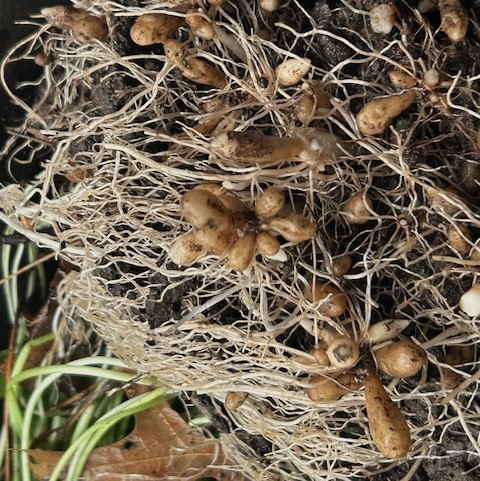
The tuberous roots of Lesser Celandine

The second factor associated with invasive behavior is the ability of the introduced species to spread and multiply so as to dominate the new environment. Lesser celandine has three methods of propagation that almost guarantee survival and promote spread. In addition to the seeds defining all angiosperms, it has not one but two means of vegetative cloning. The roots form small tubers and the stems form bulbils in the leaf axils. Both become detached and are spread by mowing, digging, and, most importantly, flowing water. The densest patches are found in wet areas due to the significance of the latter.  Once it gets established, it is almost impossible to get rid of it. Anything short of digging up the entire plant, roots and all and being careful not to drop any bulbils, will only result in a brief hiatus for a year or maybe two. Only a powerful herbicide like glyphosate will truly excise it.  [11]

In its European homeland where it is naturally kept in check, lesser celandine is not only tolerated but admired. In the UK, revered might be more appropriate. Described as a “sweet little plant,” it appears at the very beginning of spring (which is how it crowds out the competition) with the bright sun-like flowers, it is sought out by gardeners and bred by horticulturalists. There are over a hundred cultivars that range from “aglow in the dark” to “yaffle” and include  dusky maiden, mister brown, and the ghost. [12] The poet William Wordsworth admired the lesser celandine, writing “It is remarkable that this flower, coming out so early in the Spring as it does, and so bright and beautiful, and in such profusion, should not have been noticed earlier in English Verse.” [13] So he proceeded to write a poem that begins with:

                                     There is a Flower, the Lesser Celandine,

                                     That shrinks, like many more, from cold and rain;

                                      And, the first moment that the sun may shine,

                                      Bright as the sun itself, ’tis out again! [14]

Had Wordworth been an American poet the leitmotif might have been beauty and the beast instead of sunshine.

References:

1. Niering, W. and Olmstead, N. National Audubon Society Field Guide to North American Wildflowers, Alfred A. Knopf, New York, 1998, pp 670-675

2. Parker, S. Kill or Cure, Illustrated History of Medicine,  DK Publishing, New York, 2013, pp 106-107.

3. Gerard, J. Gerard’s Herball – Or Generall Historie of Plantes, London, 1633, pp 39-41.

4. Mabey, R. Weeds, Harper Collins, New York, 2010, pp 188-194.

5. Foster, S. and Duke, J. Medicinal Plants and Herbs, Houghton-Mifflin, Ne York, 2000, p. 105.

6. Sloane Kettering Medical Center . https://www.mskcc.org/cancer-care/integrative-medicine/herbs/ukrain      

7. . “Celandine”. American Cancer Society. August 2011. https://web.archive.org/web/20150423221233/http://www.cancer.org/treatment/treatmentsandsideeffects/complementaryandalternativemedicine/herbsvitaminsandminerals/celandine     

8. . “Assessment report on Chelidonium majus” European Medicines Agency, Committee on Herbal Medicinal Products (HMPC) EMA/HMPC/369801/2009  13 September 2011

9.  “Weed Risk Assessment for Ficaria verna  (Ranunculaceae) – Fig buttercup”  Animal and Plant Health Inspection Service. United States Department of Agriculture. August 12, 2015

10. Nowicki, S. “Biology: The Science of Life” The Teaching Company, Chantilly, Virginia, 2004.

11. . “Lesser celandine, Ficaria verna”. Washington State Noxious Weed Control Board. https://web.archive.org/web/20160324080851/http://www.nwcb.wa.gov/detail.asp?weed=185    

12. http://www.johnjearrard.co.uk/plants/ficariaverna/genus.html     

13. Mabey, op cit.

14. https://en.wikisource.org/wiki/Poems_(Wordsworth,_1815)/Volume_2/The_small_Celandine