Celandine, Greater and Lesser

Greater Celandine

Common Name: Celandine or Greater Celandine (above) and Lesser Celandine (below) – Celandine is frequently called greater celandine to distinguish it from its unrelated namesake. It is derived from the Latin word chelidonia which means swallow (the bird not the verb) in English. The purported reason is that celandine flowers bloom in early spring when swallows arrive to its original Mediterranean habitat and wilt when the swallows depart. Celandine is also called swallowwort due to this association and tetterwort or nipplewort for its medicinal applications. Lesser celandine got its name due to superficial resemblance to the celandine, both having yellow flowers and proliferating in similar wet areas. It is sometimes called fig buttercup or pilewort for its use in treating piles, another name for hemorrhoids.

Lesser Celandine

Scientific Name: Chelidonium majus – The genus of greater celandine means swallow in Latin as per discussion above. The species name is Latin for major, a synonym for greater. It is in Papaveraceae, the Poppy Family. Lesser celandine is Ficaria verna. The genus is from ficus, the Latin word for fig which is attributed to the two plants having similar root structures. The species name accounts for its spring (vernal) blooming. It is a member of Ranunculaceae, the Buttercup Family.

Potpourri: Even though the greater and lesser celandines share the same name, they are not closely related according to taxonomy. While both are in the Order Ranunculales of flowering plants, they are in two different families: Poppy and Buttercup. There is, however, a good reason for mistaken identity. Aside from growing in similar wet habitats as weedy plants, they share a long history of similar uses by humans for medicinal applications. It is likely that early herbalists who sought plants for potions and poultices looked for yellow flowers and found one or the other. Since greater celandine was almost certainly the first to be exploited for its chemical compounds, the addition of lesser celandine became a useful mnemonic for herbalists. Because both are overly successful in reproduction, spreading out from a small clump to take over relatively large areas, they are both subject to the universal pejorative for anything that grows were humans don’t want it to. A weed is “a form of vegetable life of exuberant growth and injurious effect” according to Merriam -Webster Third International Dictionary.  Lesser celandine is by far the most notorious and is considered an invasive species in some areas.

Another reason for referring to celandine as greater celandine is to distinguish it from the celandine poppy, also known as the wood poppy, a plant indigenous to North America. Celandine poppies are in a different genus (Stylophorum diphyllum) but are otherwise very similar in terms of chemical, and therefore medicinal properties, common characteristics of many Poppy Family plants. [1]  In all likelihood, the original name of this flower was wood poppy, and due to its superficial resemblance to the greater celandine, it was given an alternative name celandine poppy by settlers moving inland from the original colonies. This has some credence as they are found mostly in the Midwest, which was subject to waves of migration from the original New England states after the passage of Northwest Ordinance in 1787 as one of the first acts of the newly established Congress. The use of the celandine name for both the lesser celandine and the celandine poppy is almost certainly because it was well known to many settlers who came to the New World from Europe. Greater celandine was (and is) one of the more common herbal remedies for a wide range of ailments in the Old World.

Greater celandine, like most herbal remedies, was adopted by apothecaries based on trial and error oral tradition that singled out natural plant medicines. Prior to the scientific revolution in chemistry of the nineteenth century that led to pharmaceutical formulations, nature was the only choice. However, even in the modern era of big pharma, many if not most drugs are synthesized based on plant (and fungal) chemistry. Since every plant needs to grow large enough to reproduce, many evolve smells and tastes to ward off predator animals that may range from larvae to deer. If their primary threats were bacteria and microbes, then these evolved chemicals could be good candidates for human medicines for the same effect. Greater celandine exudes a bright yellow-orange liquid from its roots and stem. This likely drew attention since yellow was one of the colors the four humors mediating human health that were postulated by the Greeks of antiquity and dominated Europe in the Middle Ages. Based on the formulation of Galen in the first century CE, red blood, yellow bile, black bile, and white phlegm were associated with sanguine, choleric, melancholic, and phlegmatic attributes. [2] Within the religious construct called the Doctrine of Signatures, a plant that had yellow juice must surely have been put there by God as a natural source of yellow bile. Greater celandine was therefore one of the more important herbals of history.  

What was Greater Celandine used for? John Gerard, one of the earliest and most well-known herbalists in Europe, attributes Aristotle with its use in the treatment of “the eies (sic) of Swallows that are not fledge, if a man do prick them out, do afterwards grow again and perfectly recover their sight.” What to make of this? Treating baby bird eye disorders in the fifth century BCE is probably not literal, losing its original meaning over years and translation and interpretation.  Gerard continues with “The juice of the herbe is good to sharpen the sight, for it clenseth and consumeth away slimie things that cleave about the ball of the eye and hinder the sight.” [3] The shrine of Saint Frideswide, the patron saint of Oxford, England and reputed to be a “benefactress of the blind” is decorated with a bas-relief of greater celandine, presumably for its curative power since the flower is a prolific weed in and around Oxford. She supposedly called forth a spring in a village near Oxford whose waters were used as a wash to help restore vision, one basis for her sainthood. The eye cure remedy is unlikely, as the yellow-orange liquid exuded from greater celandine is highly corrosive and can only have blinded those who tried it, swallows and all. [4]

Greater celandine has been used as a folk medicine across Europe eastward into China for millennia and in North America after its introduction by advancing settlers in the eighteenth century. The root and stem juices were used topically to treat a variety of skin problems including warts, ringworm, and eczema. In modern medicinal practice, salicylic acid and/or cryotherapy (freezing) are similarly used, a measure of the strong reactive chemistry of the plant. Taken internally, it was not surprisingly used to treat yellow jaundice, a liver ailment that could suggest a lack of adequate yellow bile that needed augmentation. There has been a neo-renaissance in the use of greater celandine in the treatment of cancer over the last several decades. This takes the form of what amounts to natural chemotherapy, using the chemicals chelerythrine, copticine, sanguinarine, and citric acid produced by the plant for its own defense to kill tumorous cancer cells. [5] The most well-known greater celandine based product is Ukrain (named for the country) that was developed in 1978 and successfully tested in several small sample size studies for its effectiveness in treating pancreatic cancer. [6]

As an herbal remedy, greater celandine is not subject to the rigorous testing and certification necessary to qualify as a drug. It can therefore be procured over the counter without a physician’s prescription for use according to alleged and/or perceived (placebo) benefits. It is promoted for intestinal digestive problems, as a mild sedative, to prevent gallstones, and to treat liver disease. This is in addition to its long-standing use to treat skin problems like warts and to reduce eye irritation, despite the inconsistency of these countervailing therapies. However, treatment with greater celandine derived herbals is controversial. There is some indication that it causes hepatitis, a liver disease it is supposed to cure (discovered when patients using it got better when the treatment stopped). It is a known skin hazard, causing rashes and itching, and in some cases, severe allergic reactions. It is poisonous for dogs and some farm animals. [7] It is telling that the European Medicines Agency concludes that “the benefit-risk assessment of oral use of Chelidonium majus must be considered negative.” [8]

Lesser Celandine the beautiful

Lesser celandine is a doppelgänger of its greater cousin. It is a harbinger of spring in two ways. On the positive side, it blooms in profusion with a delicate, yellow-rayed flower arrayed on bright green sculpted leaves that evokes the color and warmth of the sun to erase the drab grays of winter. Since it is a variety of buttercup, the petals have the characteristic glow that is the subject of childhood play in determining preference for butter by its reflection on cheek or chin.  However, lesser celandine doesn’t know when to stop, spreading outward in all directions until it is a green blanket that covers everything. Simply put, it is invasive―an early reminder of the summertime onslaught of plants that range from Japanese stilt grass to dandelions. On its European home turf, it is beloved and eulogized as the very essence of spring. In North America, it is a weed, choking out native flowers and replacing them with a striking, but nonetheless monoculture, greensward. The good Doctor Jekyll and the selfsame but sinister Mister Hyde.

Lesser Celandine the scourge

The US Department of Agriculture defines a noxious weed as “any plant or plant product that can directly or indirectly injure or cause damage to crops (including nursery stock or plant products), livestock, poultry, or other interests of agriculture, irrigation, navigation, the natural resources of the United States, the public health, or the environment.” Just about anyone with a lawn or living near a woodland stream will agree that lesser celandine qualifies.  It was introduced into the United States sometime before 1867 when the first documented specimen was recorded in Pennsylvania. It was almost certainly planted as an ornamental; its aesthetic qualities enhance the color and seasonal variety in flower gardens. Like many introduced species, its ability to spread and dominate its new habitat was neither expected nor even realized. And, like most invasive species, it took decades for it to radiate from its original site growing geometrically in reproduction. The USDA estimates that 79 percent of the land area of the United States is suitable for its habitat and that it has an 82.6 percent chance of becoming a “major invader” if introduced. [9].

There are two reasons why introduced plants (and animals) become invasive. The first is that in most cases, new introductions will have none of the environmental constraints that were extant on its home turf. It is a tenet of ecology that all living things are constrained from exponential growth by competition for resources. In the real world where resources are limited, population growth is constrained to a finite limit called the carrying capacity which it reaches by following what is called a logistics curve. Every species occupies a biological niche that includes all of the resources available to it in its ecosystem, a term coined in 1935 referring to both the physical and biological surroundings. When a species is taken from its evolved ecosystem and placed in a new one, the rules of the game change. The checks imposed at home are removed and growth continues until it is stopped by the ecology of the new habitat. [10]

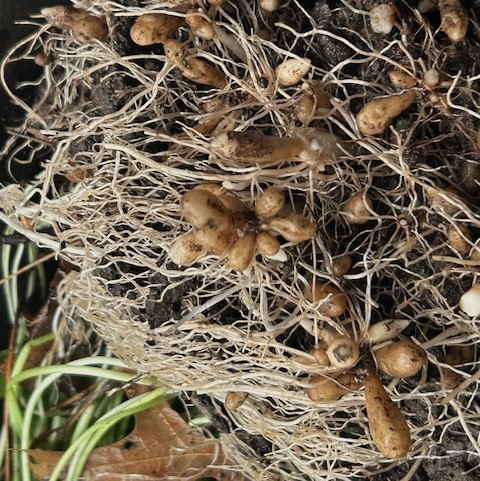
The tuberous roots of Lesser Celandine

The second factor associated with invasive behavior is the ability of the introduced species to spread and multiply so as to dominate the new environment. Lesser celandine has three methods of propagation that almost guarantee survival and promote spread. In addition to the seeds defining all angiosperms, it has not one but two means of vegetative cloning. The roots form small tubers and the stems form bulbils in the leaf axils. Both become detached and are spread by mowing, digging, and, most importantly, flowing water. The densest patches are found in wet areas due to the significance of the latter.  Once it gets established, it is almost impossible to get rid of it. Anything short of digging up the entire plant, roots and all and being careful not to drop any bulbils, will only result in a brief hiatus for a year or maybe two. Only a powerful herbicide like glyphosate will truly excise it.  [11]

In its European homeland where it is naturally kept in check, lesser celandine is not only tolerated but admired. In the UK, revered might be more appropriate. Described as a “sweet little plant,” it appears at the very beginning of spring (which is how it crowds out the competition) with the bright sun-like flowers, it is sought out by gardeners and bred by horticulturalists. There are over a hundred cultivars that range from “aglow in the dark” to “yaffle” and include  dusky maiden, mister brown, and the ghost. [12] The poet William Wordsworth admired the lesser celandine, writing “It is remarkable that this flower, coming out so early in the Spring as it does, and so bright and beautiful, and in such profusion, should not have been noticed earlier in English Verse.” [13] So he proceeded to write a poem that begins with:

                                     There is a Flower, the Lesser Celandine,

                                     That shrinks, like many more, from cold and rain;

                                      And, the first moment that the sun may shine,

                                      Bright as the sun itself, ’tis out again! [14]

Had Wordworth been an American poet the leitmotif might have been beauty and the beast instead of sunshine.

References:

1. Niering, W. and Olmstead, N. National Audubon Society Field Guide to North American Wildflowers, Alfred A. Knopf, New York, 1998, pp 670-675

2. Parker, S. Kill or Cure, Illustrated History of Medicine,  DK Publishing, New York, 2013, pp 106-107.

3. Gerard, J. Gerard’s Herball – Or Generall Historie of Plantes, London, 1633, pp 39-41.

4. Mabey, R. Weeds, Harper Collins, New York, 2010, pp 188-194.

5. Foster, S. and Duke, J. Medicinal Plants and Herbs, Houghton-Mifflin, Ne York, 2000, p. 105.

6. Sloane Kettering Medical Center . https://www.mskcc.org/cancer-care/integrative-medicine/herbs/ukrain      

7. . “Celandine”. American Cancer Society. August 2011. https://web.archive.org/web/20150423221233/http://www.cancer.org/treatment/treatmentsandsideeffects/complementaryandalternativemedicine/herbsvitaminsandminerals/celandine     

8. . “Assessment report on Chelidonium majus” European Medicines Agency, Committee on Herbal Medicinal Products (HMPC) EMA/HMPC/369801/2009  13 September 2011

9.  “Weed Risk Assessment for Ficaria verna  (Ranunculaceae) – Fig buttercup”  Animal and Plant Health Inspection Service. United States Department of Agriculture. August 12, 2015

10. Nowicki, S. “Biology: The Science of Life” The Teaching Company, Chantilly, Virginia, 2004.

11. . “Lesser celandine, Ficaria verna”. Washington State Noxious Weed Control Board. https://web.archive.org/web/20160324080851/http://www.nwcb.wa.gov/detail.asp?weed=185    

12. http://www.johnjearrard.co.uk/plants/ficariaverna/genus.html     

13. Mabey, op cit.

14. https://en.wikisource.org/wiki/Poems_(Wordsworth,_1815)/Volume_2/The_small_Celandine

Cardinal

Male cardinal pausing between assaults on his reflection in window – Photo by A. Kholmatov

Common Name: Cardinal, Northern cardinal, Redbird, Common cardinal, Cardinal grosbeak – The eye-catching red color of the male plumage is almost identical to the color that distinguishes the echelon of ecclesiastical prelates that rank just below the pope in the Roman Catholic Church. While officially named the Northern cardinal to distinguish it from other members of the genus that predominate in Central and South America, its range from Maine to Florida and west to Texas leads to the more common use of cardinal throughout the United States.

Scientific Name: Cardinalis cardinalis –  The genus and species names are the original Latin form of the word cardinal, derived from cardo, meaning “hinge.” The implication is that it is something of central importance, like the cardinals of Rome, the cardinal (N,S,E.W) directions, and the cardinal (1,2,3 …) numbers. The double genus-species designation connotes that the northern cardinal is the type species for the genus, which in a way does stress centrality.

Potpourri: The male northern cardinal is arguably the most recognizable and popular bird in North America. It was chosen as the official bird by seven states, foregoing uniqueness for panache. It is the only team name shared by two professional teams―baseball in Saint Louis and  football in Arizona. It is one of the official color of colleges ranging from MIT in Massachusetts to Stanford in California. The cardinal was chosen for its eye-catching, strident redness and not for any particular avian vitality, ubiquity,  or the singularity of song.  The cardinal is not especially notable, just one of the many so-called songbirds of the order Passeriformes that flit from tree to tree in search of food, nest-building materials, or each other. And all the while, the female cardinal is swathed in the brown feathers to match the colors of the trees and soils. [1] Why then, is the male cardinal cloaked in cardinal red?

There is also a Sacred College of Cardinals, the source of both the name and the color of the bird. The first use of the term cardinal to indicate a person of pivotal importance (literally on which things hinged from the Larin word cardo) was the deacons that presided over the seven regions of Rome in the 6th century. These prelates eventually became a privileged class as Roman magistrates and adopted the red that had long been used in Roman society to indicate rank and importance. [2] Red has been a key color in almost every society in human history, from the red ochres used in cave drawings to the war paint of Native Americans. The red that later became the robes of royalty throughout Europe was a rare and expensive commodity, ranking just behind royal purple in prominence. Red that was symbolic of power and wealth in the Roman Empire was sourced from miniscule, sap-sucking insects of the genus Kermes that fed on oak trees in the Mediterranean basin that were collected, crushed, and strained. A great deal of painstaking labor went into making just a few drams of dye. The red bug goo color that passed from Roman centurion to cardinal in antiquity was and still is scarlet and not cardinal red.

So why are North American red birds called cardinals and not scarlets? The bird cannot have been seen by Europeans before the 15th century, when the mainland of North America was first colonized. The striking red bird was almost certainly noticed by the French moving their bateaux up the Saint Lawrence River to lay claim to the region as New France. Suffering a dearth of settlers, the French government, directed by Cardinal Richelieu, chief minister to King Louis XIII, encouraged emigration starting in the middle of the 17th century. The new settlers who expanded along the Saint Lawrence River from Quebec City to Montreal were in a sense his agents, eventually renaming a tributary the Richelieu River. A bird named cardinal as Richelieu’s signature color would be equally apt. The cardinal bird name probably carried south with commerce and cultural contact to reach English colonists moving inland from Boston. No friends of persecuting papists, they may have favored the cardinal name in mockery. This is not outside the guardrails of the bawdy humor of the age. When Mark Twain was presented a scarlet robe on his receipt of an honorary doctorate at Oxford, he remarked “There is no such red as outside the arteries of an archangel.” [3] The bird is cardinal in both French and English with only a change in pronunciation as distinctive.

Cardinals have some characteristics that distinguish them as unusual when compared to the other perching birds of the Order Passeriformes more commonly called songbirds. Their most obvious is the pronounced color difference between the male and the female, a trait called sexual dimorphism. While there are subtle differences in the hue of plumage between the sexes of many birds, none take it to the extreme of a scarlet red male and a forest brown female. One hackneyed rationale is that the male would draw predators away from the nest so that the female could remain hidden with the brood. More chicks would then survive to retain the color dichotomy in perpetuity. The female, as procreator, would therefore choose a more cardinal red mate to enhance the survival of her genes. This doesn’t make much sense, since mammal egg snatchers like foxes and ferrets cannot see red. While demonstrably true physiologically and experimentally, the reason mammals cannot see red (including bulls charging at capes) can only be a matter of conjecture. The operative theory is that mammalian origins in the shadows of the dominant dinosaurs was literally devoid of much light but movement mattered; smell and hearing were paramount. Over evolutionary time, mammals retained only  blue and green cones for rudimentary color vision, with a surfeit of rod cells for dim light peripheral movement perception. (Red cones were regained by primates like us as a consequence of taking to the trees to facilitate locating the bright colored fruits that became their mainstay diet). [4] The consequence is that the red male cardinal might as well be brown since its movement is all that would matter for a predator mammal.  There are other cardinal predators such as owls, hawks, and snakes that do see red, but there is no correlation between the degree of male redness, which is referred to as “ornamentation,” and predator avoidance behavior in field studies. In fact, female cardinals have been observed fighting back against predation with no reliance on male participation. [5]  

Mate choice is a more compelling reason for cardinal red. The selection of the most desirable male by a female has been well established in some species of birds. In New Guinea, there are male birds of paradise that put on elaborate feathered displays to impress females and male bowerbirds that build extravagant nests with colorful decorations that range from red fruits to green fungi as proffered bridal suites. [6] The elaborate tail of the peacock can have no other function than to impress the pea hen. Mate choice, however, is not just for the birds. To a greater or lesser extent, it is pervasive throughout the animal kingdom from fruit flies to fruit bats and especially humans. Our very identity depends on a random sequence of mate choices that were made by parents and grandparents that extends through hundreds of generations. Mate choice can be defined as “any pattern of behavior, shown by members of one sex, that leads to their being more likely to mate with certain members of the opposite sex than with others.” In biological jargon, these are called the courter and the chooser. While there is no serious scientific disagreement about the existence of mate choice as an essential component of the birds and the bees doctrine, there is neither consensus about its actual mechanisms nor understanding of the way it evolved. [7] It is complex, inclusive of combinations of sight, smell, sound, and perhaps touch (but rarely, if ever, taste). For female chooser cardinals, some combination of sight for color and sound for birdsong are the most likely factors.

The unusual characteristics of birds were not lost on Charles Darwin, whose evolution epiphany was inspired at least in part by the different beak sizes and shapes of Galapagos Island finches. The importance of what have come to be known as Darwin’s finches on his ultimate conclusions concerning survival of the fittest has been oversubscribed. In visiting the islands of the archipelago, Darwin was struck by the similarities of a Galapagos mocking-bird to one called Thenca that he had recently seen in South America. On traveling to a second island and finding a third type of mocking-bird and observing that the indigenous giant tortoises were equally varied, he first posited that there must be something about isolated islands that promotes variations. In his field notes, he wrote that “such facts would undermine the stability of species.” It was only on his return to England with his collected finch specimens that an ornithologist named John Gould reached the conclusion that the finches were “so peculiar as to form an entire new group containing twelve new species.” [8] In the seminal work Darwin published about twenty years later, his thoughts on birds were much more nuanced. In a chapter entitled “Difficulties with the Theory,” he observes that “beautiful colours” and “musical sounds” must be due to sexual selection since “natural selection acts by life and death.” He concluded that structures created “for the sake of beauty” would be “absolutely fatal to my theory.” [9]

Darwin’s radical theory of evolution was in direct contradiction to the Bible’s origin story of the Great Flood and Noah’s Ark, an issue that resonates to this day despite overwhelming DNA evidence of evolution’s veracity. He purposely excluded any discussion of mankind’s origins so as to mitigate shock and backlash from the ecclesiastical establishment of the Victorian Era. A decade later, he elected to take on Adam and Eve directly in a second book, The Descent of Man, with the almost forgotten subtitle and Selection in Relation to Sex. Here then is Darwin’s full blown retraction: “If female birds had been incapable of appreciating the beautiful colors, the ornaments and voices of their male partners, all the labor and anxiety exhibited by the latter in displaying their charms before the females would have been thrown away; and this it is impossible to admit.” He even alludes to the use of bird feathers in women’s fashion that was popular at that time to assert that “the beauty of such ornaments cannot be disputed.” [10] There must then exist a sexual selection based on perceived beauty that operates hand in hand with natural selection based of fitness that combine to produce the tree of life. The dating game of young adult humans only differs from the pairings of birds such as cardinals in range and scope.

Sexual color dimorphism in cardinals must have something to do with mate choice, but it may not be the only factor. The intricacy, variation and tonal quality of song is also considered to be one of the primary means by which male courters seek the attention of the female choosers among passerines. In most species, only the male sings, lending some credence to this behavior as mate related. However, cardinals are unusual in that both the male and the female sing. In fact, the songs are so similar between the two that to the human ear they are indistinguishable.  However, when the male and female cardinal songs are separately analyzed by frequency and amplitude, the two songs are shown to be distinct.[10] Since bird songs are learned and, in some cases, embellished by practice, the question would be whether males learned their version of the song from other males and females likewise learned if from other females. A third intriguing possibility is that the female learned from the male and then modified the sounds ever so slightly as a way to respond. The reverse, with the male learning from the female is also possible but unlikely. This would suggest that the male and female cardinal share in a more or less egalitarian fashion.

Female cardinal engaged in nest building.

Cardinals are very aggressive―males and females in almost equal measure. This is especially notable in the late spring and early summer when adequate and suitable territory for nesting is established. Any intruder cardinal that attempts to penetrate the guarded perimeter of a mate pair’s domain will be subject to assault by the male, the female, or both. With lowered crest and eyes fixed on the aggressor, defending cardinals have been observed lunging after the intruder, using their feet and beak as weapons to force expulsion. The physical onslaught is often augmented by vocalizations described as chips and pee-toos. Intruder bird chases can go on as long as thirty minutes. This pronounced defensive posture is the cause of one of the more notable cardinal behaviors. Since birds are not self-conscious like humans and a few other animals, they do not recognize themselves in reflective surfaces like window glass. Cardinals are therefore frequently given to aggressively attacking their image in a window or even a shiny car bumper, pecking at the imagined intruder that will never go away until they themselves do. Sapience as its benefits. They eventually cease in fatigue and probably frustration.

Cardinal appearance goes beyond the red color of the male plumage to the broader category of ornamentation, inclusive of the length of the crest, bill coloration, and face mask contrast. Many attempts have been made to correlate variations in cardinal ornamentation to variations in body size and condition, feather growth, parental care, territorial defense, and mating choices. In general, the results have failed to establish any definitive relationship between any ornamentation trait including male redness and any other aspect of cardinal behavior or physiology. For example, in a trial in a rural area of New York found that males with brighter colors were positively correlated with reproductive success but those in an urban area in Ohio were not. In a more controlled experiment called a captive mate trial, females showed no preference for colorful males. [12] The only variable that can be directly attributed to a cardinal’s relative redness is the availability of fruit during the molting period when feathers are renewed. Fruits are colored by the  chemicals called carotenoids that are found in many plants to augment chlorophyll by absorbing light energy from additional frequency bands. When cardinals are fed a diet devoid of carotenoids, they vary in color from pale red to yellow. [13]

Why are male cardinals red and female cardinals brown? There is clearly a mate choice of some sort in operation, but it is not a choice favoring redness. Cardinals have elaborate courting behaviors that demonstrate evolutionary development of sex related activities. Sex matters. Many if not most birds are monogamous, retaining the same mate for life. Cardinals are a bit less stoical, changing mates not regularly but on occasion. So there must be come choosing going on and that would be  under the purview of the female chooser. This is an evolutionary result related to the lack of an external male sexual organ in most birds. Sex therefore requires the consent of the female since copulation involves contact of the male and female cloacae, known euphemistically as the cloacal kiss. This could not happen without mutual consent. (Cloaca once meant  sewer, the name given to the opening in birds, reptiles, amphibians, and fish that serves for both excretion and conception). One hypothesis is that the female cardinal chooses a male for a mate due to his compatibility. Female and male cardinals have very similar behaviors that range from having almost identical songs to being equally aggressive. The hypothesis is that this similarity was the result of female cardinal mate choice. The complexities of human mate choice are equally qualitative. If this is the case, then the red color of the male cardinal is more likely a genetic coincidence incident to female selection of a companionable mate. This is not without precedent. Dogs bred for friendliness by humans develop rounded snouts and drooping ears.

References:

1. Alderer, J. editor, Complete Birds of North America, National Geographic Society, Washington, DC, pp 597-606.

2. “Cardinal” Encyclopedia Brittanica Micropedia, William Benton, Chicago, Illinois 1972.Volume 11, p. 560.

3. Rossi, M. The Republic of Color, University of Chicago Press, Chicago, 2019, p 132.

4. Drew, L. I, Mammal, Bloomsbury Sigma, London, 2017,  pp 254-256.

5. Jawor, J. and Breitwisch, R.. Multiple ornaments in male Northern Cardinals, Cardinalis cardinalis, as indicators of condition. Ethology 2004, Volume 110 Number 2 pp 113–126.

6. Prum, R. The Evolution of Beauty, Doubleday, New York, 2017, pp 184-205

7. Rosenthal, G. Mate Choice, Princeton University Press, Princeton, 2017, pp 3-30.

8. http://darwin-online.org.uk/EditorialIntroductions/Chancellor_Keynes_Galapagos.html  

9. Darwin, C. On the Origin of the Species, The Easton Press, Norwalk, Connecticut, 1976, pp 164-166, 360-366.

10. Darwin, C. The Descent of Man, The Easton Press, Norwalk, Connecticut, 1976, pp 79-80.

11. Yamaguchi, A. “A sexually dimorphic learned birdsong in the northern cardinal”. The Condor. 1 August 1998, Volume 100 Issue 3, pp 504–511.   

12. Cornell Lab of Ornithology. “Cardinalis cardinalis” at https://www.allaboutbirds.org/news/   and https://birdsoftheworld.org/bow/species/norcar/cur/behavior#sex    

13. McGraw, K. et al “The Influence of Carotenoid Acquisition and Utilization on the Maintenance of Species-Typical Plumage Pigmentation in Male American Goldfinches (Carduelis tristis) and Northern Cardinals (Cardinalis cardinalis)”. Physiological and Biochemical Zoology. University of Chicago Press. November, 2001 Volume 74 Number 6 pp 843–852.

Hemlock for a Happy New Year

Hemlocks are among the many pines and fir evergreens that are symbolic of the holiday season. This hemlock is a new generation growing to replace those lost to an invasive species and a devastating hurricane at Limberlost in Shenandoah National Park.

Common Name: Eastern Hemlock, Canada hemlock, Hemlock spruce – Hemlock is the name for the hop plant in both the Germanic (homele) and Finno-Ugric (humala) language groups. The hop plant is the source of “hops” used for centuries across much of northern Europe to impart a bitter flavor to liquors made from malted grain. The small flowers of the hop plant are similar to the flowers of the poison hemlock (Conium maculatum) which shares the same etymology and from which the hemlock tree gets its name (by indirect association). In other words, the poison hemlock looks like and was named for  the hop plant and the hemlock tree shares a number of attributes with poison hemlock. The Carolina hemlock is very similar and difficult to distinguish from its collocated cousin.

Scientific Name: Tsuga canadensis – The generic name is from the Japanese word for the larch tree which, like the hemlock, is a member of the pine family. Most of the other trees in the genus Tsuga are indigenous to east Asia, primarily Japan. The species name is reference to the first classification of the tree in the Linnaean taxonomic system based on a specimen first sighted and identified in Canada. The Carolina hemlock is Tsuga caroliniana first distinguished in the Appalachian uplands further south.

Potpourri: Hemlocks are members of the ubiquitous Pinaceae or pine family which consists of conifer or cone-bearing trees that grow throughout the temperate regions of both the Northern and Southern Hemispheres and in mountainous tropical regions. The Pine family includes pines (Pinus), spruce (Picea), firs (Abies), hemlocks (Tsuga), larches (Larix), and Douglas-firs (Pseudotsuga or false hemlock). [1] Since they are large trees that grow in dense clusters, they are among the  most important trees of the timber industry, providing 75 percent of all lumber, and 90 percent of paper  pulp.  There are over 200 species worldwide of which about 60 are indigenous to North America. Pine family trees are self-pollinating, or monoecious, contributing to their evolutionary success at the expense of genetic diversity. The “naked seeds” that literally define the Gymnosperms (gymno is Greek―gymnasiums were places for naked exercise) are at the base of the female pinecone scales fertilized by male cone pollen wind-blown from the same tree. The pollen that is deposited on the megasporangium of the female cone in the spring ceases growth through the winter, consummating fertilization the following year. [2] In good time, you get a pine.

Hemlocks can most easily be distinguished by their needles, a term referring to the narrow, pointed leaves that, except for the larch, do not fall off over winter giving rise to the more general term evergreen. Hemlocks needles are short, arrayed in two neat rows, one of nature’s better options for higher mountains and boreal forests. However, needles do have a lifespan. Pine trees lose about one fourth of their needles every year resulting in trails coated with a soft cushion of decaying needles that suppresses almost all other plant growth, one of the best treads for foot travel. The “evergreen” needle as a leaf form is an evolutionary result of several factors involving both latitude and geology. The primary determinant is the length of the growing season, which can vary from as short as 65 days in New England to an average of 250 days in the southeast. All things being equal, a plant will trend toward greater leaf area exposed to as much sunlight as possible. Photosynthesis in the chloroplast cells of the leaves converts sun photon energy to the hydrocarbon molecules of biology. Broadleaf trees grow where they can, and evergreen needle trees grow where they can’t.

Hemlock needles (with woolly adelgids)

When the non-growth colder season approaches, broadleaf trees are better off  wintering over with bare branches, having adequate time to replenish their foliage the following spring. In northern latitudes, there is simply not enough time to restock the canopy with sun gatherers, so they persist year-round as narrow needle-like leaves. Temperature is a second factor due primarily to physics; when the freezing point is reached, the uptake of water is squelched and growth is curtailed.  Since average temperature drops about 3 degrees F every 1,000 feet, mountainous terrain has the same effect as latitude on the growing season so evergreens also prevail in higher elevations. Needle trees are also favored in northern latitudes and uplands because they are winterized with wax-coated  needles and resin-infused wood and roots. The conical shape of many conifer trees with their one dimensional needles are also better at survival in heavy snowpack. It should be noted that the pine barrens of New Jersey and the wide expanses of scrub pines across the south are neither mountainous nor northern. Some species of pine thrive in dry sandy soils where periodic wildfires have historically been the norm. Their cones are serotinous, which means that they evolved to burst open after a fire to spread the seeds of restoration, eventually becoming the dominant species. [3]  

That hemlock trees have the same name as the poisonous hemlock plant cannot be a matter of chance etymology. They have some things in common, but not the notorious toxins of the latter. The “drinking of the hemlock” was the standard method of execution in Ancient Greece. One of history’s most enduring dramas is the trial of Socrates by the popular court or dikasterion comprised of 500 Athenian citizens in 399 BCE. He was prosecuted for undermining religious faith in the  “gods that the state recognizes” by introducing new “demonical beings” and for “corrupting the youth” and found guilty by a slight majority. The hemlock execution of Socrates is considered by many historians to mark the end of the Golden Age of Greece. [4] Poison hemlock was thus well known throughout Europe by the Middle Ages both for its toxicity, and, in small doses, for treatment of a variety of ailments. There is evidence of its use for the treatment of cancer, as a narcotic or analgesic, and even as an anti-aphrodisiac (perhaps by killing the object of desire). [5] Because of this, many Europeans were familiar with its shape when growing and its smell when ground into powder. However, since there were no hemlock trees in Europe, it took the discovery and exploration of the Americas to associate the poison hemlock plant with its namesake tree.

The hemlocks of North America were almost certainly first sighted along riparian riverbanks by French explorers who penetrated the mainland by sailing up the St. Lawrence from the North Atlantic in the 16th century. Their knowledge of the smell and branching pattern of the poison hemlock led to applying the familiar name to the unfamiliar evergreen tree due to its similar characteristics. This is corroborated by the British Cyclopedia of 1836 in noting that the hemlock tree was “so called from its branches in tenuity and position resembling the foliage of the common hemlock.”  Conium, the genus of the poison hemlock, was purposely chosen because the plant looked like a miniature cone-bearing tree. In the New World, where there were so many new and strange plants, any means of distinguishing one species from another by using a mnemonic brought some order to the chaos. To differentiate the evergreen version of hemlock from its doppelgänger, the compound name “hemlock spruce” was applied. [6] Spruce trees of the genus Picea prevail in boreal forests across North America and Eurasia. Spruce is an anglicized version of “from Prussia” due to the prevalence of native spruce trees along the Baltic Sea near present day Lithuania. Prussia was  the ancestral home of the medieval Teutonic Knights that grew in prestige and power, uniting the disparate Germanic states to form a unified Germany in the 19th century. The hemlock spruce is called Pruche du Canada in Quebec, further evidence of  Prussian origin. It was later moved from the spruce to the pine family.

Eastern hemlock or hemlock spruce is the most shade tolerant of all tree species and can survive with as little as 5 percent full sunlight. Since the conversion of solar energy to produce hydrocarbon energy is the foundation of life, its lack can only be compensated for by slow growth. Like Treebeard, the ent of Tolkien’s mythical Fangorn Forest, hemlock growth is slow but inexorable. A one-inch diameter (usually reported as dbh―diameter at breast height―to account for irregularities) hemlock can be over 100 years old. Since hemlocks can grow to over six feet dbh with a height of over 150 feet, it follows that longevity is another characteristic trait. The record age for a hemlock is 988 years, older than Noah’s 969-year-old grandfather Methuselah, the epitome of lifetime endurance. Once established, a hemlock canopy blocks sunlight from penetrating to the understory, snuffing out most arboreal competition. The subsequent microclimate of dense shade with a deep duff layer retains moisture and sustains uniformly reduced ambient temperatures. Not surprisingly, the relatively exacting moisture and temperature requirements for hemlock germination are met by the conditions that they create. [7] But there is more to forest soil management than trees. There are also fungi.

Hemlock polypore growing on dead hemlock.

Pine family trees like hemlock are connected through their root systems with fungi that surround them, an arrangement know as ectomycorrhizal, “outside fungus root” in Greek. About 90 percent of all plants form mutualistic partnerships with fungi to gain access to essential soil nutrients like phosphorus and nitrogen, with the plant providing up to ten percent of its hydrocarbon sugar output to root fungi in return. For most plants, the mycorrhizal relationship is an option that results in more robust growth. For trees of the Pine family like hemlock, the mycorrhizal relationship is universal. Many different species of fungi are involved with the roots of any given tree. While there have been no studies for hemlocks, the closely related Douglas firs (Pseudotsuga menziesii) are estimated to have over 2.000 different species of associated fungi. [8] The kingdom Fungi is not uniformly benign, however, as all living things must find their niche in the tangled web of life as a matter of survival. The subsurface soils kept moist by the hulking hemlocks are an ideal habitat for mold, another broad category of fungi. Seven species of fungi attack the seeds of hemlock resting on the moist soil awaiting the magic of germination. One mold species, Aureobasidum pullulans, was found growing on almost three fourths of all hemlock seeds, impeding their full function. Hemlocks, when they eventually keel over, provide yet another form of fungi, the saprophytes that feed on the dead. Were it not for the fungi that consume the cellulose and lignin from which tree trunks are made, the world would be covered with tree trunks and none of their carbon would be returned to the atmosphere. Because hemlocks are so pervasive, one species of fungus aptly named Ganoderma tsugae or hemlock polypore, subsists exclusively on its deadwood.  Also called varnish shelf, it is one of the most recognizable of all fungi and is closely related to one of the most important fungi in Asian medicine (see full article for further details).

Hemlock growing adjacent to fallen old growth hemlock trunk in foreground.

The hemlock is listed on the International Union for Conservation of Nature Red List as near threatened. [9] This surprising state of affairs is not the result of clear cutting and overharvesting, although human impact has surely had deleterious effects. The high point of hemlock harvest was at the turn of the last century when the wood was used primarily for home construction roofs and flooring. As the population surged in the decades that followed and newspapers of the golden age of Hearst and Pulitzer proliferated, hemlocks became one of the primary sources for paper pulp.   The effects are exemplified by Michigan’s growing stock decreasing by over 70 percent between 1935 and 1955, a result of the slow growth of hemlock relative to its removal. However, the real culprit that threatens hemlocks is a sap sucking insect closely related to aphids, the bane of gardeners and food for ladybugs. The woolly adelgid was probably introduced from Japan in the early 1950s somewhere in New England and has now spread to 19 states and two Canadian provinces.[10] The larvae of the adelgid suck the body fluids from hemlock needles at their base, covering themselves with a fluffy white layer (hence woolly) to protect against predation (see full article for further details). A death by a literal thousand cuts ensues that can take decades but is in most cases inevitable. The hemlocks of Limberlost were the only old growth tract in Shenandoah National Park. They had been so weakened by woolly adelgids that they toppled during hurricane Fran in 1996. The hemlocks are just starting to recover almost thirty years later (note fallen hemlock trunk in foreground in photo). 

Unlike its poisonous namesake, hemlock is not only edible but salubrious. It has been attested that the entire Pine family “comprises one of the most vital groups of edibles in the world.” [11] This would mostly apply to northern latitudes where the paucity of winter food could result in starvation absent the resort to eating pine tree inner bark, a thin layer called the cambium.  The nutritious cambium is responsible for the formation of the water transport xylem on the inside and the hydrocarbon food transport phloem on the outside; in other words, it makes the tree trunk. For soft wood pine trees stripping off the outer bark layer to gain access to the cambium can be readily accomplished with primitive scraping tools. The native peoples of North America collected cambium which was cut into strips eaten either raw, cooked, or dried and ground into flour to make bread, a practice adopted by early colonists. The Adirondack Mountains of New York derive from the Mohawk word haterỏntaks, which means “they eat trees.” The healthful benefits of hemlocks and other pines are further enhanced by high concentrations of anti-inflammatory tannins and anti-oxidant ascorbic acid/vitamin C in all parts of the tree. The various Indian tribes had diverse uses, extending from pine tea tea to treat colds to thick pinesap paste applied to wounds as poultice.[12] One early colonist wrote in his diary in the mid 19th century that “I never caught a cold yet. I recommend, from experience, a hemlock-bed, and hemlock-tea, with a dash of whiskey in it merely to assist the flavor, as the best preventive.” [13]

References: 

1. Little, E. The Audubon Field Guide to North American Trees, Eastern Region, Alfred A. Knopf, 1980, pp 276-301.

2. Wilson, C. and Loomis, W. Botany, Holt, Rinehart and Winston, New York,1967, pp 549-570

3. Kricher, J. and Morrison, G. A Field Guide to Eastern Forests of North America, Peterson Field Guide Series, Houghton Mifflin Company, Boston. 1988, pp 9-10.

4. Durant, W. The Life of Greece, Simon and Schuster, New York, 1966, pp 452-456.

5. Foster, S. and Duke, J. Medicinal Plants and Herbs of Eastern and Central North America. Peterson Field Guide Series. Houghton Mifflin Company, Boston, 2000, pp 68-69.

6. Earle, C. Tsuga, The Gymnosperm Database, 2018, at https://www.conifers.org/pi/Tsuga.php      

7. Godman, T. and Lancaster, K. “Pinaceae, Pine Family” U.S. Forest Service Report at https://www.srs.fs.usda.gov/pubs/misc/ag_654/volume_1/tsuga/canadensis.htm   

8. Kendrick, B. The Fifth Kingdom, Focus Publishing, Newburyport, Massachusetts, 2000. Pp 257-278.

9. https://www.iucnredlist.org/species/42431/2979676    

10. https://explorer.natureserve.org/Taxon/ELEMENT_GLOBAL.2.131718/Tsuga_canadensis  

11. Angier, B. and Foster, K. Edible Wild Plants, Stackpole Books, Mechanicsburg, Pennsylvania, 2008, pp 168-169.

12.Ethnobotany Data Base at http://naeb.brit.org/uses/search/?string=tsuga+canadensis   

13. Harris, M. Botanica, North America, Harper Collins, New York, 2003, pp 44-46.